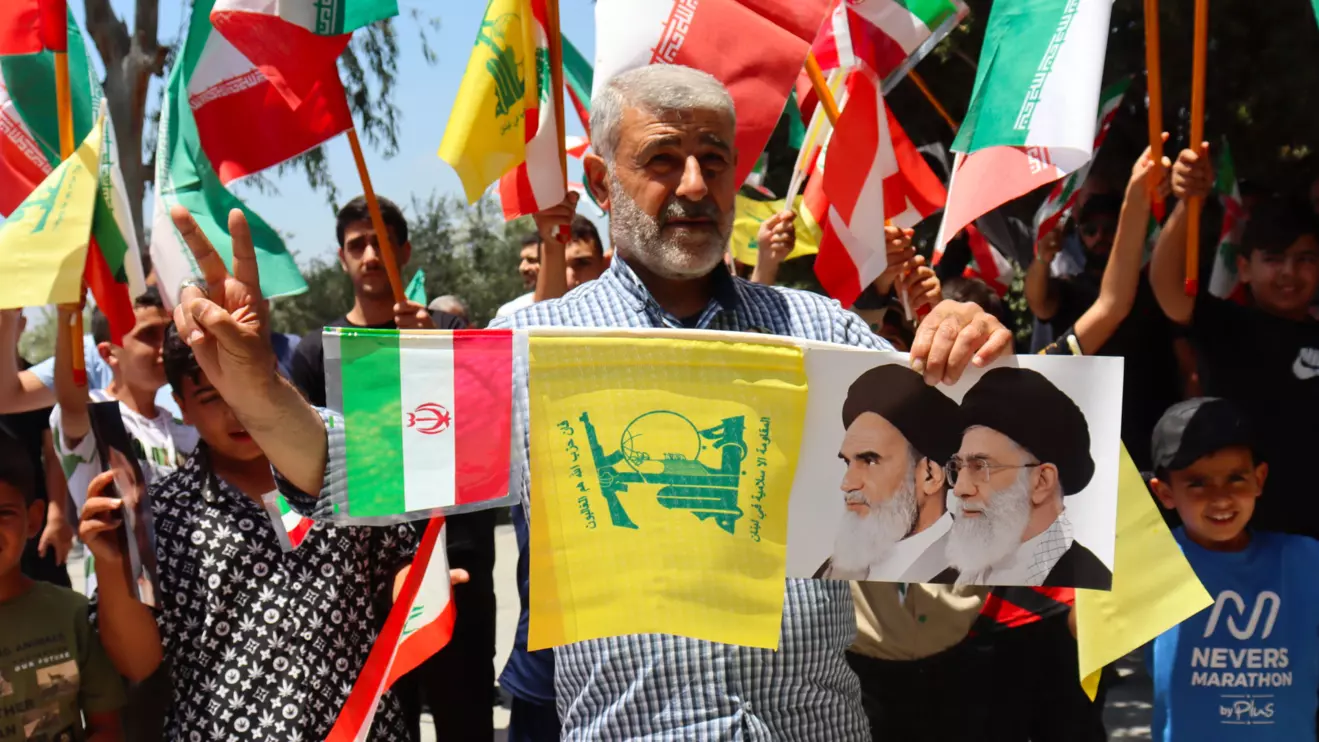
French, Saudi Arabian and American officials will hold talks with the head of the Lebanese army on Thursday in Paris aimed at finalising a roadmap to enable a mechanism for the disarmament of the Hezbollah group, diplomats said.
Israel and Lebanon agreed to a U.S.-brokered ceasefire in 2024, ending more than a year of fighting between Israel and Hezbollah that severely weakened the Iran-backed militants.
Since then, the sides have traded accusations over violations with Israel questioning the Lebanese army's efforts to disarm Hezbollah. Israeli warplanes have increasingly targeted Hezbollah in southern Lebanon and even in the capital.
CEASEFIRE AT RISK
With growing fear the ceasefire could unravel, the Paris meeting aims to create more robust conditions to identify, support and verify the disarmament process and dissuade Israel from escalation, four European and Lebanese diplomats and officials told Reuters.
With legislative elections due in Lebanon in 2026, there are fears political paralysis and party politics will further fuel instability and make President Joseph Aoun less likely to press disarmament, the diplomats and officials said.
"The situation is extremely precarious, full of contradictions and it won't take much to light the powder keg," said one senior official speaking on condition of anonymity.
"Aoun doesn't want to make the disarming process too public because he fears it will antagonise and provoke tensions with the Shi'ite community in the south of the country."
With the Lebanese army lacking capacity to disarm Hezbollah, the idea would be to reinforce the existing ceasefire mechanism with French, U.S. and possibly other military experts along with U.N. peacekeeping forces, the diplomats and officials said.
The parties hope to organise a conference at the start of next year to reinforce the Lebanese army as well as a separate conference to help reconstruction, most notably for the south.
ISRAELI STRIKES
As officials convened for the talks, multiple Israeli strikes hit towns in southern Lebanon and areas of the Bekaa Valley on Thursday, Lebanon’s state news agency NNA reported.
The Israeli military said it struck Hezbollah targets across several areas, including a military compound used for training, weapons storage and artillery launches, saying the activity violated understandings between Israel and Lebanon and posed a threat to Israel. It also said it struck a Hezbollah militant in the area of Taybeh in southern Lebanon.
Commenting on the attacks, parliament speaker and Hezbollah-allied Amal Movement leader Nabih Berri said the strikes were an "Israeli message" to the Paris conference, NNA added.
By John Irish and Jana Choukeir