Iran
Trump downplays duration of renewed Iran strikes
President Donald Trump said on Wednesday that the renewed U.S. campaign against Iran would not continue for "too long" after the biggest exchange of fire between Tehran and Washington since July.

Saudi Crown Prince Mohammed bin Salman told Iranian President Masoud Pezeshkian that Riyadh will not allow its airspace or territory to be used for military actions against Tehran, state news agency SPA reported on Tuesday.
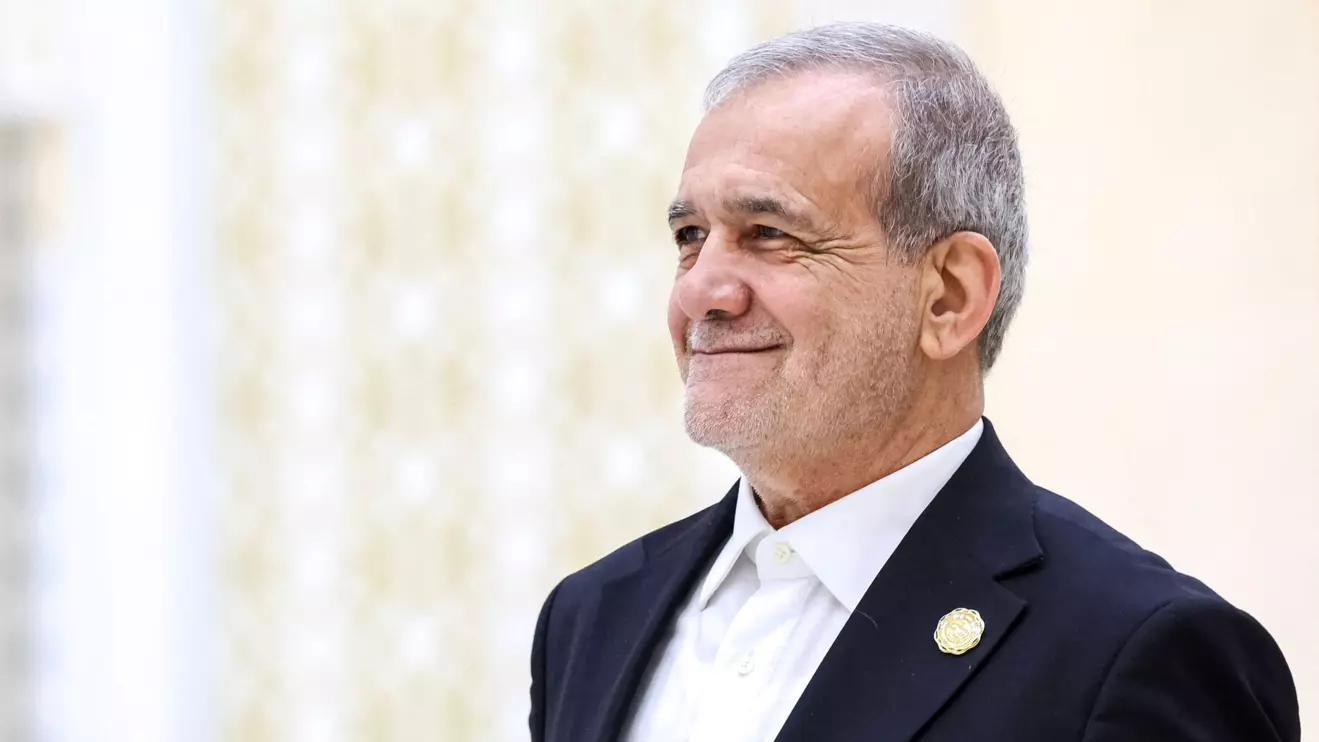
Iranian President Masoud Pezeshkian, Sputnik/Alexander Kazakov/Pool via Reuters
Saudi Crown Prince Mohammed bin Salman told Iranian President Masoud Pezeshkian that Riyadh will not allow its airspace or territory to be used for military actions against Tehran, state news agency SPA reported on Tuesday.
In a phone call with Pezeshkian, the crown prince affirmed his country's support for any "efforts that would resolve differences through dialogue" to bolster security and stability in the region.
Earlier, Iranian media reported that Pezeshkian told bin Salman that Tehran welcomes any process, within the framework of international law, that prevents war.
The statement by the Saudi de facto ruler follows a similar statement by the United Arab Emirates that it would not allow any military action against Iran using its airspace or territorial waters.
Uncertainty over the possibility of military action in Iran has lingered after U.S. President Donald Trump said last week that an "armada" was heading toward the country but that he hoped he would not have to use it.
Trump's warnings to Tehran were against killing protesters or restarting its nuclear programme, but the countrywide demonstrations have since abated.
A U.S. aircraft carrier and supporting warships have arrived in the Middle East, two U.S. officials told Reuters on Monday, expanding Trump's capabilities to defend U.S. forces, or potentially take military action against Iran.
Iran has been embroiled in protests during which rights groups say security forces killed thousands of people, including bystanders. The rights groups describe the unrest as the biggest crackdown since Shi'ite Muslim clerics took power in the 1979 revolution. Iranian authorities have blamed the unrest and deaths on “terrorists and rioters” backed by exiled opponents.
Reporting by Jaidaa Taha, Menna Alaa El-Din and Parisa Hafezi
President Donald Trump said on Wednesday that the renewed U.S. campaign against Iran would not continue for "too long" after the biggest exchange of fire between Tehran and Washington since July.
Top aides to President Donald Trump are pushing to keep the Iran war from escalating before November's midterm elections to staunch Republican electoral losses, four people familiar with the discussions said, a strategy already under strain as the U.S. and Iran exchanged back-and-forth attacks overnight.
Russia has secretly helped Iran develop advanced supersonic cruise missiles, in what the Financial Times describes as one of the most significant known transfers of strategic military technology from Moscow to Tehran, according to an investigation published Wednesday.
To make this website run properly and to improve your experience, we use cookies. For more detailed information, please check our Cookie Policy.
Necessary cookies enable core functionality. The website cannot function properly without these cookies, and can only be disabled by changing your browser preferences.