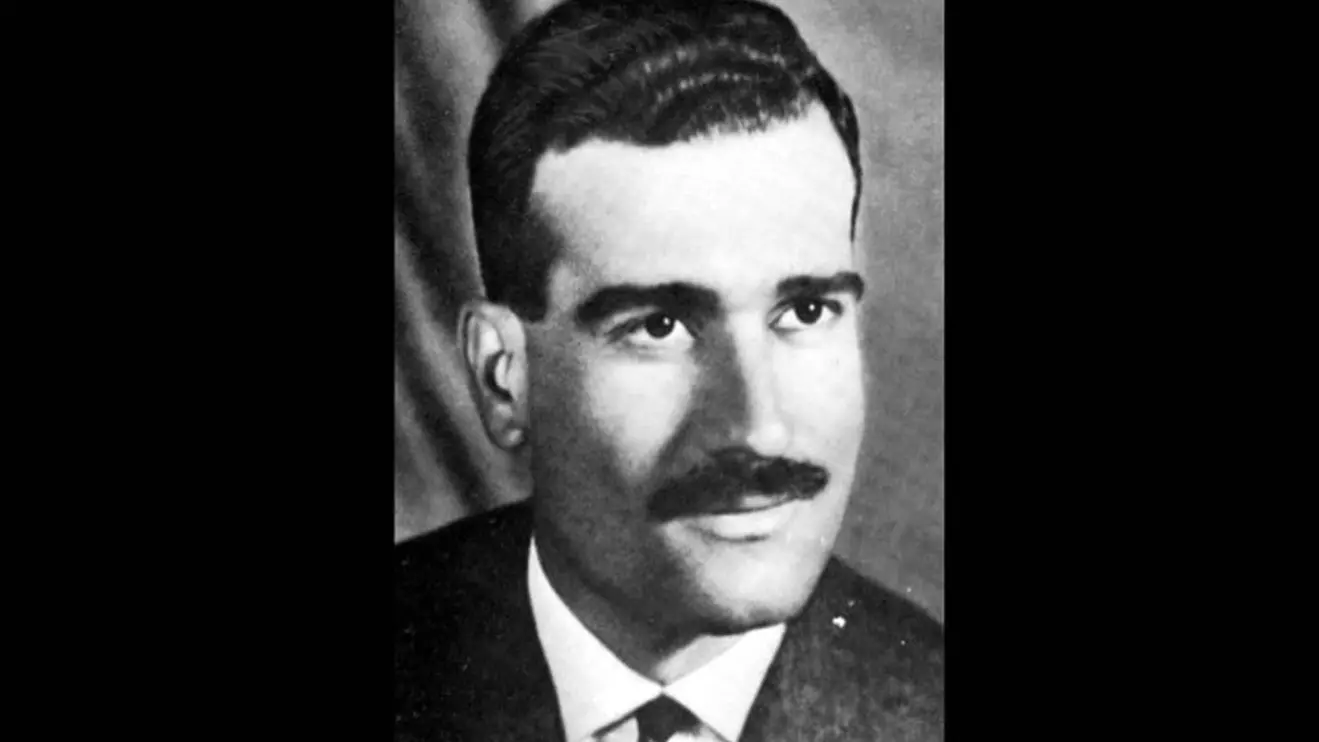
Israel's security officials on Tuesday denied that the remains of Eli Cohen, an Israeli spy executed in Damascus in 1965, were not retuned from Syria after rumors spread on social media.
In recent days, Israel reportedly reached out to officials in Syria and in the region, to request that his remains be brought home fur burial.
Eli Cohen, born on December 6, 1924, in Alexandria, Egypt, was an Israeli spy renowned for his infiltration of the highest echelons of the Syrian government in the early 1960s.
Operating under the alias Kamel Amin Thaabet, Cohen developed close relationships with Syrian political and military leaders, providing Israel with invaluable intelligence that significantly contributed to its military successes, particularly during the Six-Day War in 1967.
In January 1965, Syrian counterintelligence, with assistance from Soviet experts, uncovered Cohen's espionage activities.
He was arrested, subjected to a secret trial, and publicly executed by hanging in Damascus on May 18, 1965. Despite numerous efforts, including recent attempts facilitated by Russian mediators, Cohen's remains have not been repatriated to Israel.
Cohen's legacy endures in popular culture, inspiring various works, including the 2019 Netflix miniseries "The Spy," which dramatizes his life and espionage activities.