Iran
Trump downplays duration of renewed Iran strikes
President Donald Trump said on Wednesday that the renewed U.S. campaign against Iran would not continue for "too long" after the biggest exchange of fire between Tehran and Washington since July.

The United States and Iran on Friday were trying to reach a diplomatic solution to disputes between the two nations that have led to heightened tensions in the Middle East, and warnings from President Donald Trump that military options are at his disposal.
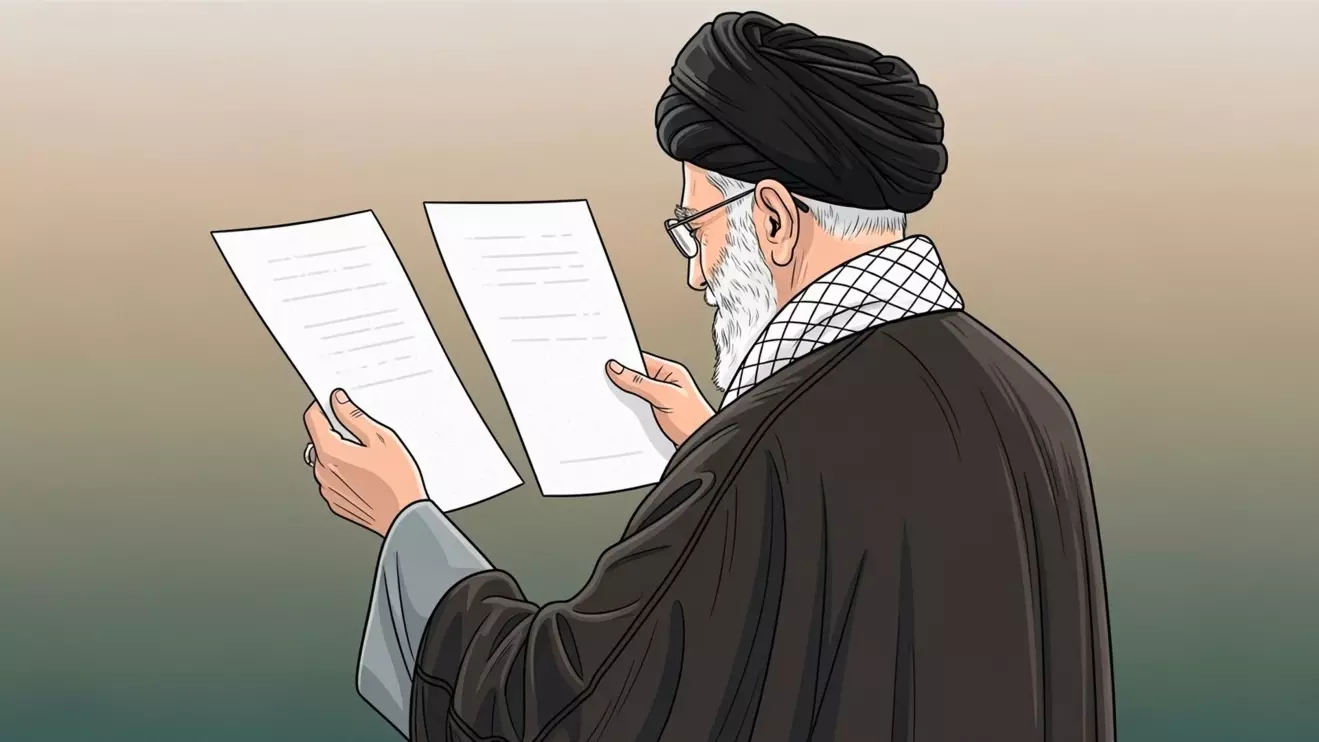
Iran's leadership remains deeply worried Trump may carry out his threats to strike Iran after a U.S. naval buildup in the region © Mena Today
The United States and Iran on Friday were trying to reach a diplomatic solution to disputes between the two nations that have led to heightened tensions in the Middle East, and warnings from President Donald Trump that military options are at his disposal.
While Washington wants talks to include the nuclear program, ballistic missiles, support for armed groups and treatment of the Iranian people, Tehran has insisted on focusing exclusively on its disputed nuclear program and is seeking recognition of its right to enrich uranium.
Here are key moments in relations between Trump's administration and Iran over recent years:
U.S. QUITS NUCLEAR DEAL - MAY 2018
During his first term in office, Trump pulled the United States out of a 2015 nuclear agreement known as the Joint Comprehensive Plan of Action, the signature foreign policy achievement of former Democratic President Barack Obama.
The deal eased sanctions on Iran in exchange for Tehran limiting its nuclear program to prevent it from being able to make an atomic bomb. Iran denies seeking nuclear weapons.
SOLEIMANI KILLED IN STRIKE ORDERED BY TRUMP - JANUARY 2020
General Qassem Soleimani, the commander of the Quds Force, the overseas arm of the elite Revolutionary Guards, was killed in Iraq in a drone strike in January 2020, ordered by Trump.
Days after the assassination, the United States described the killing as self-defense. The U.S. Attorney General at the time, William Barr, said Trump clearly had the authority to kill Soleimani and the general was a "legitimate military target".
A U.N. human rights investigator said the incident was a violation of international law. The Iranian authorities have previously called for Trump to be tried and judged.
U.S. ATTEMPTS 'SNAPBACK' OF U.N. SANCTIONS ON IRAN - AUGUST 2020
The United States triggered a process aimed at restoring all U.N. sanctions on Iran in August 2020 after the U.N. Security Council rejected a U.S. bid to extend a conventional arms embargo on the country.
The U.S. effort failed after 13 of the 15 Security Council members at the time said Washington's move was void because it relied on a mechanism agreed under the 2015 nuclear deal that the United States had quit in 2018.
U.S. CHARGES IRANIAN MAN IN PLOT TO KILL TRUMP - NOVEMBER 2024
The United States in November 2024 charged Iranian Farhad Shakeri in connection with an alleged plot ordered by Iran's elite Revolutionary Guards Corps to assassinate Trump, according to the Department of Justice.
Shakeri told law enforcement he did not intend to formulate such a plan within the time frame directed by the IRGC, according to the department.
Iran's foreign ministry said at the time in a statement carried by local media that the claim was a "repulsive" plot by Israel and Iranian opposition outside the country to "complicate matters between America and Iran."
U.S. STRIKES IRAN NUCLEAR SITES - JUNE 2025
The United States attacked key Iranian nuclear sites in June 2025, joining Israel in the biggest Western military action against the Islamic Republic since its 1979 revolution, which prompted a threat of retaliation. The extent of the damage done remains disputed.
A day later, Iran launched a missile attack on an American air base in Qatar that caused no injuries, shortly after which the 12-day conflict with Israel ended.
SANCTIONS ON IRAN SNAP BACK - SEPTEMBER 2025
U.N. sanctions on Iran were reimposed in a move spearheaded by Western powers that China and Russia unsuccessfully tried to delay. Britain, France and Germany triggered the return of international sanctions over accusations that Tehran violated the 2015 nuclear deal.
DIPLOMACY CONTINUES - FEBRUARY 2026
Talks between both sides held on Friday in Oman were described by Iran's Foreign Minister Abbas Araqchi as having gotten off to a "good start", and are set to continue, although he warned "any dialogue requires refraining from threats and pressure."
Iran's leadership remains deeply worried Trump may carry out his threats to strike Iran after a U.S. naval buildup in the region. Trump has said "bad things" will probably happen if a deal cannot be reached.
Despite the talks, the United States announced on Friday it was sanctioning 15 entities and 14 shadow-fleet vessels connected to illicit trade in Iranian petroleum, petroleum products and petrochemical products.
By Costas Pitas
President Donald Trump said on Wednesday that the renewed U.S. campaign against Iran would not continue for "too long" after the biggest exchange of fire between Tehran and Washington since July.
Top aides to President Donald Trump are pushing to keep the Iran war from escalating before November's midterm elections to staunch Republican electoral losses, four people familiar with the discussions said, a strategy already under strain as the U.S. and Iran exchanged back-and-forth attacks overnight.
Russia has secretly helped Iran develop advanced supersonic cruise missiles, in what the Financial Times describes as one of the most significant known transfers of strategic military technology from Moscow to Tehran, according to an investigation published Wednesday.

To make this website run properly and to improve your experience, we use cookies. For more detailed information, please check our Cookie Policy.
Necessary cookies enable core functionality. The website cannot function properly without these cookies, and can only be disabled by changing your browser preferences.