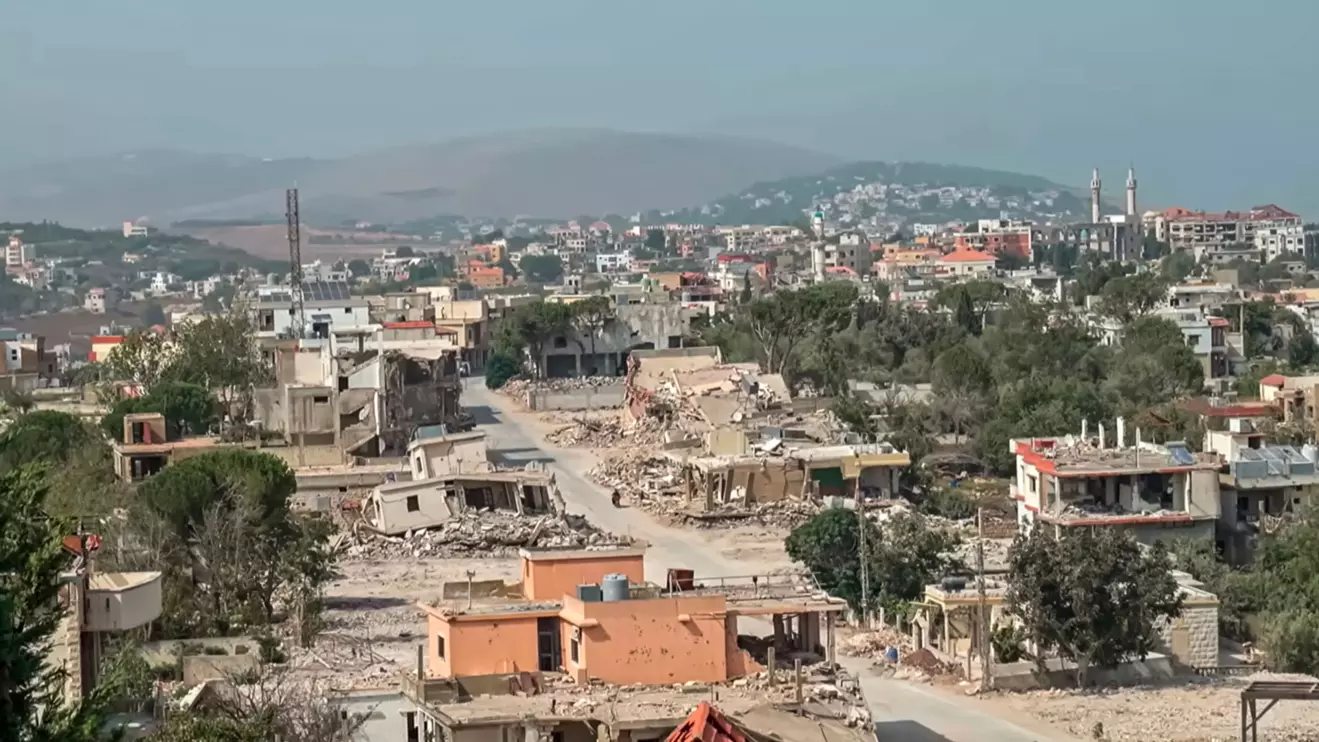
Hezbollah announced Saturday it had launched a significant wave of attacks against Israeli forces in southern Lebanon - while reports from Axios indicate that Israel is preparing a large-scale ground invasion of Lebanese territory.
The announcements, unconfirmed by independent sources, carry a deeply uncomfortable implication: Hezbollah's fighters have returned to the south in force, the very territory the Lebanese government claimed to have cleared, disarmed and secured at the start of the year.
Beirut had assured the world it had dismantled Hezbollah's arsenal in South Lebanon, destroying weapons stockpiles and collapsing the network of tunnels that had turned the region into a fortified military zone. The events of Saturday suggest those assurances were either premature, exaggerated, or simply false.
The Lebanese state has once again demonstrated its fundamental inability - or unwillingness - to exercise sovereignty over its own territory. And Israel, once again, may be left with no choice but to act where Beirut has failed.
Four Decades of Destruction
This is not a new story. Since 1982, Hezbollah has systematically dismantled Lebanon from within, corrupting its institutions, paralysing its politics, draining its economy and dragging it into wars it never chose to fight.
Every conflict Hezbollah has provoked has left Lebanon weaker, poorer and more fractured. The 2006 war. The slow strangulation of the state. The Beirut port explosion - linked to weapons stored by Hezbollah's allies. And now, in 2026, a new war launched unilaterally on March 2, without the consent of the Lebanese government, without regard for Lebanese lives.
Israel's Dirty Job
The logic is as brutal as it is inescapable: if Lebanon cannot or will not disarm Hezbollah, Israel will do it by force. A ground invasion of South Lebanon - if confirmed - would be the most significant Israeli military operation in the country since 2006.
It is a dirty job. It will cost lives on both sides. It will devastate infrastructure and displace civilians. But the alternative, a permanently rearmed Hezbollah on Israel's northern border, supplied by Iran and protected by Lebanese state paralysis, is simply not acceptable.
Lebanon's tragedy is not Israel's creation. It is Hezbollah's. For over four decades, the Iranian-backed militia has held an entire nation hostage, using its people as human shields, its territory as a military base and its institutions as a facade for Tehran's regional ambitions.
Israel didn't start this war. Hezbollah did, on October 8, 2023, and again on March 2, 2026.
And if a ground invasion is coming, the responsibility lies not in Jerusalem, but in the tunnels, the weapons caches and the command centres that Beirut promised to destroy and didn't.