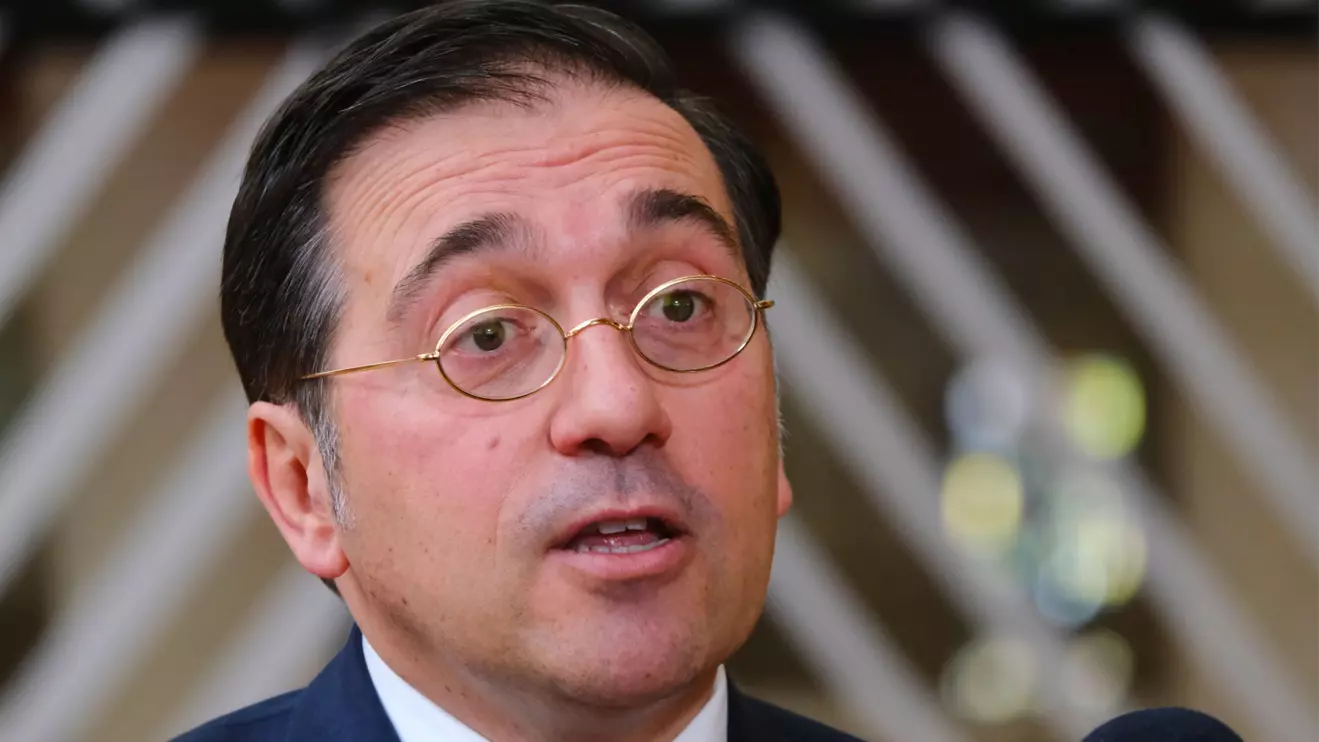
Spanish Foreign Minister José Manuel Albares Bueno’s recent statements during his visit to Lebanon have drawn criticism for displaying what some perceive as a biased stance against Israel.
His call for Israel to halt its "aggressions" against Lebanon has raised concerns over Spain’s objectivity in Middle Eastern affairs.
During a press conference on Wednesday, following a meeting with Lebanese President Joseph Aoun, Albares declared, "Israel should stop its aggressions against Lebanon, and we are here to help make that happen." His comments were in response to questions about Israel's actions ahead of the expiration of the 60-day truce with Hezbollah on January 27.
Critics argue that the Spanish government’s position disregards the context of Israel's actions, which are widely viewed as a response to over a year of continuous Hezbollah aggression against Israeli territory. By framing Israel's defensive measures as "aggression," Spain risks losing credibility as a neutral actor in Middle Eastern diplomacy.
Observers suggest that Minister Albares should adopt a more balanced perspective that acknowledges the complex dynamics between Israel and Hezbollah. Objective engagement is crucial for any nation seeking to mediate or contribute to peace efforts in the region. Failure to recognize the provocations and security threats faced by Israel undermines Spain's diplomatic standing.
Spain’s perceived bias could hinder its ability to participate effectively in peace negotiations and conflict resolution in the Middle East. A more impartial approach that considers the security concerns of all parties involved is essential for fostering dialogue and long-term stability in the region.