Survey: Over two-thirds of Lebanese Christians support peace with Israel

1 min Edward Finkelstein

A new Statistics Lebanon poll, cited by Mideast Journal, reveals a striking level of support for normalisation within the Christian community, a significant data point as Beirut and Jerusalem engage in unprecedented direct talks.

Lebanon's Christian community has historically maintained a more complex and nuanced relationship with the idea of coexistence with Israel

Lebanon's Christian community has historically maintained a more complex and nuanced relationship with the idea of coexistence with Israel

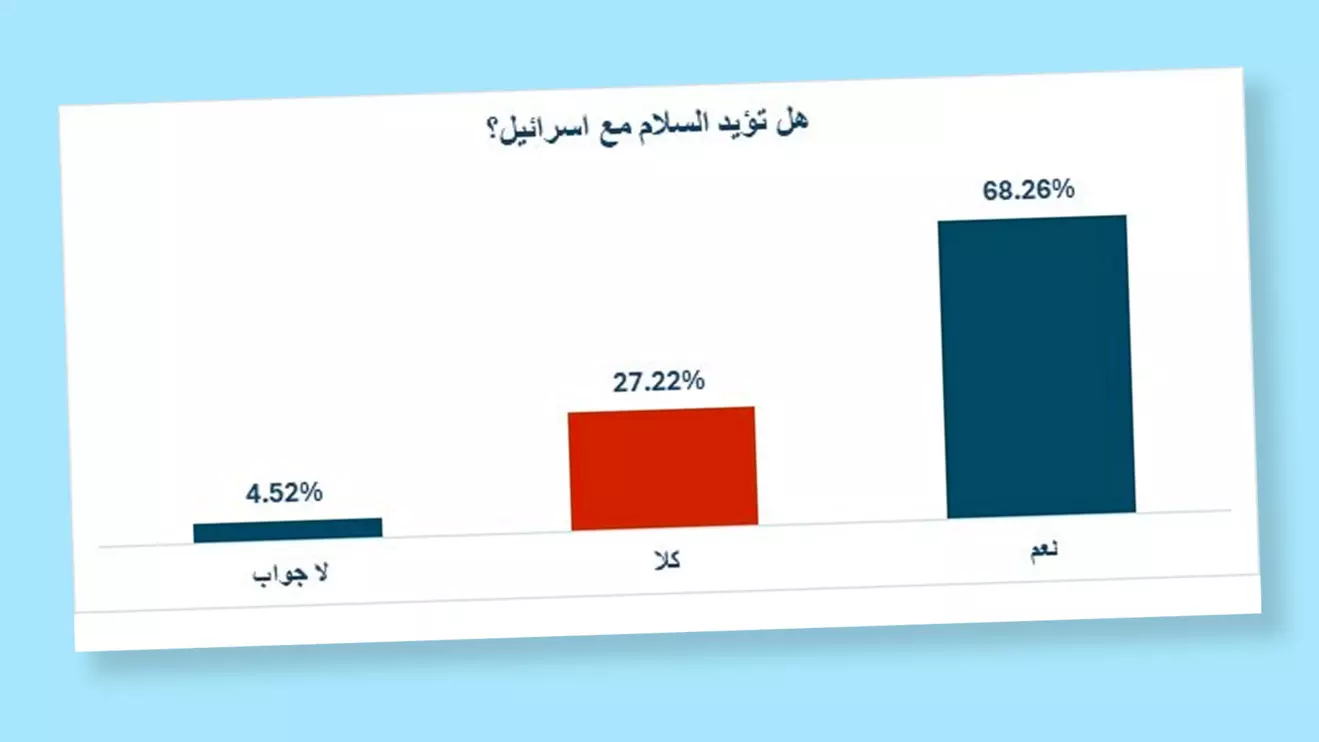
A new survey by Statistics Lebanon shows that 68.26% of Christian Lebanese respondents support peace with Israel, while 27.22% oppose it, according to findings cited by Mideast Journal.

The poll offers a rare quantitative glimpse into Lebanese public opinion on one of the most sensitive questions in the country's political landscape, at a moment when Beirut and Tel Aviv are engaged in their first direct diplomatic contacts since 1983.

The findings are striking, though not entirely surprising. Lebanon's Christian community has historically maintained a more complex and nuanced relationship with the idea of coexistence with Israel than other segments of Lebanese society.

The community bears the memory of the South Lebanon Army, a predominantly Christian militia that cooperated with Israel during the civil war era, as well as the broader legacy of the 1943 National Pact, which sought to balance Lebanon's diverse confessional interests.

The survey comes at a pivotal moment. Lebanese President Joseph Aoun has already called for direct negotiations with Israel, provoking a fierce backlash from Hezbollah, whose leader Naïm Kassem accused the government of destabilising Lebanon. Aoun's response was pointed: "Betrayal is dragging your country into war for foreign interests."

The Statistics Lebanon poll suggests that within the Christian community at least, the Lebanese president's diplomatic opening may find considerable popular support, a political resource he may need as negotiations with Israel move closer to becoming a formal

Edward Finkelstein

Edward Finkelstein

From Athens, Edward Finkelstein covers current events in Greece, Cyprus, Turkey, Egypt, Libya, and Sudan. He has over 15 years of experience reporting on these countries. He is a specialist in terrorism issues

Related

Syria

Lebanon, Syria move to reset trade ties

Lebanon and Syria will in the coming months begin revising decades-old trade agreements to revive their economic relationship following the ouster of Syrian leader Bashar al-Assad in 2024, Lebanon's economy minister told Reuters on Thursday.

Lebanon

The synagogue that remembers what Lebanon forgot

High in the hills above Beirut, where mist settles over crumbling villas and the past hangs heavier than the mountain air, stands a building that time has been unusually gentle with, even as neglect has not.

Hezbollah

Hezbollah turns on Aoun over Lebanon-Israel negotiations

Hezbollah lawmaker Hassan Fadlallah told parliament Thursday that the "ill-fated" framework agreement signed on June 26 between Lebanon and Israel was "doomed to fail," insisting "the Zionists will not be able to impose its implementation" and that "our people will thwart its effects on the ground."

Subscribe to our newsletter

Mena banner 4

To make this website run properly and to improve your experience, we use cookies. For more detailed information, please check our Cookie Policy.

  • Necessary cookies enable core functionality. The website cannot function properly without these cookies, and can only be disabled by changing your browser preferences.