Iraq
Drone overflight triggers alert at Khor Mor gas field
Sirens sounded after a drone flew over the Khor Mor gas field, one of the largest in Iraq's Kurdistan region, two security sources told Reuters on Monday, without giving more details.

Iran and the United States are far from reaching a deal to end the war, a senior Iranian official told Reuters on Tuesday, despite heightened diplomatic efforts to prevent a potential return to active conflict after the US midterm elections.
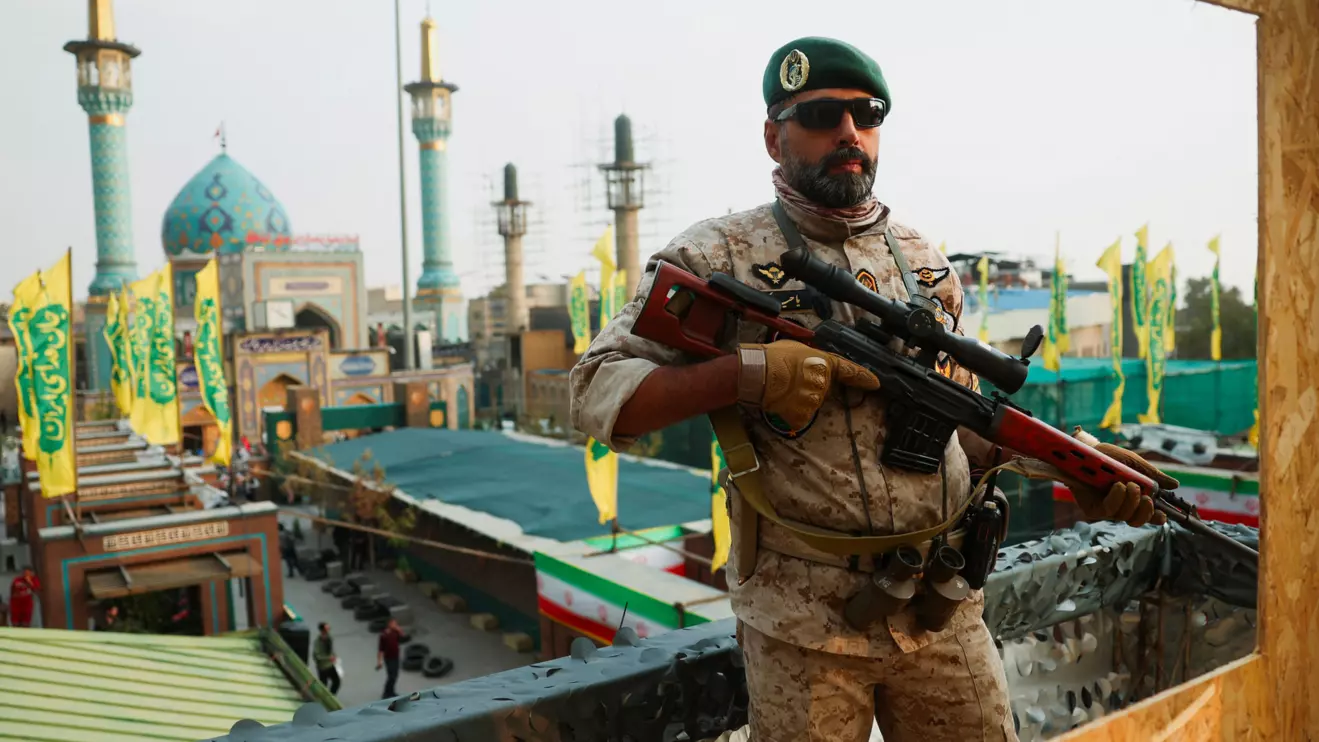
A member of IRGC at a military training center for ordinary citizens at Tajrish Square in Tehran, Iran, November 2, 2026. Majid Asgaripour/WANA (West Asia News Agency) via Reuters
Iran and the United States are far from reaching a deal to end the war, a senior Iranian official told Reuters on Tuesday, despite heightened diplomatic efforts to prevent a potential return to active conflict after the US midterm elections.
The US carried out "defensive" strikes on Iran's Qeshm island overnight, with a US official saying the strikes targeted surface-to-air missiles used against US assets. Meanwhile, the Revolutionary Guards said they downed a US MQ-9 drone overnight in the skies over the east of the Strait of Hormuz.
"Mediators are working hard to narrow gaps between Tehran and Washington," the senior Iranian official said, after Qatari mediators travelled to Tehran on Monday night for talks on a version of the draft US-Iran deal that has been under negotiation for the past eight days.
“Tehran's conditions must be met if the US wants Hormuz reopened,” the Iranian official cautioned, adding that nuclear talks could only start afterwards and that Tehran would not accept Washington's "excessive demands".
Iran's Parliament Speaker Mohammad Baqer Qalibaf said on Tuesday that the ball was in the US' court after Tehran gave a "strong and rational response" to Washington.
The senior Iranian told Reuters Tehran would respond forcefully, in the region and beyond, to US strikes.
"The enemy seeks to force the Iranian nation into submission through threats and military action, but they are sorely mistaken, Iran will not submit," Qalibaf also said on Tuesday, adding that Tehran's response to any miscalculation by the US would be unpredictable and disregard geographical constraints.
US President Donald Trump raised doubt on Monday about whether he would follow through on a threatened resumption of military strikes against Iran after the midterm elections on Tuesday, adding that he believed Tehran wanted to make a deal as soon as possible.
REGIONAL DIALOGUE CONTINUES
In parallel to US-Iran exchange of messages via intermediaries, diplomatic efforts are ongoing at the regional level to prevent further deflagration.
Iranian Foreign Minister Abbas Araqchi said on Tuesday that talks between Iran and Saudi Arabia are ongoing as Tehran aims to reach new regional security arrangements for countries in the region without foreign military involvement.
Last week, top officials from Saudi Arabia, Turkey and Pakistan met Iranian officials in Tehran, the first high-level contact between Iran and the three nations since August. The US-Israeli war on Iran started in late February and since then, fighting has spread to Saudi Arabia and Yemen.
Riyadh said the visit was intended to open negotiating channels to "prevent the return of military escalation," as fighting between Saudi Arabia and Yemen's Iran-aligned Houthis had intensified in recent weeks.
Houthi attacks on the kingdom escalated as the powerful militia advanced towards the Bab el-Mandeb Strait, a key shipping chokepoint that lies on the opposite side of the Arabian Peninsula from the Strait of Hormuz.
The Houthis have also attacked Saudi oil facilities and airports including Riyadh's international airport, disrupting flights and oil exports and drawing Saudi air strikes on Yemen in response.
Impoverished Yemen has been mired in a civil war since the Houthis pushed the internationally recognised, Saudi-backed government out of the capital, Sanaa, in 2014.
By Parisa Hafezi
Sirens sounded after a drone flew over the Khor Mor gas field, one of the largest in Iraq's Kurdistan region, two security sources told Reuters on Monday, without giving more details.
Iran shows no sign of making concessions in the war with the US, but its warnings to citizens of gas shortages this winter are the latest sign of its own vulnerabilities in the conflict, with its ports blockaded and infrastructure hammered by US strikes.
Saudi Arabia on Monday removed the commander of the military coalition backing Yemen’s government against the Houthis, the official Saudi Press Agency reported, after fresh advances by the Iran-aligned movement.
To make this website run properly and to improve your experience, we use cookies. For more detailed information, please check our Cookie Policy.
Necessary cookies enable core functionality. The website cannot function properly without these cookies, and can only be disabled by changing your browser preferences.