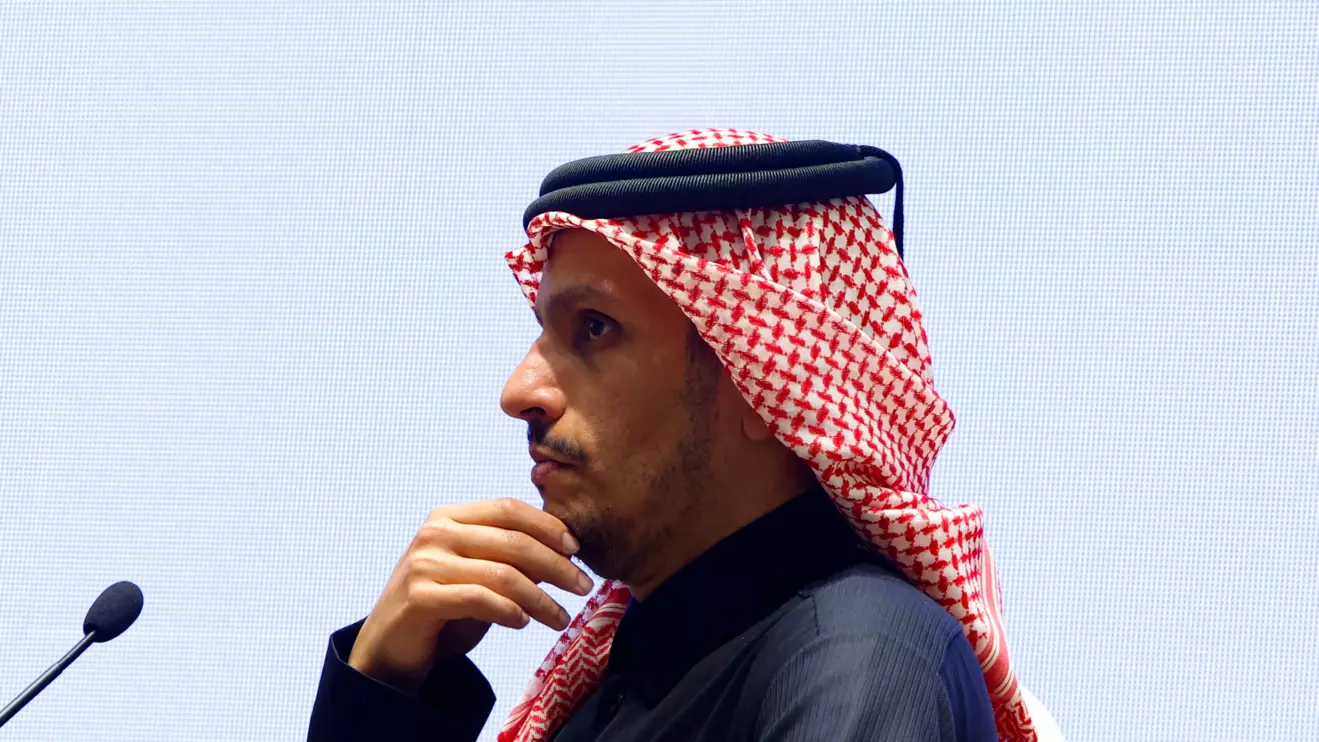
Talks over a ceasefire in Gaza have reached a stalemate due to Israel's operations in Rafah, Qatar's Prime Minister Sheikh Mohammed bin Abdulrahman Al-Thani said on Tuesday.
Israeli operations in Rafah, which started this month, have closed a main crossing point for aid from the border with Egypt a move humanitarian groups say has worsened an already dire situation.
"Especially in the past few weeks, we have seen some momentum building but unfortunately, things didn't move in the right direction and right now we are in a status of almost a stalemate. Of course, what happened with Rafah sent us backward," Sheikh Mohammed said at an economic forum in Doha.
Sheikh Mohammed, whose country has mediated heavily between Palestinian Islamist group Hamas and Israel throughout the seven-month conflict, said Qatar would keep working to resolve the situation.
"We make it very clear for everyone: our job is limited to our mediation," he said. "That's what we will do, that what we will continue to do."
Sheikh Mohammed said the fundamental difference between the two parties was over the release of hostages and ending the war.
More than 34,000 Palestinians have been killed in Israel’s assault on the Gaza Strip, say health officials in the Hamas-ruled enclave. The war began when Hamas militants attacked Israel on Oct. 7, killing 1,200 people and abducting 252 others, of whom 133 are believed to remain in captivity in Gaza, according to Israeli tallies.
"There is one party that wants to end the war and then talk about the hostages and there is another party who wants the hostages and wants to continue the war. As long as there is not any commonality between those two things it won't get us to a result," Sheikh Mohammed said.
Reporting by Andrew Mills and Hadeel Al Sayegh