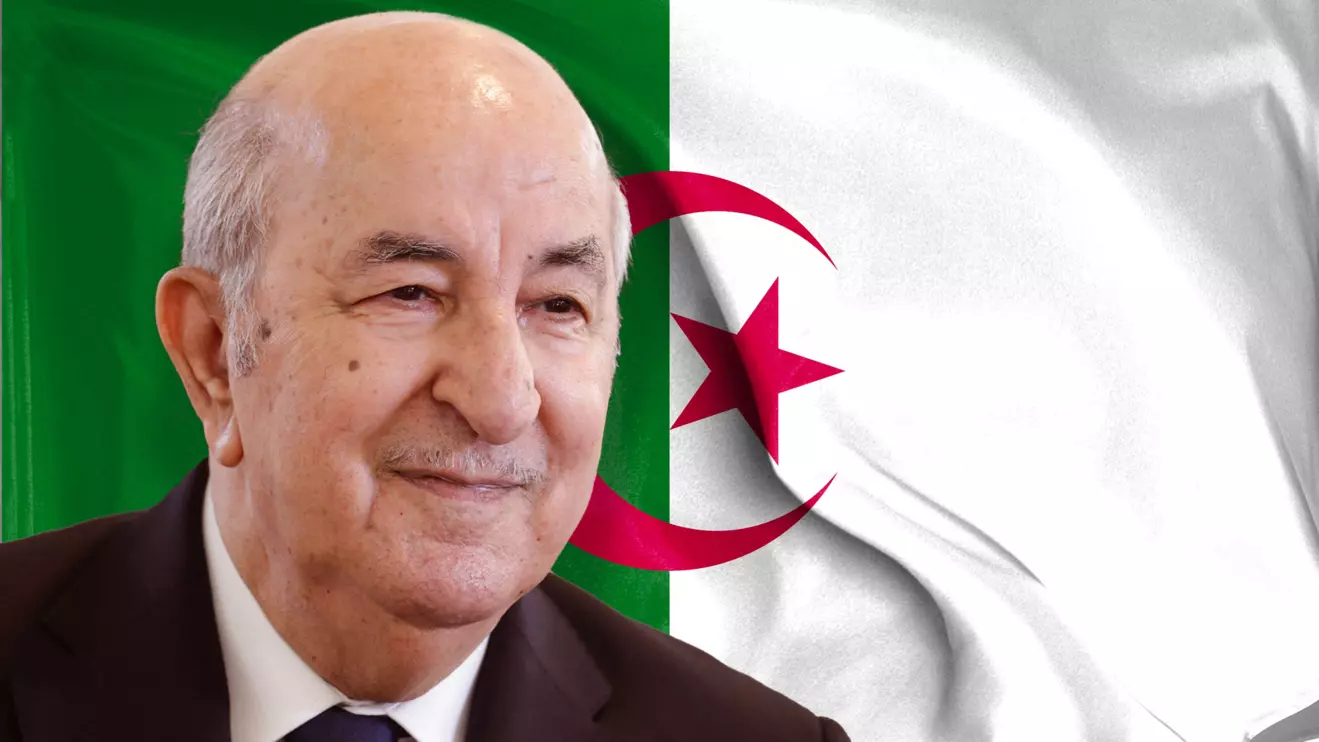
The Algerian regime of Abdelmadjid Tebboune continues to showcase its absolute disregard for fundamental rights and justice. The latest scandal involves the political prisoner Boualem Sansal, who has been pressured to change his lawyer simply because his current counsel is Jewish.
According to the French magazine Marianne, emissaries from the Algerian regime visited Boualem Sansal in his hospital room—where he is undergoing radiotherapy—to coerce him into replacing his French lawyer François Zimeray with a "non-Jewish" attorney.
This appalling state-sponsored antisemitism is yet another example of the totalitarian drift of the Algerian government, which routinely persecutes opponents under fabricated charges.
The 80-year-old Algerian-French writer, known for his outspoken criticism of the regime, was arrested on November 16 at Algiers airport. He is being prosecuted under Article 87 bis of the Penal Code, which falsely equates any act perceived as a threat to the state with terrorism.
This bogus charge is a well-worn strategy used by the Algerian government to silence dissent. In Algeria, speaking out against corruption, calling for democracy, or challenging the authoritarian rule is enough to be labeled a terrorist and thrown in prison.
But in Sansal’s case, the scandal is even more grotesque. Not only has he been imprisoned, but he is also being told who he can and cannot have as legal representation, based on blatantly antisemitic criteria.
This is not the first time the Algerian regime has displayed overt antisemitism. For decades, the government has obsessively demonized Israel and anything remotely related to Jewish identity.
Algeria’s foreign policy aligns with some of the world’s most extreme regimes and terrorist organizations:
- Open support for Hamas and Islamic Jihad, responsible for terrorist attacks against civilians.
- Close ties with Iran and Hezbollah, which actively destabilize the Middle East.
- Relentless anti-Israel propaganda, used as a distraction from Algeria’s deep internal crises.
This toxic rhetoric serves a dual purpose: creating an external scapegoat while concealing the failures of an incompetent and corrupt regime.
Algeria, which has the potential to be a leading power in North Africa, continues to isolate itself internationally, refusing to modernize or acknowledge its deepening crisis. Instead, it clings to a military-police dictatorship that stifles all dissent.
A State in Decline, Repression Without Limits
The Boualem Sansal case is a shocking illustration of what Algeria has become under Tebboune’s rule: an authoritarian state, fueled by rampant nationalism and state-backed antisemitism, that ruthlessly crushes those who dare think differently.
Western democracies can no longer turn a blind eye to this reality. Algeria is not a democracy—it is a dictatorship that persecutes its own citizens. It’s time for the world to stop giving it the benefit of the doubt.
Algeria deserves better than this oppressive regime. But for real change to happen, the Algerian people must finally be able to speak freely—without fear of imprisonment.