Iran
One country votes. The other executes
On the eve of Israel’s general election, Iran said on Monday that the outcome would make no difference to the Islamic Republic. The remarks echo the regime’s long-standing rhetoric toward Israel.

Top officials from Mecca Pact countries Saudi Arabia, Turkey and Pakistan are to meet Iran's leaders in Tehran on Monday in their first high-level contact since the kingdom became a pressure point in the wider Iran conflict.
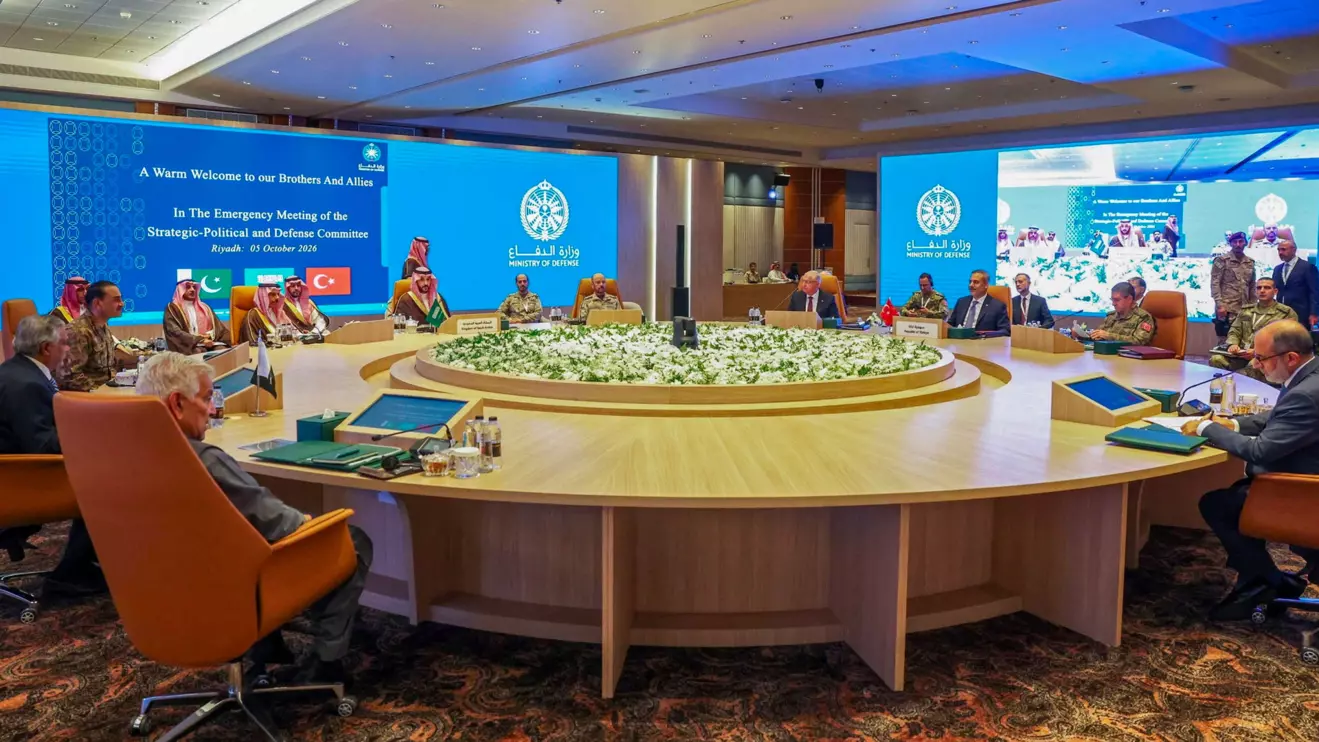
Turkey's Foreign Minister Hakan Fidan, Pakistan's Deputy Prime Minister and Foreign Minister Mohammad Ishaq Dar, Saudi Arabia's Foreign Minister Prince Faisal bin Farhan Al Saud, Turkey's Defence Minister Yasar Guler, Turkish Chief of General Staff General Selcuk Bayraktaroglu, Pakistan's Chief of Defence Forces and Chief of Army Staff Field Marshal Asim Munir, Pakistan's Defence Minister Khawaja Muhammad Asif, Saudi Arabia's Defence Minister Prince Khalid bin Salman, Saudi Arabia's Chief of General Staff General Fayyadh bin Hamed Al-Ruwaili and Pakistan's retired Lieutenant General Nauman Mahmood, Secretary General of the Mecca defence pact, take part in the Mecca defense pact meeting between Turkey, Saudi Arabia and Pakistan in Riyadh, Saudi Arabia, October 5, 2026. Saudi Press Agency
Top officials from Mecca Pact countries Saudi Arabia, Turkey and Pakistan are to meet Iran's leaders in Tehran on Monday in their first high-level contact since the kingdom became a pressure point in the wider Iran conflict.
Saudi Arabia will be represented by Defence Minister Prince Khalid bin Salman, Pakistan by army chief Field Marshal Asim Munir, and Turkey by intelligence chief Ibrahim Kalin, Saudi and Iranian officials said.
Attacks by Yemen's Iran-aligned Houthis have spiralled in recent weeks and rhetoric between Washington and Tehran has grown more heated. Both countries have also drawn up plans to restart the wider war, possibly after the US midterm elections on November 3.
Monday's planned talks will be the first high-level contact between Iran and all members of the three-nation bloc since Saudi Arabia was drawn deeper into the conflict. Under the Mecca Joint Defence Agreement signed in August, an armed attack on one member is considered an attack on all.
Iranian Foreign Ministry spokesperson Esmaeil Baghaei said on Monday discussions on regional security would include "Israel’s expansionist policies, developments in the Palestinian territories and Lebanon, and the repercussions of US and Israeli military action against Iran."
Baghaei said the meeting, proposed during a visit by Munir to Tehran last week, could be a first step towards establishing regional security mechanisms based on the interests of countries in the region.
Qatari mediators met Iranian officials in Tehran on Sunday in a push to de-escalate regional tensions, Reuters reported. Qatar has, for months, played a mediating role between Tehran and Washington.
A senior Iranian official said the meeting was initiated by Pakistan, during Munir's visit to Tehran, as he met Iranian President Masoud Pezeshkian and other senior officials. During the visit, Iranian officials told him there would be no talks with Washington until Tehran's demands were met, according to Iranian media.
Earlier mediation efforts involving both Pakistan and Qatar helped produce an interim peace agreement in June, but the deal quickly unravelled as fighting between Iran and the United States resumed weeks later.
The deputy secretary of Iran's top security body, Ali Baqeri-Kani, told state TV that Saudi Defence Minister Prince Khalid, Pakistan's Munir and Turkish intelligence chief Ibrahim Kalin would visit Tehran for consultations with Iran’s Supreme National Security Council on regional security.
Saudi Deputy Minister for Public Diplomacy Rayed Krimly said the meeting is part of ongoing efforts by the Mecca Pact countries to de-escalate the current crisis, promote diplomatic solutions, and support mediation efforts led by Qatar and Pakistan. "The visit also underscores the pivotal role of the Mecca Pact states in fostering regional security and stability, and their commitment to working with all nations in the region toward achieving this goal," Krimly posted on X.
Pakistan's military media wing and Turkey's Foreign Ministry did not immediately respond to requests for comment.
TENSIONS RISING
Saudi Arabia intercepted another wave of missiles and drones on Sunday as fighting with the Houthis continued unabated.
Ministers from the Mecca Pact countries held an emergency meeting in Riyadh earlier this month and agreed to ensure the "rapid deployment" of military forces and capabilities in Saudi Arabia.
The Houthi attacks have become an increasingly destabilising element in the US-Israeli conflict with Iran, turning US ally Saudi Arabia into a pressure point in the wider war.
Tensions between Washington and Tehran have sharpened in recent days. President Donald Trump said on Friday the US may carry out another military operation against Iran and Iran's leaders have said that a renewed US military campaign would be met with a stronger response than before.
Iranian security officials have told Reuters that Tehran has drawn up detailed plans to hit Gulf undersea cables if the United States and Israel attack again. A US intelligence memo this week warned that Iranian plots against American personnel had reached "advanced stages".
The war, now nearly eight months old, has weighed on President Donald Trump's approval ratings ahead of the midterms.
The Mecca agreement's first article says the parties shall use "all necessary means" to eliminate threats to one another's territorial integrity, sovereignty or internationally recognised borders, according to a text seen by Reuters.
Efforts by Turkey’s parliament to ratify the agreement began last week and are still underway, while Pakistan approved the pact last week.
By Andrew Mills and Ariba Shahid
On the eve of Israel’s general election, Iran said on Monday that the outcome would make no difference to the Islamic Republic. The remarks echo the regime’s long-standing rhetoric toward Israel.
Attacks by Yemen's Iran-aligned Houthis have nearly emptied the skies over Riyadh this month, aviation data showed on Monday, with cancellations grounding almost nine out of every 10 scheduled flights at the Saudi capital's airport.
Yemen's Iran-aligned Houthis said on Monday they had attacked Saudi Arabia's East-West crude oil pumping stations and Riyadh airport, as rising hostilities choke oil supplies and threaten to erupt into a larger conflict.
To make this website run properly and to improve your experience, we use cookies. For more detailed information, please check our Cookie Policy.
Necessary cookies enable core functionality. The website cannot function properly without these cookies, and can only be disabled by changing your browser preferences.