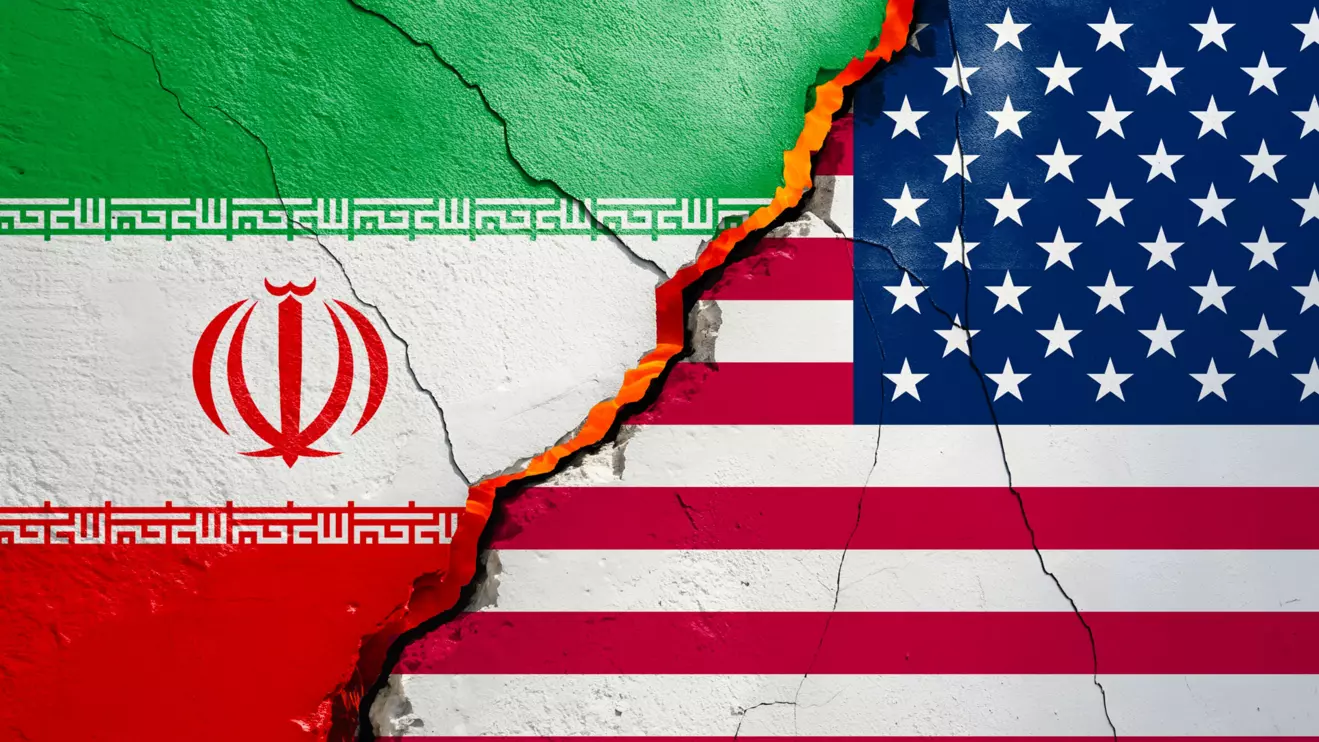
For years, Western policy toward Iran has been built on a quiet assumption: that the Islamic Republic can be managed, delayed, contained, but not fundamentally confronted.
That assumption is now colliding with reality. The nuclear clock is advancing, regional escalation is intensifying, and the military balance around Iran is shifting in ways not seen in years. What is unfolding is not another routine diplomatic cycle. It may be the final window in which pressure-backed negotiations can prevent a much wider conflict.
The danger is not only what Iran is doing. It is the possibility that the world continues treating the regime’s behavior as a series of negotiable files rather than as the operating logic of a system built on repression at home and coercion abroad.
For decades, policy debates have revolved around talks versus pressure, diplomacy versus confrontation. This framing is misleading.
Diplomacy is not belief. It is a tool governments use when alternatives are riskier or harder to sustain. Used correctly, negotiations can slow nuclear escalation, restore monitoring and reduce the odds of sudden war. But talks alone cannot change the political character of the system they engage.
The strategic question is therefore larger: how to manage immediate danger while steadily shifting the long-term balance between state power and society in Iran.
A coherent approach operates on parallel tracks. The first is containment: verifiable nuclear limits, intrusive inspections and clear consequences for violations. This reduces uncertainty and buys time. But time only has value if it is used to alter realities beyond the negotiating room.
The second track is structural pressure. The economic reach of the Revolutionary Guards is not incidental; it is the regime’s financial spine.
Sanctions that merely signal disapproval are ineffective. Pressure must focus on the commercial networks, shipping channels, energy revenues and financial intermediaries that sustain coercive power. Consistent enforcement, asset tracing and coordinated legal action matter more than declarations.
A third track, often treated rhetorically rather than strategically, concerns the Iranian people themselves.
The distance between society and state in Iran is one of the defining political facts of the region. Policy cannot engineer political change from abroad, and overt ownership of Iran’s future would discredit domestic actors.
But external actors can widen the space in which civic life survives: supporting access to uncensored information, strengthening digital security, maintaining educational and cultural channels, and offering refuge to those targeted for peaceful expression. These measures do not dictate outcomes; they reduce the regime’s monopoly over narrative and organization.
This framework also clarifies the role of power. The large-scale American military posture now surrounding Iran is not theatrical signaling; it is the material foundation of leverage.
History shows that regimes weaken when three forces converge: economic constraint, informational openness and sustained internal demand for accountability
Carrier groups, air assets and regional deployments change the strategic environment in ways communiqués never can. For a regime whose decisions are shaped by survival, visible force alters risk calculations more effectively than diplomatic language alone.
This is not an argument for impulsive war, but for credible pressure. When Tehran sees that escalation would carry real and immediate costs, diplomacy becomes a channel for de-escalation rather than a shield for delay.
Force posture has a second function. Authoritarian systems rely on the perception of permanence, the belief that external actors have accepted the regime as a fixed feature of the landscape.
Sustained strategic resolve signals the opposite: that repression and regional aggression carry accumulating consequences, and that time does not necessarily favor the rulers. In a society where the gap between state and population is already pronounced, that perception matters.
None of this promises rapid transformation. Systems built on security control rarely collapse on schedule.
But history shows that regimes weaken when three forces converge: economic constraint, informational openness and sustained internal demand for accountability. External policy can influence the first two. The third belongs to Iranians.
In this structure, negotiations serve a narrow but necessary function: they manage risk while broader pressures accumulate.
They are a stabilizing mechanism, not a solution. The objective should be understood, even if not theatrically declared: a political evolution in Iran in which authority derives from public consent rather than coercive guardianship.
“The question is no longer whether Iran will negotiate, but whether the world is prepared for what happens if negotiations fail.”
Hope, then, is not a slogan attached to diplomacy, nor a promise attached to regime-change rhetoric. It is the outcome of strategy, the gradual narrowing of a system’s capacity to repress and the gradual expansion of society’s capacity to act.
Stability imposed by fear is temporary. Stability grounded in legitimacy endures. The difference lies not in words at a negotiating table, but in the structures that policy chooses to strengthen over time.