The Lebanese government failed. And the world should say so clearly.
For weeks, Beirut's new leadership - President Joseph Aoun and Prime Minister Nawaf Salam - assured the international community that Hezbollah had disarmed south of the Litani River. The message was reassuring. It was also, as it turns out, either dangerously naive or deliberately false.
On March 2, Hezbollah launched a full-scale offensive. The weapons were there all along. The fighters had never left. The so-called disarmament was a carefully orchestrated deception, hidden stockpiles, concealed positions, and a strategic withdrawal designed to buy time and rebuild capability.
Lebanon's government either believed the lie or chose to look away. Either way, the result is the same: Hezbollah struck again, and Israel is once more left to deal with the consequences.
The Anatomy of a Failed State
Let us be honest about what Lebanon is. It is not a sovereign state in any meaningful sense. It is a territory contested between a legitimate government that lacks power and an armed militia that holds it. Aoun and Salam are not villains, ,they are men of goodwill trapped in an impossible situation. They want to disarm Hezbollah. They simply cannot.
The Lebanese army is under-equipped, underfunded, and riddled with Shia soldiers whose loyalties often lie closer to Hezbollah than to the state they serve.
The expulsion order against Iran's ambassador, defied openly under pressure from Parliament Speaker Nabih Berri, illustrated this paralysis with brutal clarity. A sovereign state issued a legal order. A militia's political ally overruled it. And the order was not enforced.
That is not sovereignty. That is theatre.
And then there is UNIFIL. Created in 1978, the United Nations Interim Force in Lebanon has had nearly half a century to achieve its mandate. It has not.
Through every Hezbollah arms shipment, every tunnel dug beneath its positions, every rocket stockpile assembled in villages under its watch, UNIFIL looked the other way. It became, in practice, a diplomatic fig leaf, providing the international community with the comfortable illusion that someone was managing the situation, while Hezbollah built one of the most heavily armed non-state forces in history.
The blue helmets did not fail through incompetence alone. They failed through design, a mandate so constrained, a mission so politically compromised, that meaningful action was never truly possible.
The result is 5,000 missiles, rockets and drones fired at Israel since March 2, from territory that UNIFIL was supposed to have kept weapons-free.
Israel's Dirty War
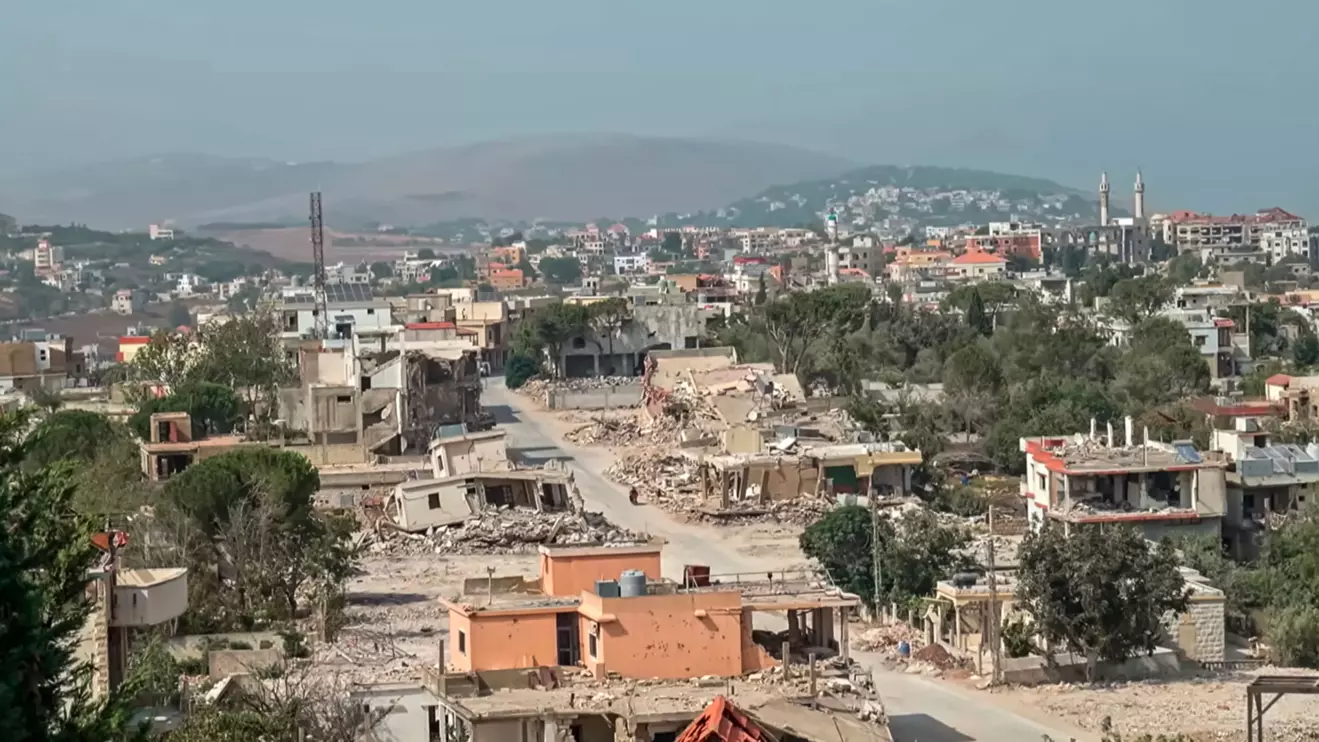
In this vacuum, Israel has no choice. The creation of a buffer zone extending to the Litani River is not aggression. It is the logical consequence of every failure that preceded it, Lebanon's failure to govern, UNIFIL's failure to deter, the international community's failure to hold Hezbollah accountable.
Israel is doing what no one else had the courage or the will to do: dismantling a terrorist infrastructure that has held Lebanon hostage for more than forty years, devastated its economy, corrupted its politics, and turned its south into a launchpad for attacks on a neighbouring democracy.
This operation should not fall on Israel alone. Western forces, those who created UNIFIL, who endorsed the Taif Agreement, who guaranteed the 2006 ceasefire, who signed the November 2024 deal, bear a share of responsibility for this catastrophe. Destroying Hezbollah's military capability is not only Israel's interest. It is a precondition for Lebanon's liberation.
Hezbollah has not protected Lebanon. It has consumed it. Forty years of Iranian proxy warfare have left the country economically ruined, politically paralysed, and militarily occupied from within. The Lebanese people - the majority of whom, polls show, want Hezbollah disarmed - deserve better.
The buffer zone Israel is establishing is not the end of Lebanon. It may, paradoxically, be the beginning of its salvation - the first real step toward a south that is genuinely demilitarised, genuinely controlled by the Lebanese state, and genuinely free from the Iranian stranglehold that has made normal life impossible for decades.
Nobody wanted this war. But somebody had to fight it.
Israel stepped up. The world should take note, and ask itself why it took so long.