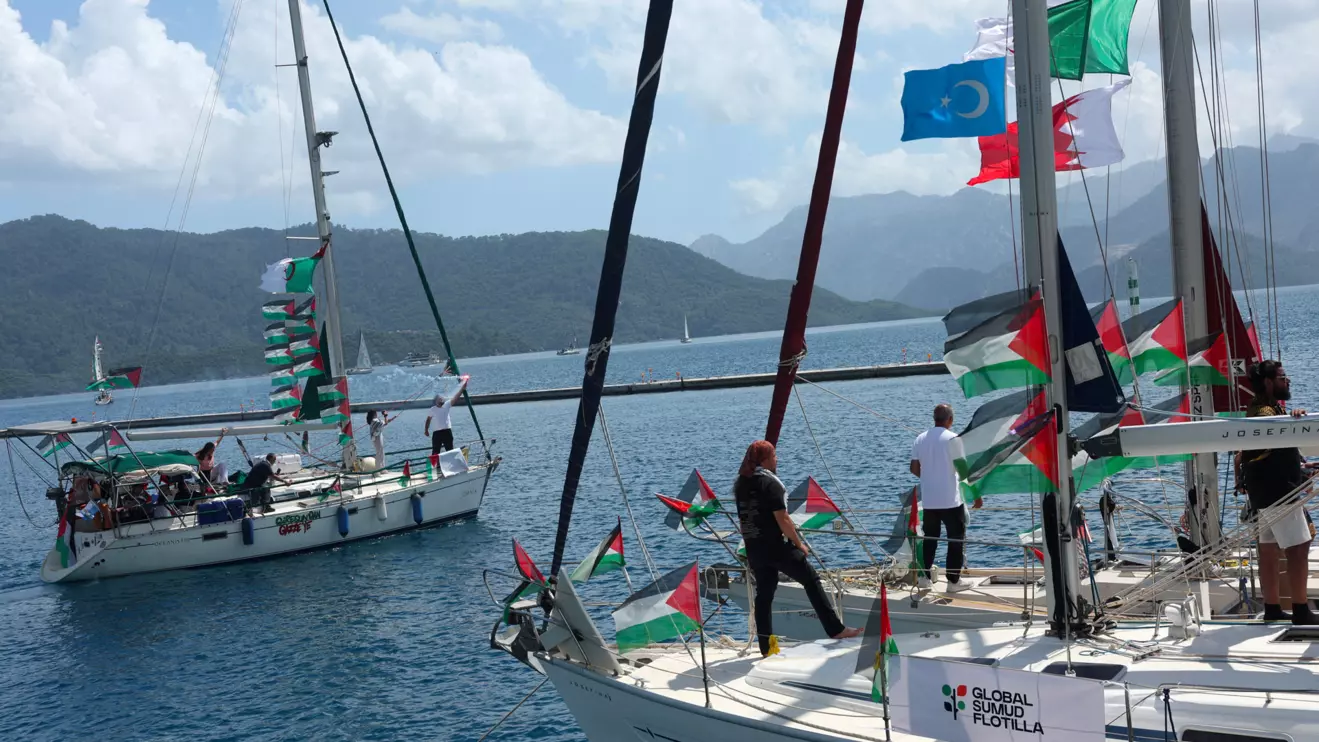
The Global Sumud Flotilla set sail from the Turkish port of Marmaris on Thursday, making its third attempt to reach Gaza after two previous departures ended in interception by Israeli forces.
The first departure was from Spain on 12 April, when Israeli forces stopped the vessels in international waters, transferring more than 100 pro-Palestinian activists to Crete and detaining two others in Israel.
The activists on board speak of urgent humanitarian need, of a besieged population desperate for aid at a moment when global attention has shifted toward the Iran war and its fallout across the region.
The rhetoric is powerful. The boats are not.
Here is the inconvenient detail that the flotilla's organisers would prefer not to discuss: the vessels involved are small sailing boats, the kind that struggle in open Mediterranean swells and would sink under the weight of any meaningful cargo. They are physically incapable of transporting humanitarian supplies in any quantity that would make a material difference to the people of Gaza.
This is not a humanitarian convoy. It is a sailing demonstration.
The gap between the stated mission, delivering aid to a suffering civilian population, and the actual capacity of the vessels involved is not a logistical oversight. It is the point.
The flotilla's purpose is not to feed Gazans. It is to provoke an Israeli interception, generate images of confrontation on the high seas, and produce a news cycle that frames Israel as the obstacle to humanitarian relief.
Propaganda dressed as solidarity
The operation is sophisticated in its design. By invoking civilian suffering and humanitarian law, the organisers place Israel in a no-win position: intercept the boats and become the aggressor; allow them through and validate the narrative that the blockade was never necessary.
What the flotilla does not carry, and has never carried, is serious humanitarian intent. Genuine aid organisations with genuine cargo use genuine ships, coordinate with established mechanisms, and do not require a media escort of activists livestreaming from the bow.
The Global Sumud Flotilla is, in the end, a floating press release, sent by people whose primary concern is not the people of Gaza, but the political cause that uses them.