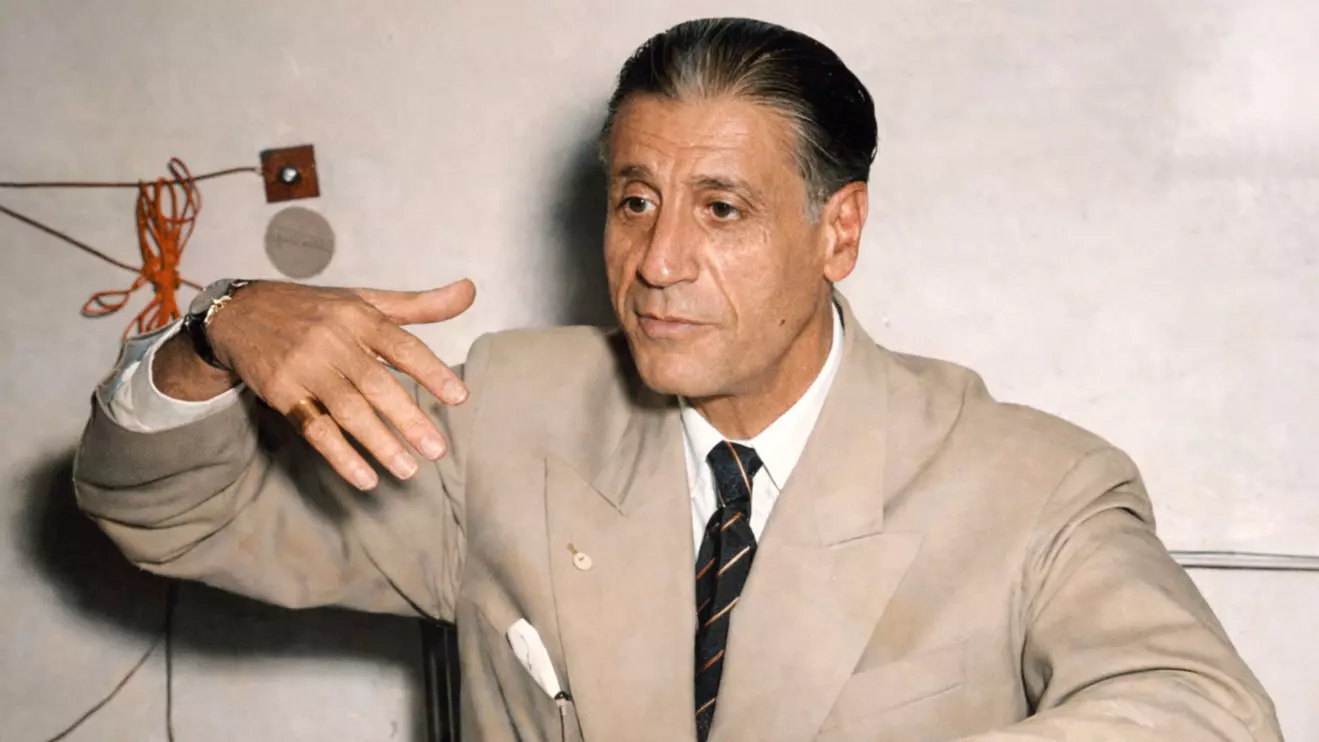
Among the more paradoxical chapters in Lebanese political history is the relationship between the Kataeb Party (founded on the model of European fascist movements) and the country’s small but vibrant Jewish community.
Far from being adversaries, the two groups developed a bond of mutual protection that lasted through some of Lebanon’s most turbulent decades.
By the 1970s, the Kataeb had grown into one of Lebanon’s dominant political forces, boasting an estimated membership of between 60,000 and 70,000. The overwhelming majority, around 85 percent, were Maronite Christians.
Yet the party’s rolls also included members of minority Christian communities, Shiites, Druze, and Jews. In the context of the Arab world, this was a remarkable breadth of sectarian inclusion.
Defenders of the Wadi Abou Jamil
The roots of the Kataeb–Jewish relationship predate the Lebanese Civil War by several decades. When the party was founded in 1936 by Pierre Gemayel, Lebanon’s Jewish community in Beirut was already under pressure from rising pan-Arab sentiment and the provocations of the Mufti of Jerusalem, Haj Amin el-Husseini, who had fled to Lebanon in 1937 and began inciting violence against Jews.
It was in this period that the Phalangists established themselves as protectors of Lebanon’s Jewish neighborhoods. Whenever pro-Palestinian demonstrations threatened the Wadi Abou Jamil, Beirut’s historic Jewish quarter, it was the Kataeb, alongside the Lebanese state, that stepped in to defend it. The Kataeb Youth Movement even forged an institutional connection with the Jewish Scouts, an extraordinary arrangement in the Arab political landscape of the era.
When the State of Israel was proclaimed in May 1948, a mob armed with bricks and incendiary grenades marched toward the Wadi Abou Jamil, only to be turned back by Lebanese police and Kataeb Party militias standing guard at the neighborhood’s edge.
The 1948 War and Its Aftermath
Lebanon’s formal participation in the 1948 Arab–Israeli War placed the country’s Jewish community in a precarious position. The day after Israel declared independence, bombs exploded in Jewish residential areas, and the Lebanese government declared a state of emergency. Anti-Jewish demonstrations swept the streets of Beirut.
Yet even as Lebanon sent troops to the border, the Kataeb continued to serve as a buffer between Jewish neighborhoods and those who wished to harm them.
Despite the violence of that period, the Jewish community in Beirut had in fact grown during the preceding years, swelled by refugees from Syria and Iraq. The 1947 Aleppo Pogrom alone drove a large wave of Syrian Jews south to Beirut. The city briefly housed one of the largest Jewish communities in the Arab world.
Pragmatism Behind the Alliance
The relationship was, at its core, a pragmatic one. The Kataeb’s ideology was Lebanese nationalist, deeply opposed to pan-Arabism and to the growing Palestinian militant presence in Lebanon. These positions naturally aligned with the interests of Lebanese Jews, who likewise felt threatened by pan-Arab and pan-Islamist movements. Both communities had reason to resist the same forces.
The party’s subsequent collaboration with Israel during the Civil War further reinforced these ties, even as it deepened the Kataeb’s estrangement from the Arab nationalist mainstream.
A Final Act of Protection
By 1975, fewer than 1,000 Jews remained in Lebanon. By 1980, the number had fallen to barely 200 to 300 people.
When Israeli forces entered Lebanon in 1982, the handful of Jewish families still in Beirut saw it as a guarantee of safety. But when Israel withdrew in 1984, their situation deteriorated rapidly. Islamist militias, perceiving an obvious link between Lebanese Jews and the Israeli state, made continued Jewish life in Lebanon impossible. Eleven Jews were kidnapped and killed.
The Kataeb responded with one final act of protection: those Jewish families who remained were quietly removed overnight from the Wadi Abou Jamil and relocated to the safety of the Christian enclave, an understated coda to half a century of an alliance that history has largely overlooked.