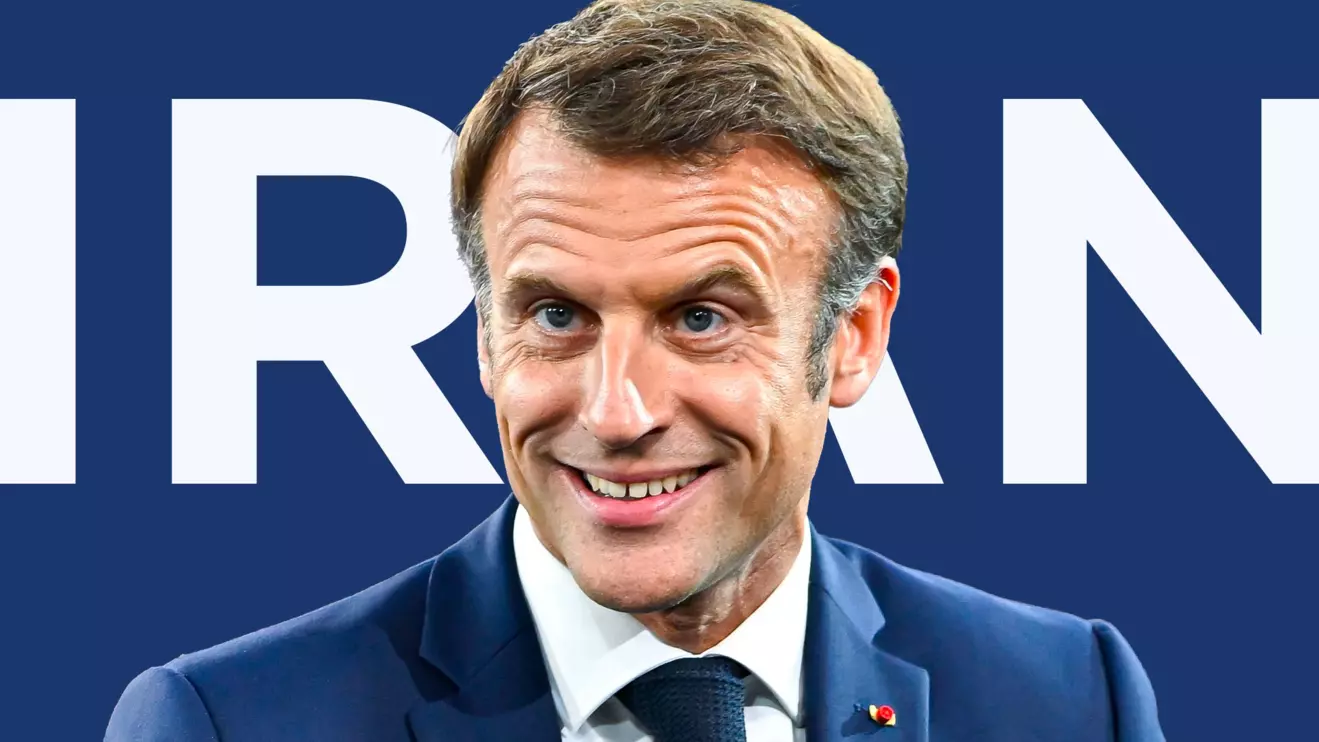
Like clockwork, Emmanuel Macron rushed to his keyboard Saturday to remind the world that he exists. As US and Israeli strikes reshaped the Middle East in real time, France's increasingly irrelevant president issued yet another carefully worded statement that will change absolutely nothing.
Macron declared that the "ongoing escalation is dangerous for all" and must "cease immediately," adding that Iran "must understand it now has no other option than to engage in good-faith negotiations." He also called for an "urgent meeting of the UN Security Council," reminding everyone that France is "aware of its international responsibilities."
One might ask: which responsibilities, exactly? The responsibility of not being consulted? Of not being informed? Of watching history unfold on a screen like the rest of us?
Because here is the uncomfortable truth: Macron was not in the loop. Washington and Jerusalem planned and executed one of the most significant military operations in Middle Eastern history — and nobody called Paris. Not even a courtesy text.
Naivety Dressed as Statesmanship
The statement itself is a masterclass in diplomatic irrelevance. Calling on Iran to engage in "good-faith negotiations" after decades of deception, proxy warfare, and nuclear brinkmanship reveals either a stunning naivety about the Iranian regime — or a cynical attempt to appear balanced while contributing nothing.
Iran does not respond to strongly worded French communiqués. It never has. It never will.
The Incredible Shrinking President
Let us not forget the context. Macron is a president who commands an approval rating that would embarrass a local mayor. His authority at home is shattered. His influence abroad, never particularly formidable, has evaporated entirely. France was sidelined from AUKUS. It was ignored in Ukraine's most critical moments. And now, on the biggest night in Middle Eastern history in decades, it was not even given a heads-up.
Yet there he is, calling for a UN Security Council meeting, as if a gathering of diplomats in New York will somehow pause a war that has already begun.
The Ridicule Is Deserved
To be fair to Macron, he is consistent. Whether it is his quixotic attempts to mediate with Putin, his lectures to African leaders who have since shown him the door, or his periodic reinventions as Europe's strategic visionary, the pattern never changes. Grand words. Zero impact.
Saturday's statement on Iran is simply the latest chapter in a foreign policy defined by the desperate need to be seen — rather than the actual ability to act.
The Middle East is on fire. And Emmanuel Macron is asking for a meeting.
Très bien, Monsieur le Président. We'll let you know how it turns out.