Tunisia
Biggest protest in years hits Tunisia
Thousands of Tunisians joined the largest protest against President Kais Saied in years on Saturday, accusing him of undermining democracy and mishandling the economy in a growing challenge to his rule.

Tunisia did not stall. It receded. The country that once sold itself as the only successful child of 2011 now lives under a presidency that concentrates power, criminalizes dissent, and cannot keep the lights on.
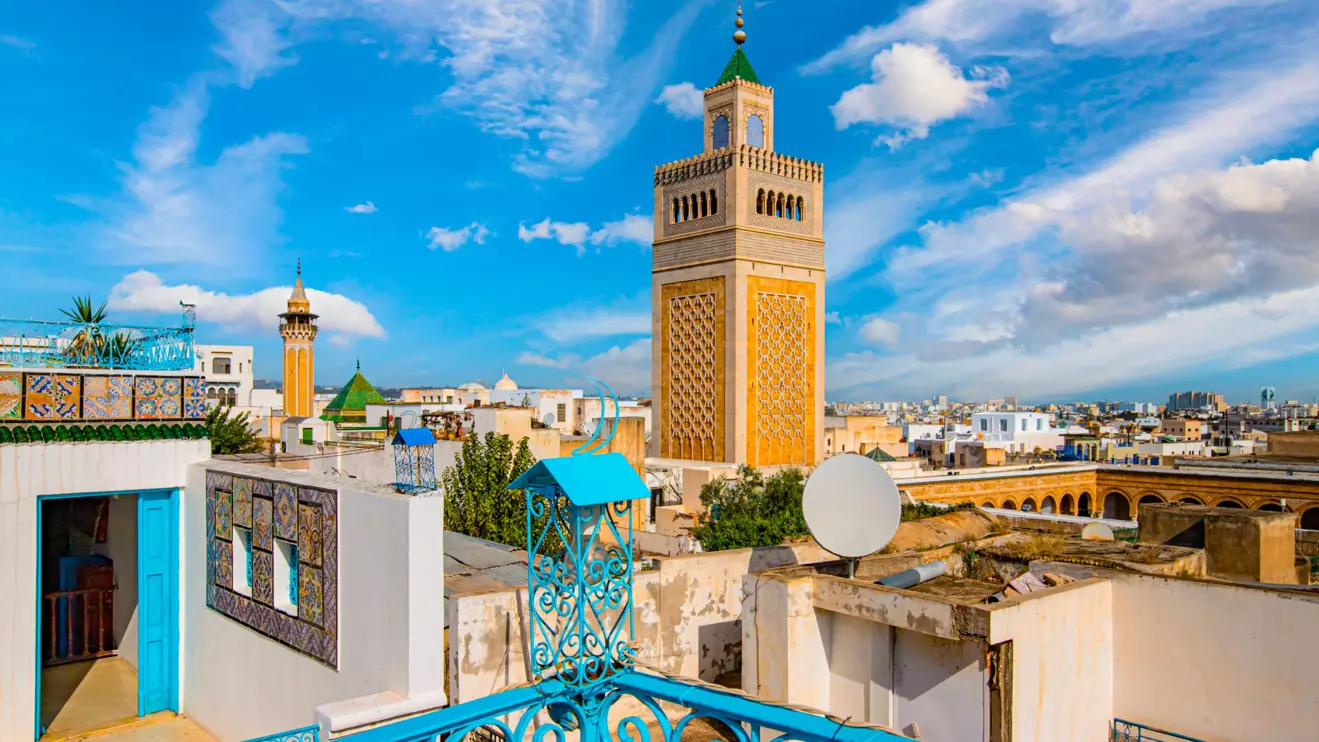
Tunis, Tunisia © Mena Today
Tunisia did not stall. It receded. The country that once sold itself as the only successful child of 2011 now lives under a presidency that concentrates power, criminalizes dissent, and cannot keep the lights on.
Kais Saied promised to rescue the state from a venal political class. He delivered a narrower cage and a thinner table.
After the 2021 power grab—parliament frozen, then dissolved; a constitution rewritten for one man; judges purged; opponents, journalists and civic workers prosecuted for “conspiracy” and “false news”—growth collapsed, then crawled back at a rate too weak to employ the young.
Unemployment still hovers near 15 percent. Debt rose. The state leaned on the banks after Saied treated an IMF program as foreign diktat. Inflation cooled on paper; food, medicine, water and electricity did not. The slogan of 2011—“work, freedom, dignity”—is shouted again, this time at the man who claimed to incarnate it.
This is not self-reliance. It is austerity without a plan and authoritarianism without competence. Speech is a felony. Associations are suspended. A state of emergency is stretched past the law that created it. Prime ministers come and go. The shortages remain.
It is in this wreckage that nostalgia for Zine El Abidine Ben Ali, not as a program, and not among those who remember the police and the plunder, but as a bitter folk memory among the young: security, and a basket ten dinars could still fill. That nostalgia indicts the present. It does not acquit the past.
Ben Ali’s Tunisia was a police state that eventually ran out of legitimacy. Saied’s is a police state that has discarded even the old regime’s limited ability to deliver predictability.
The post-2011 decade failed differently: noisy parties, captured institutions, an economy that never produced enough work. Saied understood the anger.
He did not understand the job. He smashed pluralism and kept the scarcity. Many Tunisians still judge government by results, not procedure. On results, the captain has failed.
What is required is to name the present without euphemism.
Saied did not restore the dignity of the state. He personalized it. He did not cleanse politics. He replaced a quarreling parliament with a silent one.
Tunisia now emigrates its talent, jails its critics, and waits for a theory of “the people” that never quite includes the people standing in the dark.
By Francois Igmen
Thousands of Tunisians joined the largest protest against President Kais Saied in years on Saturday, accusing him of undermining democracy and mishandling the economy in a growing challenge to his rule.
Many Israelis have stopped believing that Donald Trump will finish the Iranian nuclear question. I am one of them, and I would like to be proven wrong.
Seven months into this war, the Islamic Republic is in the tightest corner of its forty-seven years. That is not cheerleading; it is arithmetic.
To make this website run properly and to improve your experience, we use cookies. For more detailed information, please check our Cookie Policy.
Necessary cookies enable core functionality. The website cannot function properly without these cookies, and can only be disabled by changing your browser preferences.