Let us be clear from the outset. The two-week ceasefire brokered between the United States and Iran - with Israel as the silent third party and Pakistan as the unlikely intermediary - will not lead to peace.
The conditions for a durable agreement do not exist. The gaps between the two sides are not negotiable differences waiting to be bridged. They are fundamental incompatibilities.
The military offensive against Tehran will almost certainly resume. The only question is when.
The American position has been consistent since day one. The United States demands the complete dismantlement of Iran's nuclear programme, not a freeze, not a cap, not another round of inspections that Tehran will game for years.
Dismantlement. It also demands an end to Iran's ballistic missile production, weapons that have struck Gulf states and Israel with devastating effect, and a full severance of support for the regional proxy network: Hezbollah, Hamas, the Houthis.
These are not opening positions. They are the floor.
What Tehran is offering instead
Iran's response has been to demand that Lebanon be included in the ceasefire framework. On the surface, this sounds like a reasonable de-escalation request. It is not.
It is a calculated manoeuvre designed to preserve Hezbollah's military infrastructure on Israel's northern border, to freeze the militia in place, armed and intact, financed and trained by the Islamic Revolutionary Guard Corps, ready for the next round.
It is worth noting that even the Lebanese government itself has banned Hezbollah's military wing. The notion that an international ceasefire should entrench the very force that has spent decades hollowing out Lebanese sovereignty is not a peace proposal. It is an insult to the Lebanese state dressed up as diplomacy.
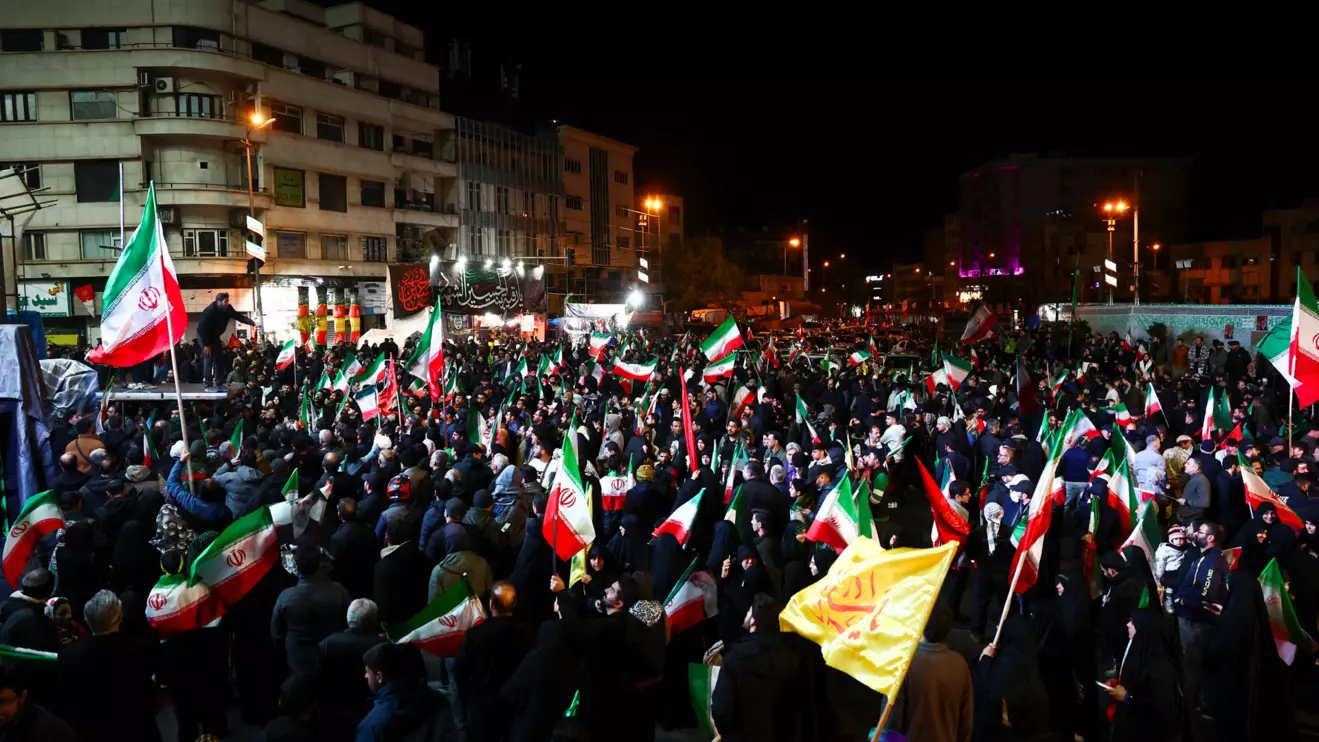
Iran's government media, meanwhile, is declaring victory. The mullahs' state broadcasters are telling their domestic audience that Tehran has triumphed, that the ceasefire is proof that America blinked. This is not the language of a regime preparing concessions. It is the language of a regime preparing to outlast the pause.
The arithmetic of failure
The distance between the two positions is not a negotiating gap, it is a chasm. Washington is asking Iran to surrender the three pillars on which the Islamic Republic has built its regional power: the nuclear threat, the missile deterrent and the proxy network. Tehran has invested forty years and hundreds of billions of dollars in those pillars. No regime willingly dismantles its own survival architecture.
And yet, if Iran keeps them, no agreement is possible. The logic is brutal and simple.
What the next two weeks will reveal is not whether a deal can be struck - it probably cannot - but how long both sides are willing to maintain the fiction that one is within reach.
The United States, if it remains firm, will eventually conclude that Iran is not negotiating in good faith. Tehran, emboldened by its domestic propaganda, has no political incentive to move.
History offers few examples of a temporary ceasefire with Iran's Revolutionary Guard that produced lasting results.
The 2015 nuclear deal - negotiated over years, involving six world powers - began unravelling within months of implementation. A two-week truce brokered in the middle of an active conflict, with Lebanon unresolved, with Hezbollah still armed, with Iran's media claiming victory, has even less foundation to stand on.
The honest assessment is this: the guns will almost certainly return. The only variable is the pretext, whether Iran provides one through a proxy attack, a nuclear provocation, or simply by refusing every American demand until Washington's patience, already described as thin by Vice President Vance, runs out entirely.
Two weeks. No plan. No shared definition of success. No realistic path to the agreement both sides claim to want.
This is not a ceasefire on the road to peace. It is a pause on the road to the next round.