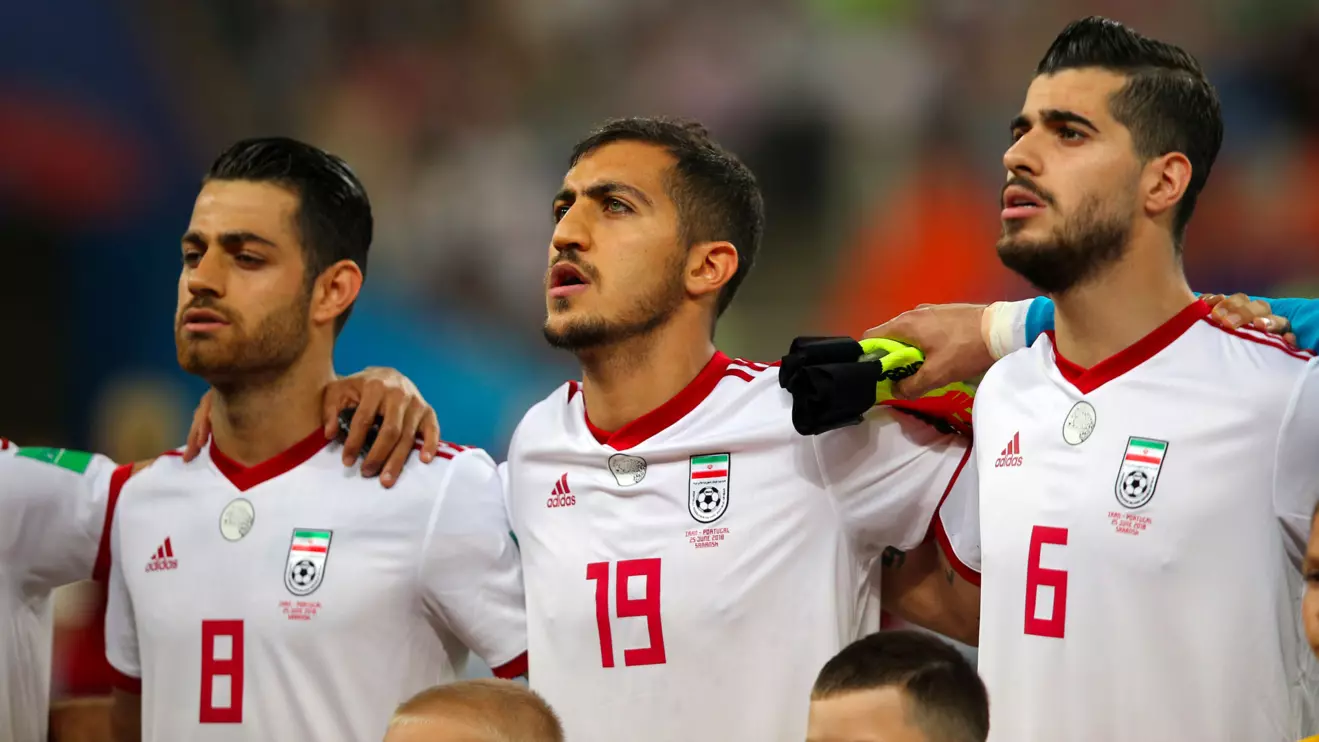
Iran's Football Federation has asked FIFA to help obtain multi-entry visas for its players so they can travel between their Mexican base camp and their matches in the United States, federation president Mehdi Taj announced Thursday.
"FIFA should ensure the delivery of a multi-entry visa so that players can enter the US and return to Mexico," Taj said in a video circulated by Iranian state media.
The request follows Iran's decision - approved by FIFA on Saturday - to relocate its World Cup base camp from Tucson, Arizona, to Tijuana, the Mexican border city just across from California. The move reflects the extraordinary diplomatic complexity of hosting a team whose government is designated as a state sponsor of terrorism by the United States.
Iran's three group-stage matches are all scheduled on American soil: Los Angeles on June 15 against New Zealand, Los Angeles again on June 21 against Belgium, and Seattle on June 26 against Egypt. Each match requires players to cross the US-Mexico border, hence the need for multi-entry visas.
What FIFA is choosing not to say
The visa logistics are complicated enough. But they are not the most uncomfortable aspect of this situation.
Iran's Football Federation does not operate independently. It functions under the close supervision of the Islamic Revolutionary Guard Corps, a body designated as a terrorist organisation by the United States government, the very country that will be issuing these visas. Some federation officials are, by credible accounts, active agents of Iranian intelligence services, willingly or otherwise.
FIFA's response to all of this has been its trademark: enthusiastic cooperation, carefully worded statements, and a studied determination not to ask the questions that most obviously need asking.
The world's governing body of football is now in the position of lobbying the US State Department to facilitate the entry of officials from a IRGC-supervised federation into American territory, during a tournament co-hosted by a country at war with Iran.