History rarely offers clean victories. Transformational moments tend to emerge from prolonged tension, moral ambiguity, and leaders willing to act when outcomes are uncertain. The Iranian crisis sits firmly within this historical pattern.
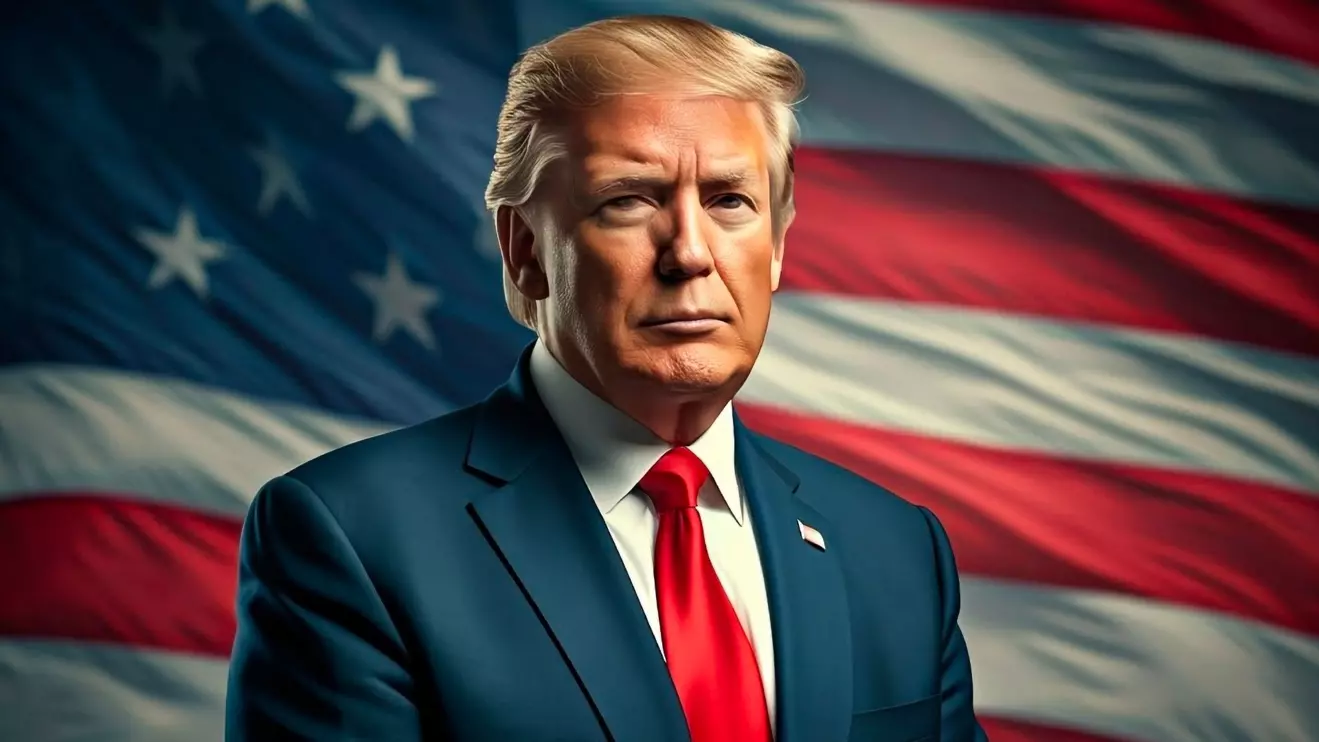
After more than four decades of repression, ideological rigidity, and regional destabilization, the question is no longer whether the Islamic Republic of Iran is under strain, but whether the current moment can be turned into decisive change. In that context, the leadership of Donald Trump may prove historically consequential.
Since the 1979 revolution, the Iranian regime has survived not because it enjoyed popular legitimacy, but because it mastered endurance.
It absorbed sanctions, exploited diplomatic caution, and relied on internal repression to outlast both domestic opposition and international pressure.
Western policy oscillated between containment and engagement, often prioritizing short-term stability over long-term resolution. The result was a frozen conflict: predictable, dangerous, and unresolved.
What altered this equilibrium was not a sudden moral awakening, but pressure applied with unusual consistency. Trump’s approach to Iran departed sharply from decades of incremental diplomacy.
By withdrawing from the nuclear agreement and reinstating comprehensive sanctions, his administration forced the regime into a position it had long avoided—one where economic survival, internal legitimacy, and regional ambitions collided simultaneously.
The consequences were visible. Iran’s economy deteriorated rapidly. Inflation surged, public services weakened, and elite cohesion eroded.
More importantly, fear within society began to crack. Protest movements grew broader and bolder, driven increasingly by women and young people who no longer sought reform within the system, but its end.
History shows that regimes rarely fall from external force alone; they collapse when internal pressure becomes irreversible. In this sense, external pressure functions as a catalyst rather than a cause.
Serious history is not written in absolutes. It is written in consequences
This is where the historical weight of leadership matters. Decisive moments are not defined by rhetoric, but by whether a leader recognizes when structural weakness can be accelerated into transformation.
Trump’s critics rightly note his unconventional style and polarizing conduct. Yet history is indifferent to style. It measures outcomes. If sustained pressure contributes to the weakening or eventual collapse of a theocratic system that has shaped repression for generations, the magnitude of that outcome dwarfs the controversies surrounding the individual who helped precipitate it.
The phrase “worth thousand Nobel Prizes” is not hyperbole; it is scale. A Nobel Prize recognizes a singular contribution. The dismantling of a regime that suppresses women, silences dissent, fuels regional instability, and exports ideological extremism would generate multiple, simultaneous goods: human freedom, regional security, reduced conflict, and moral clarity. No single award could adequately reflect such an outcome.
A brief comparison with Ukraine reinforces this perspective. Ukraine’s resistance demonstrated how assumptions of permanence, about borders, power, and submission, can be overturned when pressure meets resolve.
Iran represents a different theater, but the same historical principle applies: systems built on coercion appear stable until they are not. When internal resistance aligns with external pressure, history accelerates.
None of this guarantees success. History offers opportunities, not assurances. The Iranian regime retains coercive power, and transitions are rarely orderly.
But moments of genuine possibility are rare, and they demand leadership willing to accept risk rather than defer responsibility.
Whether Trump ultimately “enters history” depends not on intent or acclaim, but on whether decisive pressure is maintained long enough to allow internal forces to finish what fear once prevented.
Serious history is not written in absolutes. It is written in consequences. If Iran’s long-frozen trajectory bends toward liberation, then this moment, contested, uncomfortable, and unexpected, will be judged as one of extraordinary weight. Not because of who stood at the center of it, but because of what finally changed.