Iran
Iran accuses Trump of trying to buy time
U.S. President Donald Trump indefinitely extended the ceasefire with Iran on Tuesday, hours before it was set to expire, to allow the two countries to continue peace talks.
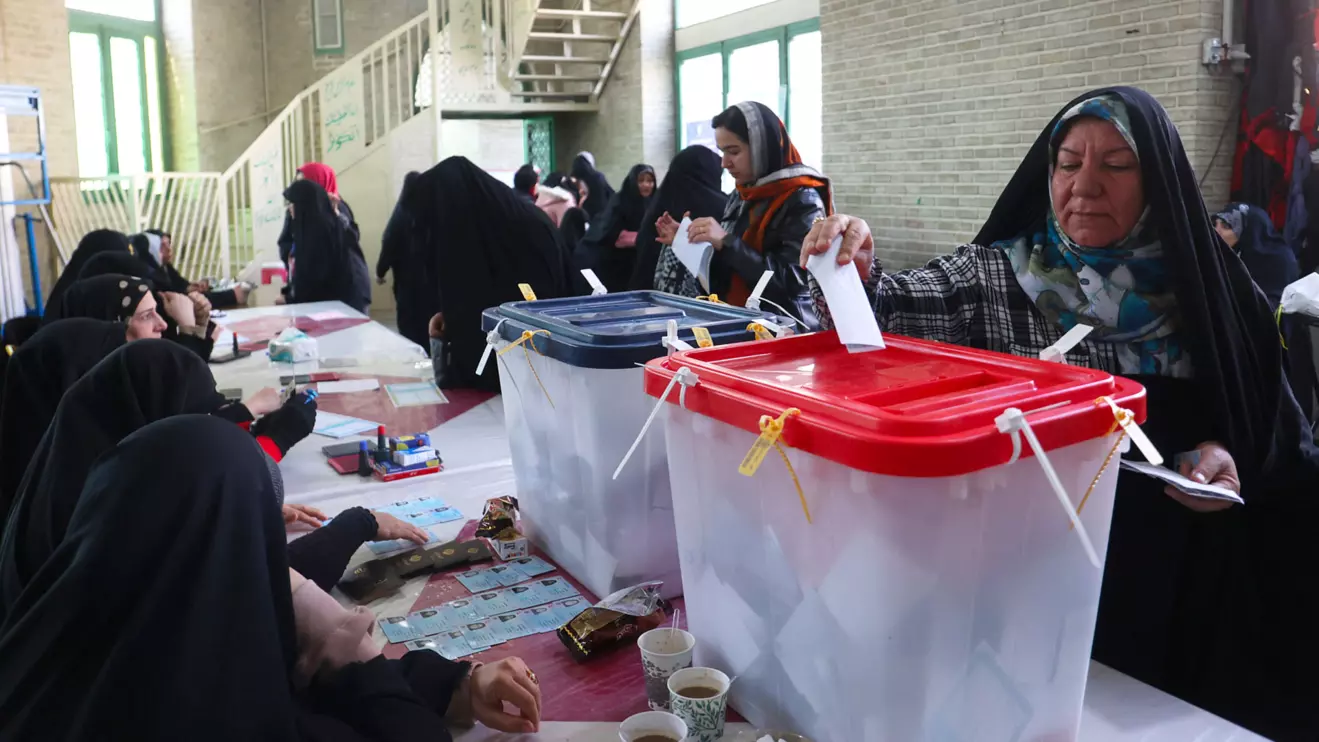
Unofficial reports on Saturday estimated turnout in Iran’s parliamentary election, seen as a test of the clerical establishment’s legitimacy, at about 40%, which would be the lowest turnout since the 1979 Islamic revolution.
An Iranian woman casts her vote during parliamentary elections at a polling station in Tehran, Iran, March 1, 2024. Majid Asgaripour/WANA (West Asia News Agency) via Reuters
Unofficial reports on Saturday estimated turnout in Iran’s parliamentary election, seen as a test of the clerical establishment’s legitimacy, at about 40%, which would be the lowest turnout since the 1979 Islamic revolution.
With heavyweight moderates and conservatives staying out and reformists calling Friday's election unfree and unfair, the contest was essentially among hardliners and low-key conservatives who proclaim loyalty to Islamic revolutionary ideals.
The interior ministry may announce the official turnout later on Saturday.
Tehran's rulers needed a high turnout to repair their legitimacy, badly damaged by anti-government protests in 2022-23 that spiralled into some of the worst political turmoil since the revolution.
But official surveys suggested only about 41% of eligible Iranians would vote. That appeared to be the case, as Hamshahri newspaper said more than 25 million people, or 41% of eligible voters, had turned out.
Iran's turnout hit a record low 42.5% in 2020 parliamentary elections, while about 62% of voters participated in 2016.
Hamshahri called Friday's turnout "a 25-million slap” to calls for an election boycott, in a front-page headline next to a depiction of a ballot paper smacking U.S. President Joe Biden in the face.
The election coincided with growing frustration over Iran's economic woes and restrictions on political and social freedoms.
It was twinned with a vote for the 88-seat Assembly of Experts, an influential body tasked with choosing the 84-year-old Khamenei's successor.
Editing by William Mallard
U.S. President Donald Trump indefinitely extended the ceasefire with Iran on Tuesday, hours before it was set to expire, to allow the two countries to continue peace talks.
Lebanon's prime minister and French President Emmanuel Macron will discuss on Tuesday how to strengthen the country's hand in possible direct negotiations with Israel in the United States later this week, as Beirut turns to a trusted European ally.
President Donald Trump told CNBC in an interview on Tuesday that he did not want to extend a ceasefire with Iran, adding the U.S. was in a strong negotiating position and would end up with what he called a great deal.
To make this website run properly and to improve your experience, we use cookies. For more detailed information, please check our Cookie Policy.
Necessary cookies enable core functionality. The website cannot function properly without these cookies, and can only be disabled by changing your browser preferences.