Iran
Liberation is not a slogan. It is a set of decisions
Seven months into this war, the Islamic Republic is in the tightest corner of its forty-seven years. That is not cheerleading; it is arithmetic.

The United Nations Relief and Works Agency for Palestine Refugees (UNRWA) is set to open a representation office in Ankara within weeks, according to its Commissioner-General Philippe Lazzarini.
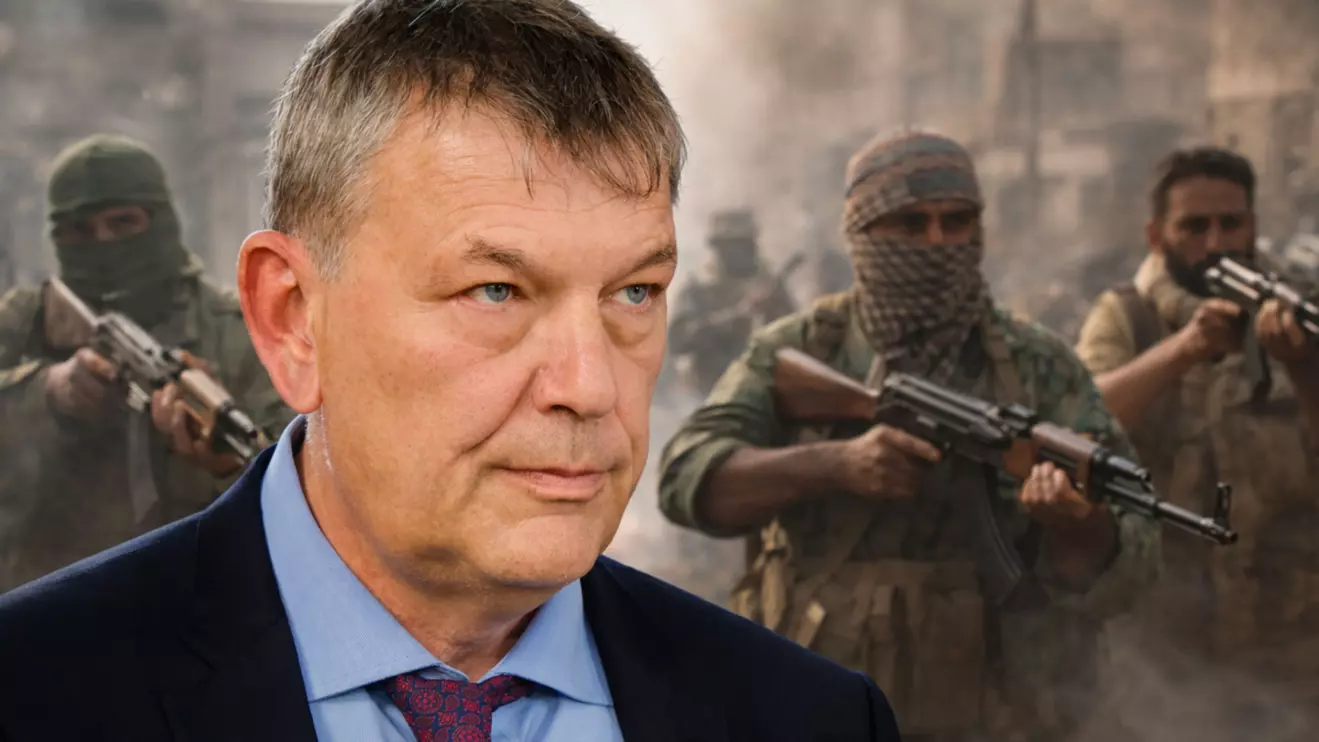
Philippe Lazzarini © Mena Today
The United Nations Relief and Works Agency for Palestine Refugees (UNRWA) is set to open a representation office in Ankara within weeks, according to its Commissioner-General Philippe Lazzarini.
This decision, announced Thursday, represents yet another troubling chapter in the agency's controversial history and raises serious questions about UN Secretary-General António Guterres' judgment and oversight.
UNRWA's credibility has been fundamentally undermined by its documented ties to terrorist organizations. The agency worked closely with Hamas and Palestinian Islamic Jihad for years in Gaza, with some employees directly participating in the October 7, 2023 massacres in Israel.
These are not mere allegations but established facts that should have triggered a complete overhaul of the organization, if not its dissolution.
Yet instead of accountability, we witness expansion. Lazzarini announced this development in Ankara just one day after revealing the dismissal of nearly 600 Gaza-based UNRWA employees for financial reasons, a decision that exposes the agency's misplaced priorities.
An Ideological Alliance
The choice of Ankara as UNRWA's new hub is hardly coincidental. Turkey under President Recep Tayyip Erdoğan has long hosted Hamas leadership and provided sustained support to the terrorist movement.
Lazzarini praised Turkey's "political and financial support" for Palestinian refugees and the Palestinian cause, signaling an ideological alignment that should alarm anyone committed to peace and stability in the Middle East.
Philippe Lazzarini himself has consistently championed the Palestinian cause, including its violent manifestations. His leadership has been marked not by neutrality and humanitarian focus, but by political activism that betrays the UN's foundational principles.
Where is UN Leadership?
The critical unanswered question is why Secretary-General Guterres permits such an opening. By allowing UNRWA to establish itself in a country that actively supports designated terrorist organizations, the UN is legitimizing partnerships that undermine international security and the integrity of humanitarian work.
This is not merely administrative reorganization, it represents a strategic decision to align UNRWA more closely with actors hostile to peace.
The justification that this will be a "representation office" and "advocacy bureau" that "could host certain agency functions that can be performed remotely" rings hollow. What functions exactly? Coordinating with Hamas operatives? Facilitating financial flows to terrorist networks?
The Ankara office opening illustrates the United Nations' systemic failures: lack of accountability, tolerance for terrorist sympathies within its agencies, and inability to reform compromised institutions. UNRWA has operated for over seven decades, ostensibly to assist Palestinian refugees in Gaza, the West Bank, Lebanon, Jordan, and Syria. Yet its mission has been corrupted by political ideology and infiltration by extremist elements.
The international community has a right to demand answers. Why does UNRWA continue to operate with minimal oversight?
Why are documented connections to terrorism insufficient to trigger fundamental reform? And why is the UN Secretary-General enabling an agency with such a tainted record to expand operations in partnership with a government that harbors terrorists?
The Need for Reform
The United Nations was established to promote peace, security, and humanitarian assistance. UNRWA's trajectory, from Hamas collaboration to expansion in Erdoğan's Turkey, represents a betrayal of these ideals.
The agency requires not a new office in Ankara but comprehensive investigation, radical reform, or outright replacement by organizations capable of providing genuine humanitarian assistance without political bias or terrorist entanglements.
Until UN leadership confronts these uncomfortable truths, episodes like the Ankara office opening will continue to erode the organization's credibility and effectiveness.
The question is no longer whether UNRWA is fit for purpose, the evidence suggests it is not, but whether the United Nations itself possesses the integrity to address this failure.
The world deserves better. Palestinian refugees deserve better. And the cause of peace demands institutions worthy of trust, not agencies compromised by the very forces they should oppose.
Seven months into this war, the Islamic Republic is in the tightest corner of its forty-seven years. That is not cheerleading; it is arithmetic.
Israel goes to the polls on October 27 in what may be its most consequential election in years - the first since October 7, the wars with Hamas and Hezbollah, and the seven-month conflict with Iran.
The new year began with a scandal. A documentary built on the testimony of twenty-four anonymous Israeli soldiers and intelligence officers won a prize in Venice and set off a fury at home. The chief of staff has ordered a legal hunt for the sources; the culture minister speaks of treason.

To make this website run properly and to improve your experience, we use cookies. For more detailed information, please check our Cookie Policy.
Necessary cookies enable core functionality. The website cannot function properly without these cookies, and can only be disabled by changing your browser preferences.