US-Iran talks in Switzerland yield "Encouraging progress" on Lebanon and Hormuz

1 min Edward Finkelstein

Iranian and American negotiators have reached agreement on mechanisms to halt fighting in Lebanon and secure the Strait of Hormuz, Pakistan and Qatar announced Monday following the first round of formal negotiations at the Bürgenstock resort in the Swiss Alps.

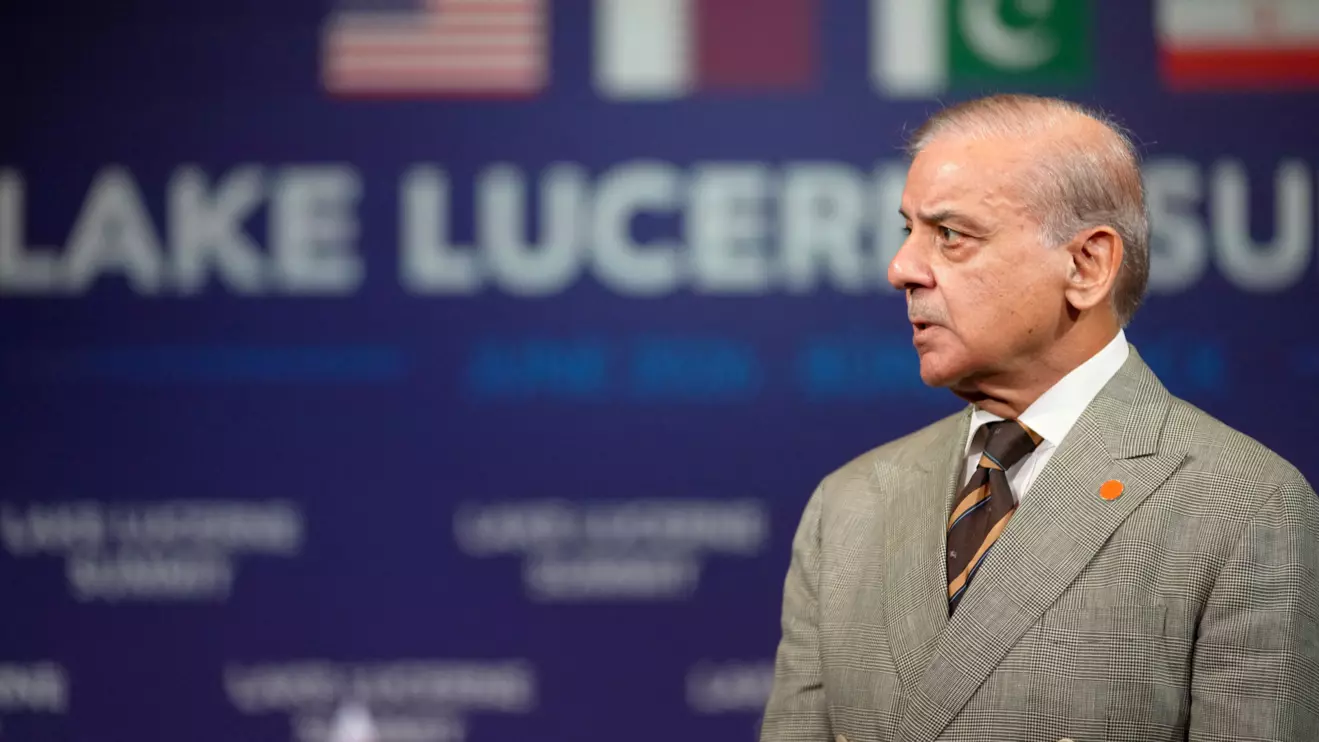
Pakistan's Prime Minister Shehbaz Sharif attends a quadrilateral meeting between the U.S., Iran, Pakistan, and Qatar at the Lake Lucerne Summit, aimed at advancing a deal to end the Middle East conflict, at Buergenstock Resort Lake Lucerne, near Stansstad, Switzerland, June 21, 2026. Reuters/Nathan Howard

Pakistan's Prime Minister Shehbaz Sharif attends a quadrilateral meeting between the U.S., Iran, Pakistan, and Qatar at the Lake Lucerne Summit, aimed at advancing a deal to end the Middle East conflict, at Buergenstock Resort Lake Lucerne, near Stansstad, Switzerland, June 21, 2026. Reuters/Nathan Howard

Iranian and American negotiators have reached agreement on mechanisms to halt fighting in Lebanon and secure the Strait of Hormuz, Pakistan and Qatar announced Monday following the first round of formal negotiations at the Bürgenstock resort in the Swiss Alps.

The joint statement from Islamabad and Doha described "encouraging progress" at the luxury hotel talks, with both delegations agreeing on "a roadmap to reach a final agreement within 60 days, laying the foundation for the immediate launch of new technical discussions" for the remainder of the week.

No further details were provided by the mediators on the specific mechanisms agreed upon for Lebanon or Hormuz, leaving significant questions unanswered about how the ceasefire will be enforced and who will guarantee Hezbollah's compliance.

The announcement represents the first concrete outcome from the negotiations opened under the US-Iran memorandum of understanding signed last week, which committed both sides to a 60-day process aimed at producing a permanent settlement to the regional war that has killed thousands since February 28.

Pakistan and Qatar, who have played central mediating roles throughout the conflict, framed the day's outcome as a foundation rather than a conclusion, with technical working groups expected to dig into the details in the days ahead.

The hardest questions, Iran's nuclear programme, its ballistic missile arsenal, and the future of Hezbollah, remain to be addressed.

Edward Finkelstein

Edward Finkelstein

From Athens, Edward Finkelstein covers current events in Greece, Cyprus, Turkey, Egypt, Libya, and Sudan. He has over 15 years of experience reporting on these countries. He is a specialist in terrorism issues

Related

Qatar

Qatar keeps gas flowing through Hormuz

Four liquefied natural gas tankers controlled by Qatar were heading into the Strait of Hormuz on Monday, despite a fall in ship traffic after Iran announced that it had again closed the waterway over the weekend, shipping data showed.

Iran

This man is dangerous

US Vice President JD Vance expressed hope Sunday for "a new chapter" in relations with Iran as talks opened in Switzerland to finalise a memorandum of understanding already showing cracks just four days after its signing, strained by continued fighting in Lebanon and a fresh warning from Donald Trump that Tehran must prevent Hezbollah from "causing trouble."

Israel

Israeli forces authorized to respond to threats

Israeli soldiers are free to act without restriction to eliminate threats in Lebanon, Israeli Defence Minister Israel Katz said on Sunday, adding troops remained in position in what Israel refers to as a security zone.

Subscribe to our newsletter

Mena banner 4

To make this website run properly and to improve your experience, we use cookies. For more detailed information, please check our Cookie Policy.

  • Necessary cookies enable core functionality. The website cannot function properly without these cookies, and can only be disabled by changing your browser preferences.