Iran
One country votes. The other executes
On the eve of Israel’s general election, Iran said on Monday that the outcome would make no difference to the Islamic Republic. The remarks echo the regime’s long-standing rhetoric toward Israel.

Yemen's Iran-aligned Houthi militants fired on Saudi oil installations in two ports on the Red Sea coast on Saturday, but the United States held back from launching air strikes on Iran itself for the first night in two weeks.
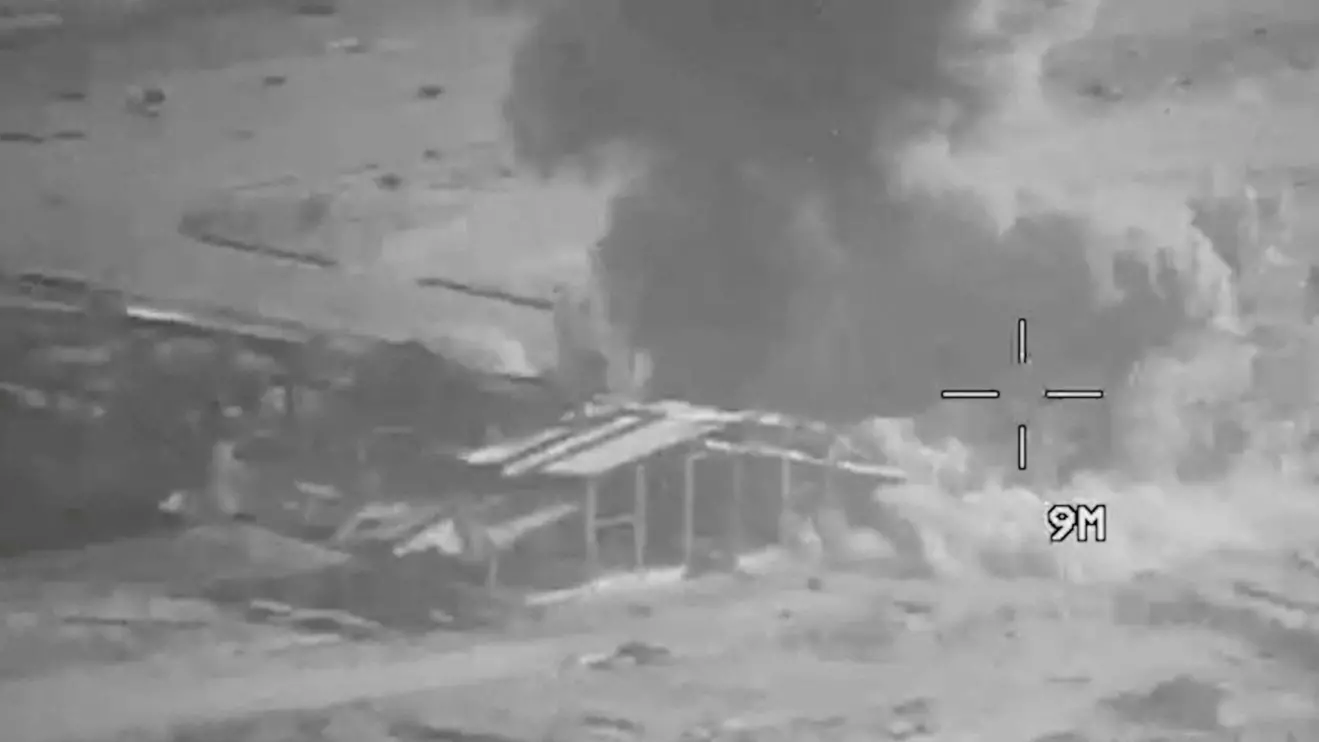
Smoke rises from an explosion at an unknown location, during what the U.S. Central Command (CENTCOM) says are strikes on Iranian military targets, in this screengrab taken from a handout video released on July 23, 2026. U.S. Central Command/Handout via Reuters
Yemen's Iran-aligned Houthi militants fired on Saudi oil installations in two ports on the Red Sea coast on Saturday, but the United States held back from launching air strikes on Iran itself for the first night in two weeks.
There was no immediate explanation from Washington of why it had abruptly halted a streak of 13 nights of escalating strikes since an interim deal to end hostilities collapsed, in retaliation for Iranian attacks on shipping in the Strait of Hormuz.
"It seems that our dear Iran had a peaceful night last night," Health Ministry spokesperson Hossein Kermanpour said on X.
After the quiet night in Iran, there were also no reports on Saturday of attacks from Iran on its Gulf neighbours, which have also been taking place daily in response to the U.S. attacks.
However, the strikes from Iran's Houthi allies on Saudi Arabia were a sign that the war that has disrupted energy supplies from the Gulf could be spreading to a second major shipping route, and reigniting Yemen's own civil war.
WAR THREATENS TO SPREAD TO YEMEN
Houthi military spokesperson Yahya Saree said the group had successfully struck sites belonging to Saudi state oil giant Aramco in Jizan and Yanbu. Video shared on social media and verified by Reuters showed a large column of smoke rising from the direction of the Aramco refinery in Jizan.
Two Asia-based trading sources said that they had been informed of potential damage to fuel and oil storage sites at Jizan. Aramco did not respond to requests for comment.
In Yanbu, two ballistic missiles aimed at oil installations were intercepted by a U.S.-made Patriot battery operated in Saudi Arabia by the Greek military under an agreement with Riyadh, Greek security sources said.
Yanbu is Saudi Arabia's main Red Sea oil port, where millions of barrels a day are loaded, and has become the main route out for Saudi oil skirting the Strait of Hormuz, which has been blockaded by Iran. Jizan, on the Red Sea close to the Yemeni border, is the site of a refinery with a capacity of 400,000 barrels per day.
In Yemen, the air force of the Saudi-backed, internationally recognised government, which has opposed the Houthis for more than a decade, struck Houthi missile and drone launch sites and arms depots in the Marib and al-Jawf provinces, Yemeni officials said.
Earlier, the Saudi-led military alliance said it had bombed Houthi military positions on Friday in the Red Sea port of Hodeidah.
The Yemeni officials said both sides in Yemen's civil war were mobilising forces along the front.
SAUDI-LED COALITION STRIKES HODEIDAH
Saudi Arabia has led an Arab coalition battling against the Houthis for more than a decade since the Iran-aligned fighters captured Yemen's capital, Sanaa.
The Yemeni civil war, during which hundreds of thousands of people died from fighting and famine, has been paused under a ceasefire since 2022. But that truce broke down this month, with the Houthis effectively joining the wider war their Iranian allies have waged since being attacked by the U.S. and Israel.
The Houthis have declared a naval blockade of Saudi Arabia over the past week, and Houthi leader Abdul Malik al-Houthi said all Saudi oil facilities could be targets.
The move has contributed in recent days to one of the war's sharpest rises in global oil prices, with Brent crude spiking above $100 a barrel for the first time since May.
U.S. President Donald Trump on Friday vowed "major military punishment" for Tehran and the Houthis after the Houthis struck two Saudi tankers in the Red Sea.
An interim truce meant to end the war effectively collapsed two weeks ago, with U.S. forces striking targets in southern Iran in response to Iranian disruption of shipping in the Strait of Hormuz.
Trump has threatened in recent days to widen the range of targets to include Iran's energy plants and bridges, send ground forces to seize its oil hub of Kharg Island, and bomb a deep-underground nuclear-linked site known as Pickaxe Mountain.
On Friday, however, Trump said he had not yet made a decision on new major strikes.
"We are talking to them," he told reporters at the White House. "I think they're being serious. I think ... they are being by far the most serious that we've seen them, but that doesn't mean we get there."
By Lefteris Papadimas and Idrees Ali
On the eve of Israel’s general election, Iran said on Monday that the outcome would make no difference to the Islamic Republic. The remarks echo the regime’s long-standing rhetoric toward Israel.
Top officials from Mecca Pact countries Saudi Arabia, Turkey and Pakistan are to meet Iran's leaders in Tehran on Monday in their first high-level contact since the kingdom became a pressure point in the wider Iran conflict.
Attacks by Yemen's Iran-aligned Houthis have nearly emptied the skies over Riyadh this month, aviation data showed on Monday, with cancellations grounding almost nine out of every 10 scheduled flights at the Saudi capital's airport.
To make this website run properly and to improve your experience, we use cookies. For more detailed information, please check our Cookie Policy.
Necessary cookies enable core functionality. The website cannot function properly without these cookies, and can only be disabled by changing your browser preferences.