Iran
Trump downplays duration of renewed Iran strikes
President Donald Trump said on Wednesday that the renewed U.S. campaign against Iran would not continue for "too long" after the biggest exchange of fire between Tehran and Washington since July.

The war in Iran is no longer just a geopolitical event. It is a real-time stress test of the global energy system.
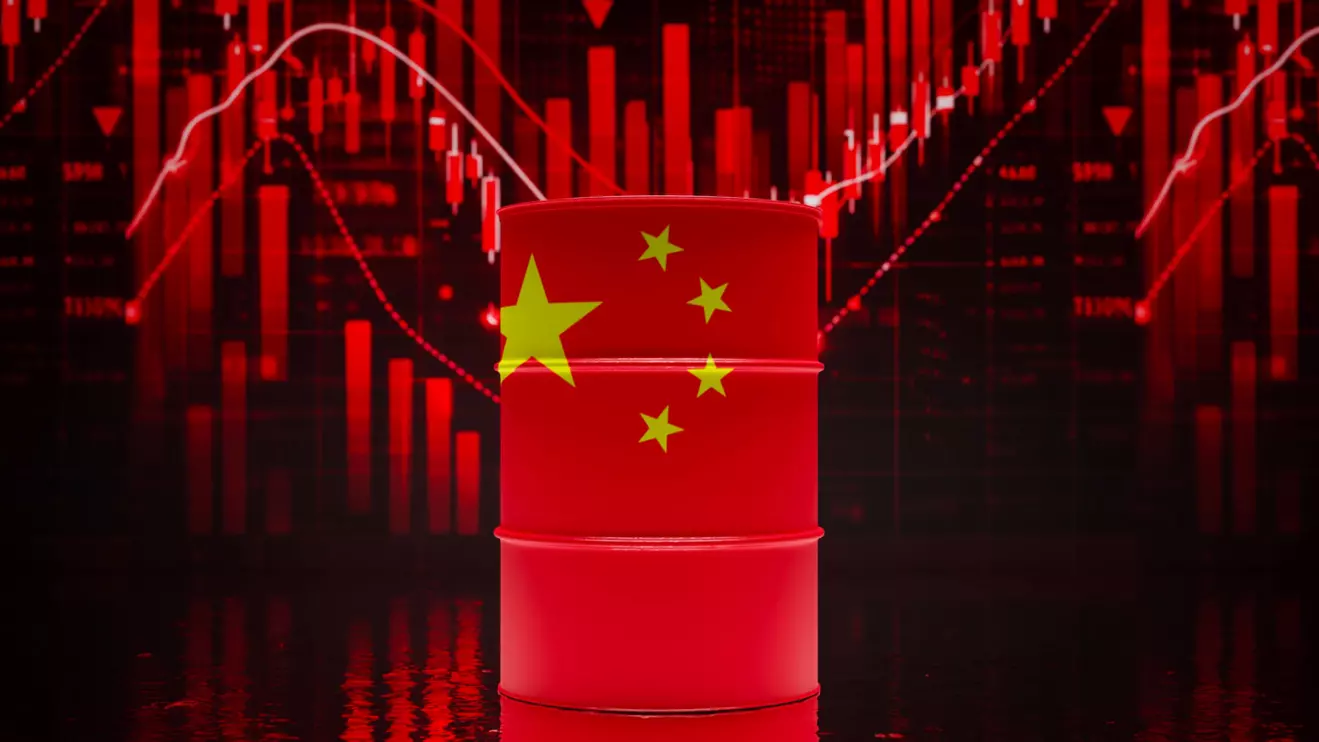
This war is teaching a simple lesson the market still refuses to price: Energy is not just a commodity. It is a supply chain under military constraint © Mena Today
The war in Iran is no longer just a geopolitical event. It is a real-time stress test of the global energy system.
It is brutally exposing the true cost of oil dependency and the fragility of maritime chokepoints like the Strait of Hormuz.
The United States is already spending billions of dollars to sustain operations in the region. A single Tomahawk missile costs roughly $1.5 to $2 million, and recent strike waves have involved dozens, sometimes hundreds, of precision munitions per cycle. Air operations, carrier deployments, and missile defense systems are pushing daily operational costs into the hundreds of millions.
More importantly, this is no longer just about money. It is about capacity.
U.S. stockpiles are tightening. The decision to delay Tomahawk deliveries to Japan is not anecdotal. It is a signal. Ammunition levels are approaching strategic warning thresholds, highlighting a structural issue: modern warfare consumes high-end munitions faster than industrial systems can replenish them.
This war is teaching a simple lesson the market still refuses to price: Energy is not just a commodity. It is a supply chain under military constraint.
And chokepoints are no longer theoretical risks. They are active pricing mechanisms.
And during this time, China may have just broken one of fusion energy’s most stubborn limits.
In early 2026, China’s EAST Tokamak reportedly operated above the Greenwald density limit, sustaining plasma at levels long considered unstable. For decades, this limit defined the maximum density a fusion plasma could reach before collapsing. More density means more fusion reactions. More fusion reactions mean more potential energy output.
Crossing that threshold, while maintaining stability, is not just a technical milestone. It challenges a fundamental assumption in fusion physics.
Even more interesting, Chinese researchers observed what they describe as a “new operational regime”, where plasma behavior does not degrade as expected at higher densities.
Let’s be clear. This is not commercial fusion. This is not energy breakeven. This is not replacing oil next year.
But it is something else entirely. It is a signal.
A signal that China is steadily accumulating breakthroughs across the full stack of future power: AI, electricity, materials, and now fusion physics.
And in systems like this, progress is rarely linear. It compounds. Then it surprises.
If even a fraction of these advances converge over the next two decades, the implications go far beyond energy:
The world is still pricing energy scarcity.
China may already be working on abundance.
By Jacques Lemoisson, CEO of GATE Capital Management & GATE Advisory Geopolitics and global Macro expert, specialist in Chinese asset themes for institutional clients.
President Donald Trump said on Wednesday that the renewed U.S. campaign against Iran would not continue for "too long" after the biggest exchange of fire between Tehran and Washington since July.
Top aides to President Donald Trump are pushing to keep the Iran war from escalating before November's midterm elections to staunch Republican electoral losses, four people familiar with the discussions said, a strategy already under strain as the U.S. and Iran exchanged back-and-forth attacks overnight.
Russia has secretly helped Iran develop advanced supersonic cruise missiles, in what the Financial Times describes as one of the most significant known transfers of strategic military technology from Moscow to Tehran, according to an investigation published Wednesday.

To make this website run properly and to improve your experience, we use cookies. For more detailed information, please check our Cookie Policy.
Necessary cookies enable core functionality. The website cannot function properly without these cookies, and can only be disabled by changing your browser preferences.