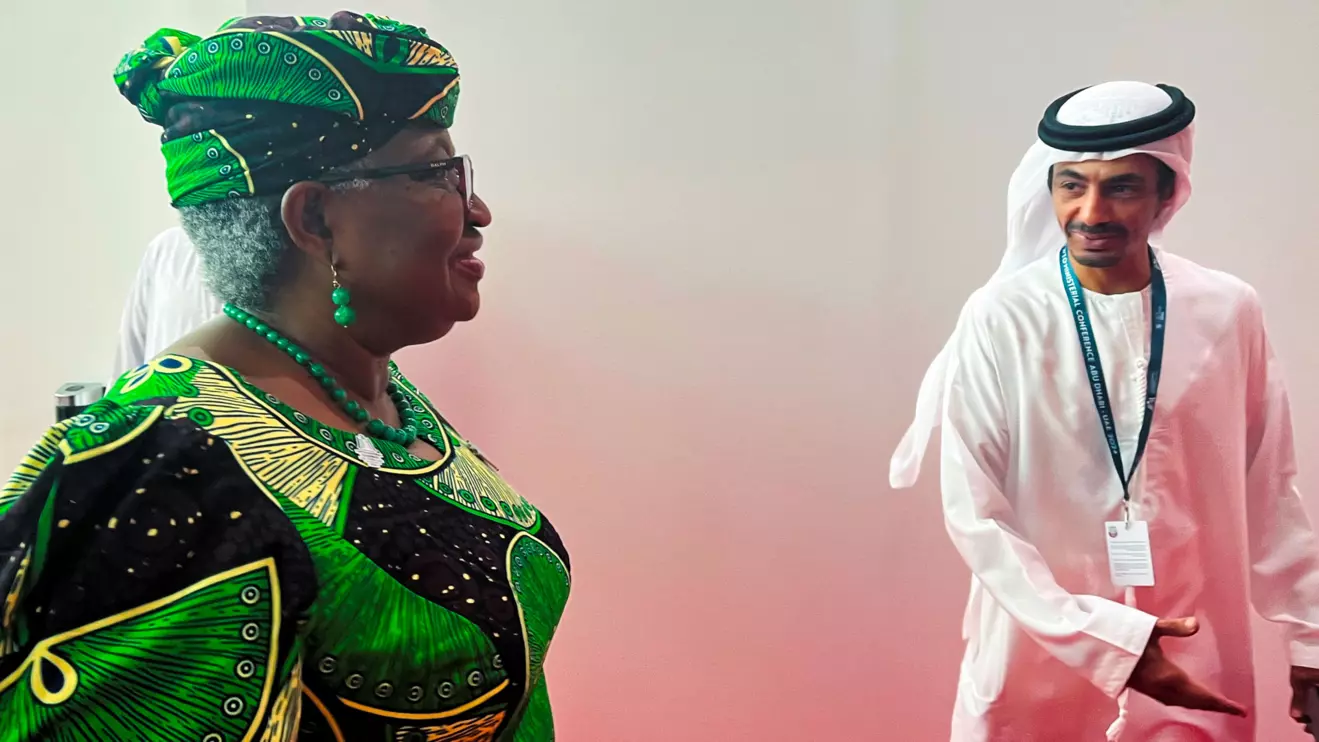
Trade ministers from nearly every country in the world gathered in Abu Dhabi on Monday for a World Trade Organization meeting that aims to set new global commerce rules, but even its ambitious chief Ngozi Okonjo-Iweala sought to curb expectations.
The almost 30-year-old global watchdog, whose rules underpin 75% of global commerce, tries to strike deals by consensus, but such efforts are becoming more difficult amid signs that the global economy is fragmenting into separate blocs.
"Let's not pretend that any of this will be easy," Ngozi Okonjo-Iweala said in his opening speech, describing the atmosphere as "tougher" than the WTO's last 2022 meeting, citing wars, tensions and elections and signs that trade growth will undershoot the body's own estimate.
She called on ministers to "roll up their sleeves" and complete negotiations, but seemed to rule out any deal in Abu Dhabi on reforming the body's mothballed appeals court.
"We are not there yet," she said.
However, negotiators say they are still hopeful for an agreement that could buoy global fish stocks and protect fishermen by banning government subsidies.
"We are not in dreamland here. International cooperation is in bad shape. Real success would be fish, plus two or three things," one trade delegate told Reuters.
Other outcomes from the four-day meeting that are either definite or achievable are the accession of two new members - Comoros and East Timor - and a deal among some 120 countries to remove development-hampering investment barriers.
Tougher areas are extending a 25-year moratorium on applying tariffs on digital trade, which South Africa and India oppose, and an agreement on agriculture trade rules that has eluded negotiators for decades.
"The multilateral trading system with the WTO at its core is at a critical juncture; it is confronting many challenges," Thani Al Zeyoudi, conference chair and UAE's minister of foreign trade said in an opening address.
"The WTO remains a powerful force in countering the current unilateralism, protectionism, and discrimination."
FUTURE RELEVANCE
On Sunday, the UAE announced a $10 million grant to support WTO initiatives such as the Fisheries Funding Mechanism, the Enhanced Integrated Framework (EIF), and the Women Exporters in the Digital Economy (WEIDE) Fund, launched during the conference.
Zeyoudi said that trade and sustainability would be on the agenda as part of an effort to ensure the body's future relevance.
One factor that could help is the determination of Okonjo-Iweala, a former Nigerian finance minister, whose insistence on all-night meetings helped deliver a package of deals in Geneva in 2022.
"What makes me a bit more optimistic than others at this point is that the director-general is a very proactive person and is prepared to push ministers. Also, the UAE trade minister is very results-orientated," said Alan Yanovich, partner at law firm Akin Gump Strauss.
John Denton, International Chamber of Commerce Secretary General, said even a modest outcome such as a forward-looking ministerial statement that showed common purpose among governments would be worth taking.
"The WTO is a public good ultimately, and our view is that there is a major cost to the real economy from any erosion of that system," he said.
By Emma Farge and Rachna Uppal