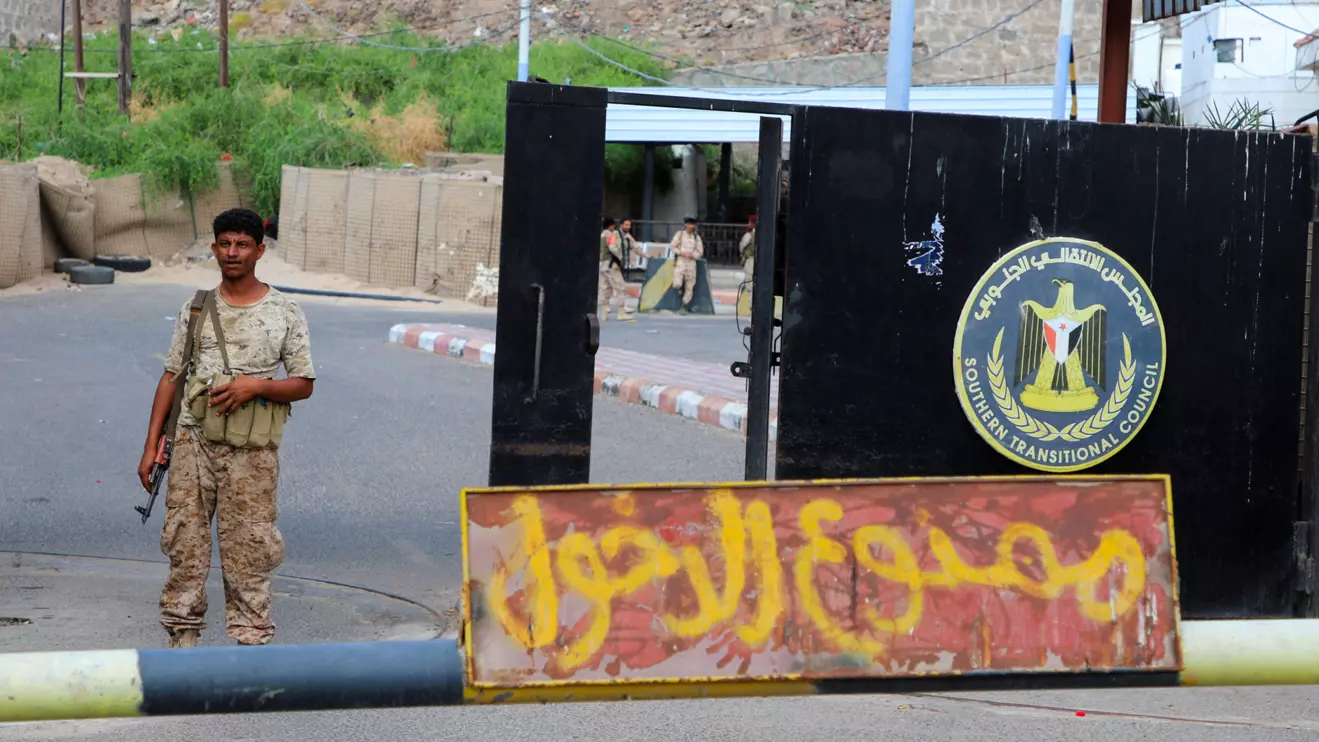
Yemen's main separatist group, the Southern Transitional Council, denied on Saturday it was disbanding, contradicting a statement by one of its members that the group had decided to dissolve itself.
The conflicting statements highlight a split in the STC, a group backed by the United Arab Emirates that seized parts of southern and eastern Yemen in December in advances that heightened tensions with another Gulf power, Saudi Arabia.
Saudi Arabia and the UAE used to work together in a coalition battling Iran-backed Houthis in Yemen's civil war but the STC advances exposed their rivalry, bringing into focus big differences on a wide range of issues across the Middle East ranging from geopolitics to oil output.
Saudi-backed fighters have largely retaken the areas of southern and eastern Yemen that the STC seized, and an STC delegation has travelled to the Saudi capital Riyadh for talks.
But STC leader Aidarous al-Zubaidi skipped the planned meetings and fled Yemen on Wednesday, and the Saudi-led coalition accused the UAE of helping him escape on a flight that was tracked to a military airport in Abu Dhabi.
In an announcement broadcast on Saudi state media on Friday, one of the group's members said the STC had decided to disband.
But in a statement issued on Saturday, the STC said it had held an "extraordinary meeting" following the announcement in Riyadh and declared it "null and void", saying it had been made "under coercion and pressure".
The group also said its members in Riyadh had been detained and were being "forced to issue statements".
The STC reiterated calls for mass protests in southern cities on Saturday, warning against any attempts that target the group's "peaceful activities".
Authorities in Aden that are aligned with Yemen's Saudi-backed government on Friday ordered a ban on demonstrations in the southern city, citing security concerns, according to an official directive seen by Reuters.
Reporting by Menna Alaa El-Din and Jaidaa Taha