Iraq
Drone overflight triggers alert at Khor Mor gas field
Sirens sounded after a drone flew over the Khor Mor gas field, one of the largest in Iraq's Kurdistan region, two security sources told Reuters on Monday, without giving more details.

Behind a carved wooden door on Baghdad’s historic al-Rashid Street, Iraq’s first Jewish museum has opened its doors. Named “Shamash,” it tells the story of a community that once thrived in Iraq for more than 2,500 years, before almost entirely disappearing
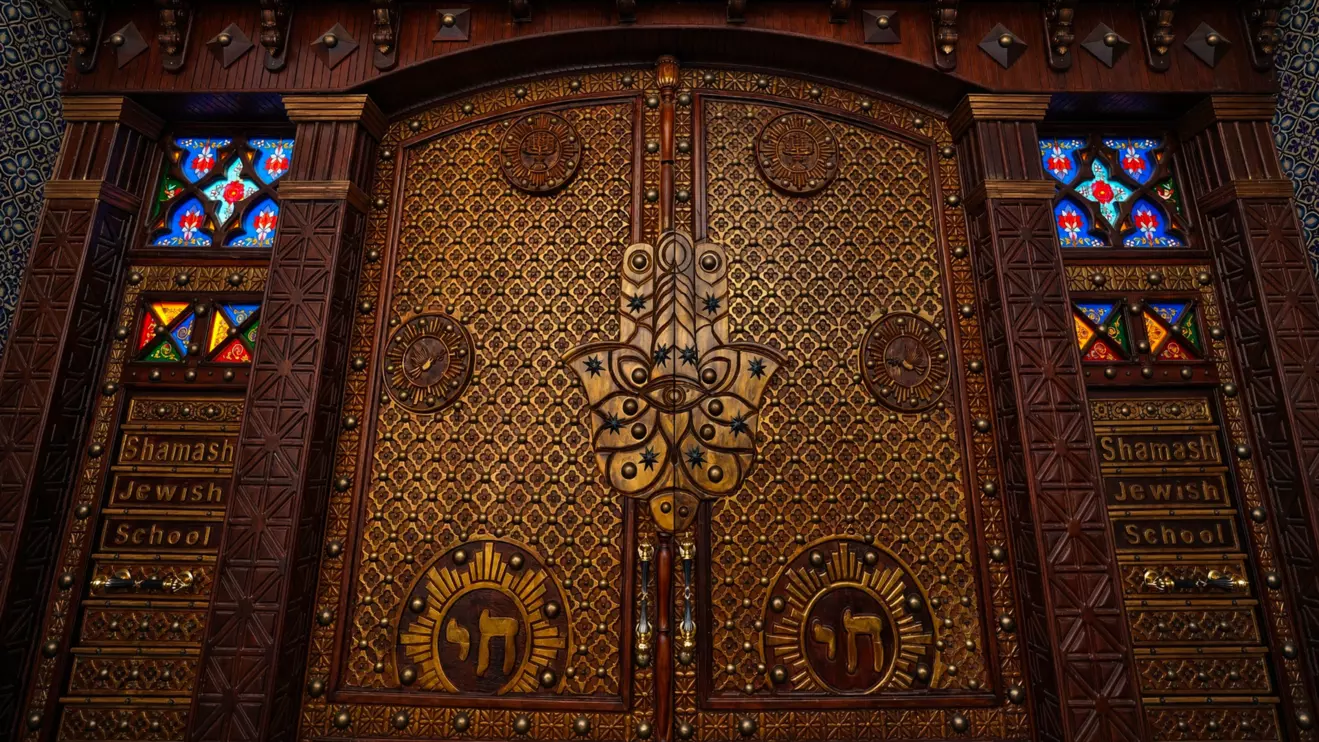
The carved wooden door of the Shamash Jewish Museum, Iraq’s first, on Baghdad’s al-Rashid Street © AFP
Behind a carved wooden door on Baghdad’s historic al-Rashid Street, Iraq’s first Jewish museum has opened its doors. Named “Shamash,” it tells the story of a community that once thrived in Iraq for more than 2,500 years, before almost entirely disappearing.
Since its opening in October, a growing number of Iraqi and foreign visitors have come to explore its documents and photographs. On the walls hang portraits of prominent figures such as Sassoon Eskell, Iraq’s first finance minister, and Dhafer Fouad Eliyahu, a doctor who treated patients free of charge until his death in 2021.
The building itself carries the community’s memory. Founded in 1928 with funding from Iraqi Jew Yaacoub Shlomo Shamash, it was a school that taught in English to pupils of all faiths. Confiscated by the state in the 1970s, it was returned to the Jewish community by court order in 1992.
The museum is the work of the community’s few remaining representatives, led by Khalida Fouad Eliyahu, the late doctor’s sister, who have set out to restore several heritage sites as Iraq enjoys relative stability after decades of war.
In the 1940s, Iraq was home to around 135,000 Jews, one of the largest and most influential communities in the Middle East. Their exodus began with the Farhud of June 1941, when more than 100 Jews were killed in mob attacks in Baghdad, and accelerated after Israel’s creation in 1948 and the restrictions imposed by Iraqi authorities.
Today, only a few dozen Jews remain, living discreetly, mostly in the Kurdistan region. Some fifty synagogues and community sites still stand, many crumbling or used as warehouses.
By Ali Hassan al-Tamimi
Sirens sounded after a drone flew over the Khor Mor gas field, one of the largest in Iraq's Kurdistan region, two security sources told Reuters on Monday, without giving more details.
Iran's most powerful Shi'ite militia ally in Iraq has been raking in hundreds of millions of dollars from oil stolen from the state, Iraqi officials say, prompting the prime minister to ready his security forces to confront the heavily armed group.
Jordanian and Iraqi authorities said on Monday they will block the Telegram social media service for national security reasons, with Baghdad's media regulator saying the app had not done enough to stop offending content.
To make this website run properly and to improve your experience, we use cookies. For more detailed information, please check our Cookie Policy.
Necessary cookies enable core functionality. The website cannot function properly without these cookies, and can only be disabled by changing your browser preferences.