
Israel
Gaza envelope population tops pre-October 7 levels
Thousands of newcomers are joining returning evacuees, a quiet verdict on who won the southern front.

Syria’s interim president Ahmed al-Sharaa warned on Saturday that Israel’s insistence on establishing a demilitarized zone in southern Syria places the country in a “dangerous position.”
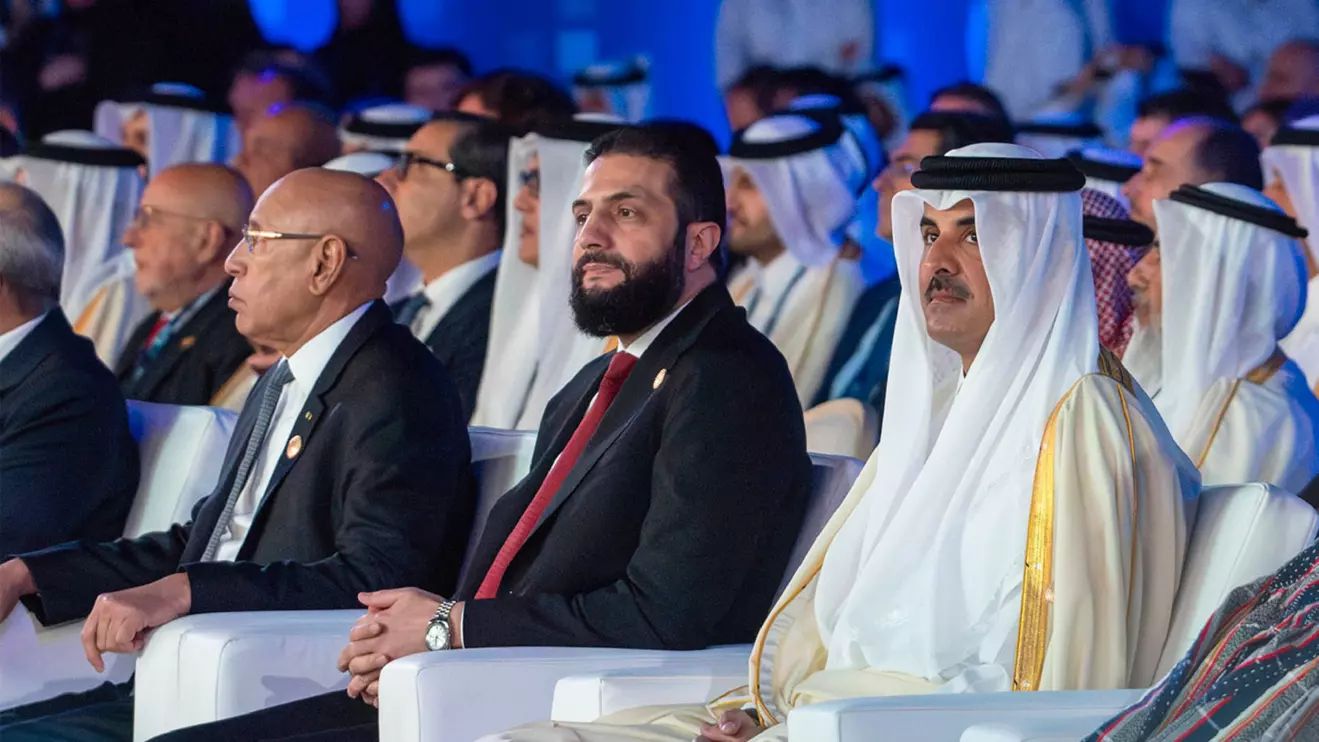
Ahmed al-Sharaa on Saturday at the Doha Forum, alongside the Emir of Qatar © X
Syria’s interim president Ahmed al-Sharaa warned on Saturday that Israel’s insistence on establishing a demilitarized zone in southern Syria places the country in a “dangerous position.”
Speaking on the sidelines of the Doha Forum, he said that international actors had aligned behind Damascus’s demand for Israel to withdraw to positions held before December 8, the day Bashar al-Assad’s regime fell. Israeli strikes in the eastern Golan have continued in recent weeks, with the latest attack killing thirteen people.
Al-Sharaa reiterated Syria’s commitment to the 1974 disengagement agreement with Israel, arguing that any move to negotiate alternative arrangements, such as a new demilitarized zone, would “endanger Syria gravely.”
He added that negotiations were underway with U.S. involvement, aiming to address the security concerns of all parties. “Syria is the one facing Israeli attacks,” he said. “So who should be requesting a buffer zone first?”
But while al-Sharaa projects confidence abroad, many observers remain cautious about the direction he intends to take Syria internally, particularly as the country approaches the first anniversary of Assad’s ouster.
His long-standing involvement in hard-line Islamist circles before assuming power has raised questions among analysts and civil society groups about whether his leadership can truly steer Syria toward a democratic, inclusive future, or whether the revolution risks exchanging one form of authoritarianism for another.
A leader under scrutiny at home and abroad
In previous interviews, including one with The Washington Post in November, al-Sharaa rejected the idea of any “totally demilitarized zone” in the south and insisted that Israel must withdraw to pre-December 8 lines. He has also repeatedly pushed back against accusations that he himself once endorsed extremist currents, framing the issue as a misunderstanding of the term “terrorism.”
These comments have done little to reassure critics who fear that Syria’s political transition could be compromised by the ambiguity surrounding his ideological trajectory. Analysts note that while he now speaks of the rule of law and institutional reform, his earlier affiliations continue to cast a long shadow.
Addressing domestic issues, al-Sharaa said the new government “does not resemble the old one” and is committed to holding accountable those responsible for atrocities committed after Assad’s fall.
He acknowledged violations on the coast and in the south but insisted that “the rule of law prevails in Syria.” He also argued that not all Alawites supported the former regime and that many had been “victims” of the conflict.
Al-Sharaa praised improvements in public services and an uptick in investment, while again urging the full lifting of the U.S. Caesar sanctions, currently suspended only on a temporary basis. “We are 95 percent of the way there,” he said.
A fragile transition, and the stakes for Syria’s future
While the interim president’s diplomatic push aims to strengthen Syria’s position on the regional stage, the core question remains unresolved:
Can Syria’s transition succeed if its new leadership carries unresolved ideological baggage that risks undermining democratic governance?
For many Syrians and international observers, prudence remains essential.
The fall of Assad opened a historic window for rebuilding the country, but the direction chosen now, and the character of those leading it, will determine whether Syria moves toward stability and pluralism, or slides back into a new cycle of mistrust and authoritarian drift.
Thousands of newcomers are joining returning evacuees, a quiet verdict on who won the southern front.
Turkish President Tayyip Erdogan said it was unrealistic to expect all countries to make the same progress on climate policy while inequalities in access to financing and technology persisted, adding he expected support from all nations for Turkey's COP31 Climate Summit action agenda.
Turkey and Iraq agreed on Wednesday for Turkish forces to hand over a military camp in northern Iraq to the Iraqi government gradually, they said after talks in New York, adding they also agreed to end the presence of "outlawed armed elements" in northern Iraq.
To make this website run properly and to improve your experience, we use cookies. For more detailed information, please check our Cookie Policy.
Necessary cookies enable core functionality. The website cannot function properly without these cookies, and can only be disabled by changing your browser preferences.