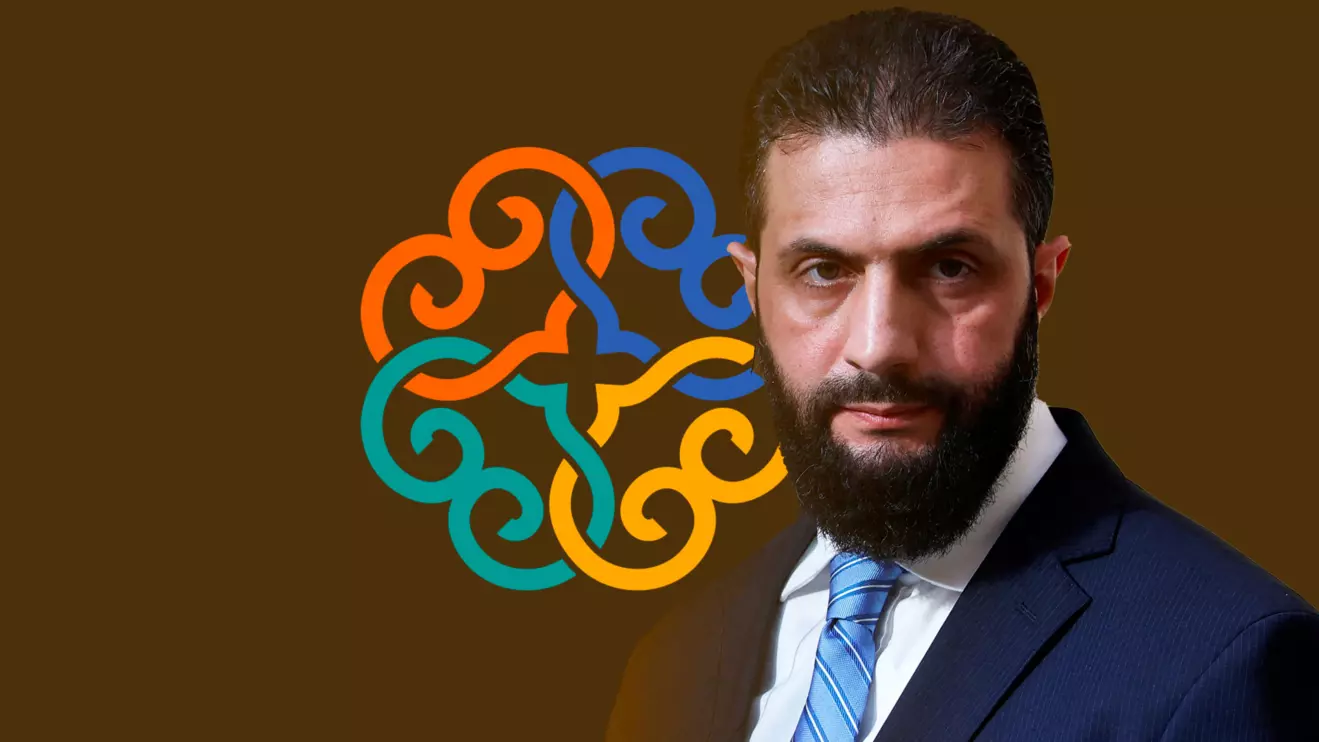
Syria’s transitional president, Ahmad al-Sharaa, warned on Tuesday of renewed turmoil in the Middle East if his government and Israel fail to reach a security agreement.
His remarks came as U.S. envoy Tom Barrack suggested that a “de-escalation” accord could be imminent.
Al-Sharaa, a former jihadist leader who rose to power following the ouster of former president Bashar al-Assad in December 2024, is set to make history on Wednesday as the first Syrian head of state to address the UN General Assembly since 1967.
His country has faced repeated Israeli airstrikes and incursions in recent months, exploiting what he described as a moment of Syrian weakness.
Speaking at an event hosted in New York by the Middle East Institute, al-Sharaa sought to downplay Syria’s role as a destabilizing force.
“We are not the ones creating problems for Israel. We are afraid of Israel, not the other way around,” he said.
Al-Sharaa categorically dismissed any discussion of partitioning Syria, warning that such ideas would destabilize neighboring countries.
“Jordan is under pressure, and any talk of dividing Syria will harm Iraq and harm Turkey,” he insisted. “It will take us all back to square one.”
The Syrian leader emphasized that his nation had only just emerged from more than 15 years of devastating conflict, arguing that further fragmentation would undo fragile progress.