
Israel
48 seats, 28 days, zero easy options
Israeli President Isaac Herzog formally tasked opposition leader Gadi Eisenkot on Sunday with forming the next government.

Arab League Secretary-General Nabil Fahmy used a visit to Lebanon's presidential palace on Monday to promise Beirut more diplomatic backing, as fears grow that the war between Hezbollah and Israel could flare up again.
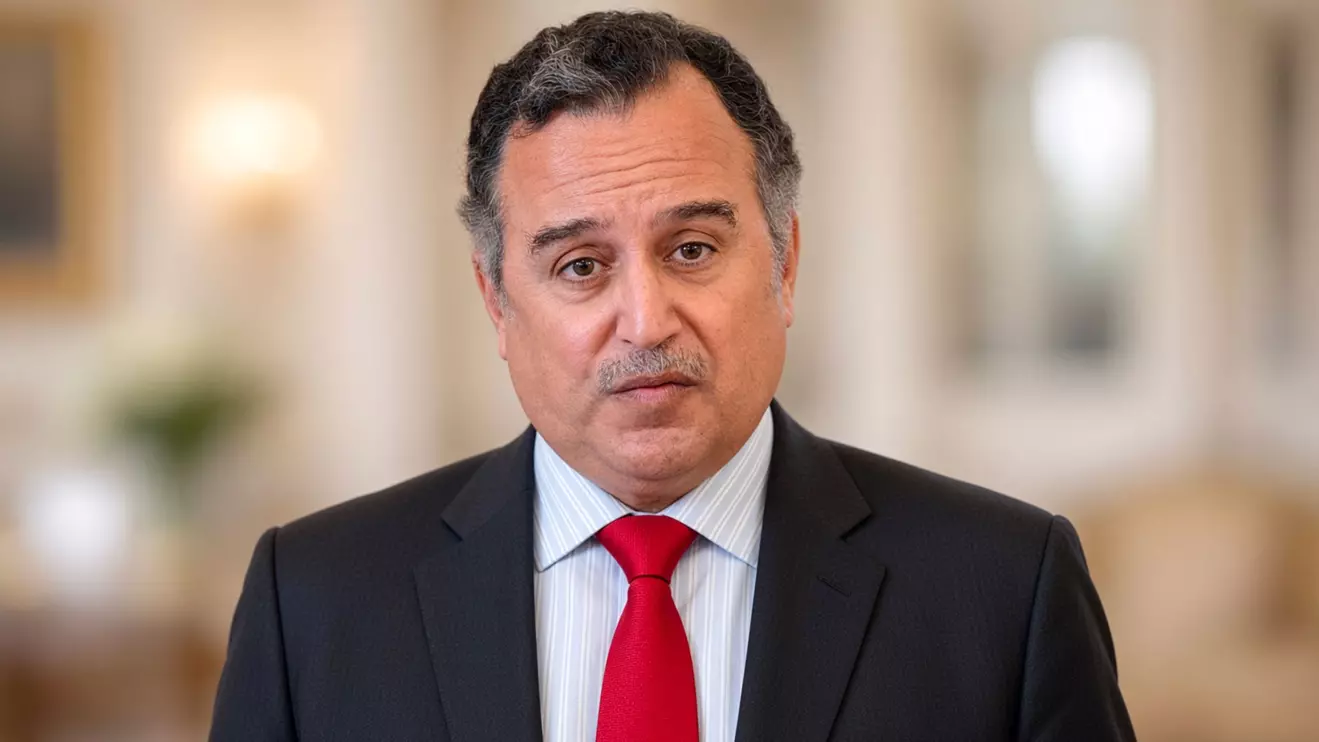
Nabil Fahmy © Mena Today
Arab League Secretary-General Nabil Fahmy used a visit to Lebanon's presidential palace on Monday to promise Beirut more diplomatic backing, as fears grow that the war between Hezbollah and Israel could flare up again.
Speaking at Baabda after meeting President Joseph Aoun, Fahmy said Lebanon's negotiations with Israel enjoy "total Arab support." The talks are expected to resume, under conditions, in Tampa, Florida, after a suspension of almost three months.
"Lebanon is among the Arab League's priorities," Fahmy said, according to Lebanon's state-run National News Agency. He pledged to stand with the Lebanese state and its institutions "on the political, economic and social levels," and said "political and diplomatic" activity on Lebanon "will be intensified." He also announced a visit to the south of the country.
That is where the pressure is greatest. Israeli forces still occupy about 620 square kilometers of Lebanese territory and carry out strikes there daily.
Aoun denounced what he called Israel's "daily violations" in the south and said the country had failed to respect the terms of the framework agreement signed in Washington on June 26.
The attacks, he said, "will lead nowhere" and "will only strengthen the Lebanese people's attachment to their land." They also prevent the state from reaching its goals, he added, notably deploying the Lebanese army in the south and disarming Hezbollah.
Even so, Aoun said Lebanon remains committed to diplomacy "despite the difficulties," because its cost is "far lower than that of a devastating war," a price the Lebanese, and southerners in particular, are already paying. He welcomed "any effort and any initiative" by the Arab League to help Lebanon through the crisis.
Israeli President Isaac Herzog formally tasked opposition leader Gadi Eisenkot on Sunday with forming the next government.
Israel's president on Saturday chose Gadi Eisenkot, Prime Minister Benjamin Netanyahu's strongest rival, to try to form a new government following a deadlocked election that left neither man with a clear path to power.
S&P Global Ratings has kept Israel’s sovereign credit rating at ‘A’ with a stable outlook. Despite months of security and economic upheaval, the agency sees no reason to change its view of the country’s credit risk.

To make this website run properly and to improve your experience, we use cookies. For more detailed information, please check our Cookie Policy.
Necessary cookies enable core functionality. The website cannot function properly without these cookies, and can only be disabled by changing your browser preferences.