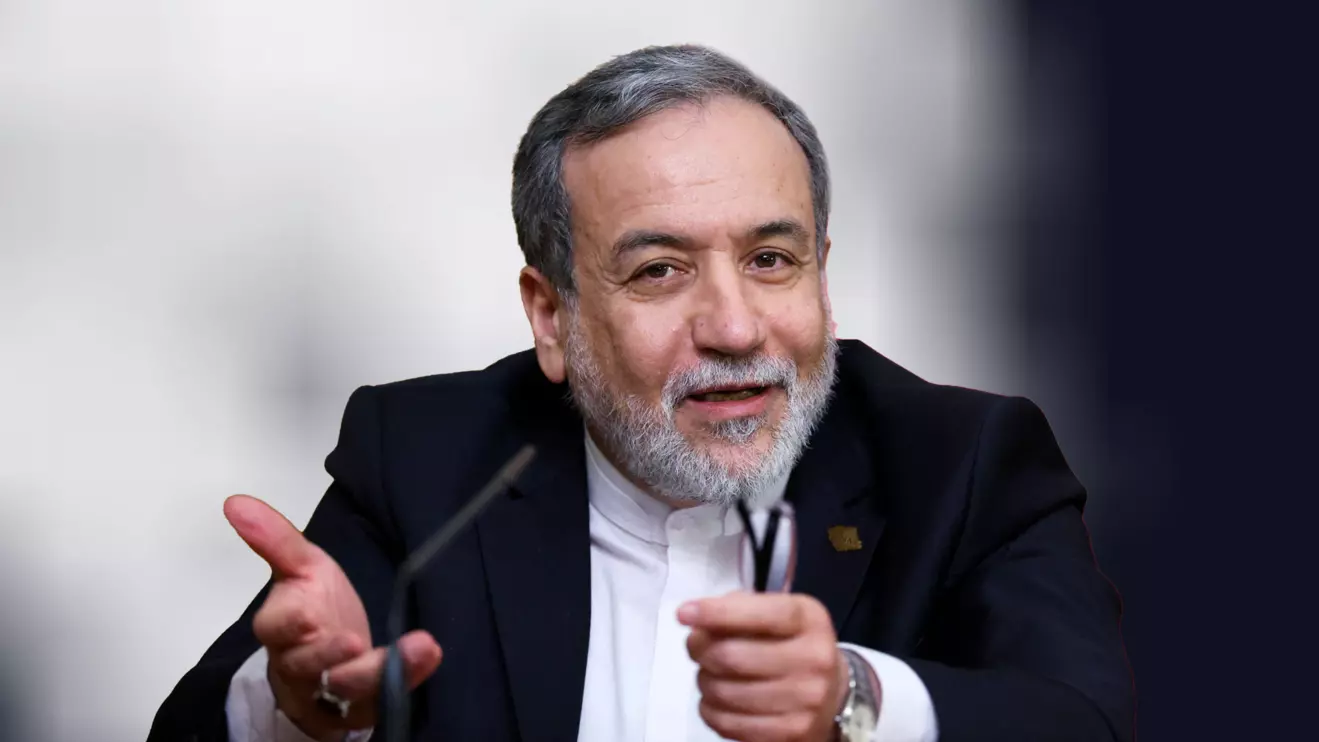
Iran's Foreign Minister Abbas Araqchi called Thursday for "vigilance and coordination" among regional countries to counter what he described as "destabilising and escalatory actions" by the United States and Israel, in separate phone calls with his counterparts in Turkey, Egypt and Pakistan.
Araqchi claimed US and Israeli strikes on Iranian infrastructure were "aimed at escalating tensions" and vowed that Iran would "spare no effort in defending its sovereignty and security."
Abbas Araqchi is not a foreign minister in any meaningful sense of the word. He is Tehran's international propaganda arm, a polished communicator tasked with repackaging the regime's narrative for foreign consumption.
His phone calls to Ankara, Cairo and Islamabad were not diplomatic outreach. They were talking points dressed as diplomacy, delivered on behalf of a leadership that is either hiding underground, hospitalized or counting its dead after weeks of devastating US-Israeli strikes.
The irony is almost too rich: a regime that launched missiles at Qatar, Kuwait, Bahrain, Saudi Arabia, Jordan, Oman and the UAE, countries it now asks to stand in solidarity against « destabilisation », expects its neighbors to forget what Iran has done to their infrastructure, their airports and their civilians.
The Message Nobody Is Buying
Turkey's Fidan may sympathize. Egypt will listen politely. Pakistan will nod cautiously. But none of them have forgotten that Iran fired ballistic missiles at Gulf capitals while lecturing the world about escalation.
Araqchi speaks. The region listens. And then the region looks at the craters Iran left behind, and draws its own conclusions.
When the regime that bombed its neighbors calls for regional unity against destabilization, the word "irony" doesn't quite cover it.