
Lebanon
Israeli army radio announces "Significant" reduction of troops in South Lebanon
Israel's army radio (GLZ) announced Thursday a "significant" reduction in the number of brigades deployed in the occupied "buffer zone" in southern Lebanon.

Lebanon's Minister of Transport, Fayez Rassamny, assured Saturday that Beirut Rafic Hariri International Airport is operating normally and that national carrier Middle East Airlines (MEA) continues to fly « normally », according to Lebanon's official National News Agency (NNA).
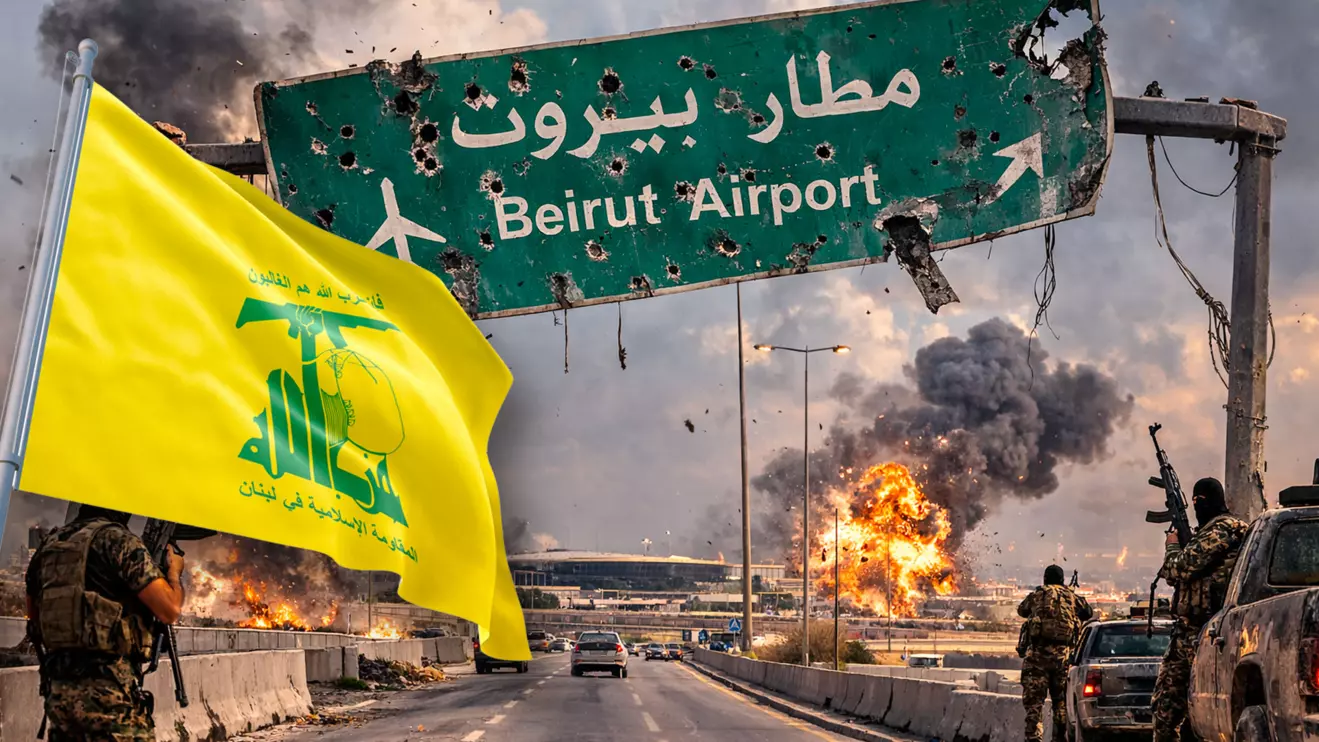
Reaching the airport is far from risk-free © Mena Today
Lebanon's Minister of Transport, Fayez Rassamny, assured Saturday that Beirut Rafic Hariri International Airport is operating normally and that national carrier Middle East Airlines (MEA) continues to fly « normally », according to Lebanon's official National News Agency (NNA).
The reassurance, however, tells only part of the story.
MEA is now virtually the only airline still serving Beirut, as foreign carriers have suspended their flights one by one - some on a day-by-day basis, others for defined periods - in the shadow of the US-Israeli war against Iran and the ongoing conflict engulfing the region.
The airport's continued operation comes with an uncomfortable geographical reality: the only express road connecting central Beirut to the airport runs alongside the southern suburbs, Hezbollah's stronghold and one of the most heavily targeted areas in Israeli strikes.
Every passenger, every crew member, every flight that lands or departs Beirut does so within earshot - and eyesight - of an active war zone.
That Middle East Airlines continues to fly under these conditions is either an act of remarkable resilience or extraordinary risk, possibly both.
For Lebanon, a country already on the edge, keeping its airport open is not just a logistical necessity. It is the last lifeline connecting a besieged nation to the outside world.
Israel's army radio (GLZ) announced Thursday a "significant" reduction in the number of brigades deployed in the occupied "buffer zone" in southern Lebanon.
Thousands of newcomers are joining returning evacuees, a quiet verdict on who won the southern front.
Turkish President Tayyip Erdogan said it was unrealistic to expect all countries to make the same progress on climate policy while inequalities in access to financing and technology persisted, adding he expected support from all nations for Turkey's COP31 Climate Summit action agenda.
To make this website run properly and to improve your experience, we use cookies. For more detailed information, please check our Cookie Policy.
Necessary cookies enable core functionality. The website cannot function properly without these cookies, and can only be disabled by changing your browser preferences.