As Israel presses a deadly offensive against armed group Hezbollah in his home country, Lebanese artist Charbel Samuel Aoun wrestles with the role of art in a country engulfed in conflict.
"Does art still have a place in such a crisis?" said Aoun, a 45-year-old mixed media painter and sculptor.
Lebanon has historically played a central role in the Arab world's artistic scene, serving as a vibrant hub for visual arts, music and theatre, blending traditional and contemporary influences.
Now, Lebanese artists are using their work as an outlet for the frustration and despair they feel after a year-long Israeli offensive that has killed more than 3,200 people, the vast majority of them since September.
Aoun's pieces are a direct reflection of Lebanon's back-to-back crises. In 2013, he began gathering dust from Syrian refugee camps in Lebanon to create a series of layered paintings, before moving on to explore other mediums.
Now, he says the darkness and hopelessness of the war - and the debris left behind by Israel's intense bombing campaign across Lebanon's south, east and Beirut's southern suburbs - has revived his desire to work with dust.
"You either stop everything or keep going with the little that still has meaning," he said.
Two of his exhibitions have been cancelled due to the war. While he once lived on the income from his art, he now also relies on selling honey from his beehives, which he first set up as a project to create art from beeswax.
"I can no longer rely on the art market," he said.
Galleries across Beirut have shut down in recent months, with owners telling Reuters there was no demand to buy art at this time. Lebanon's famed modern art museum, the Sursock Museum, has moved its collections to underground storage.
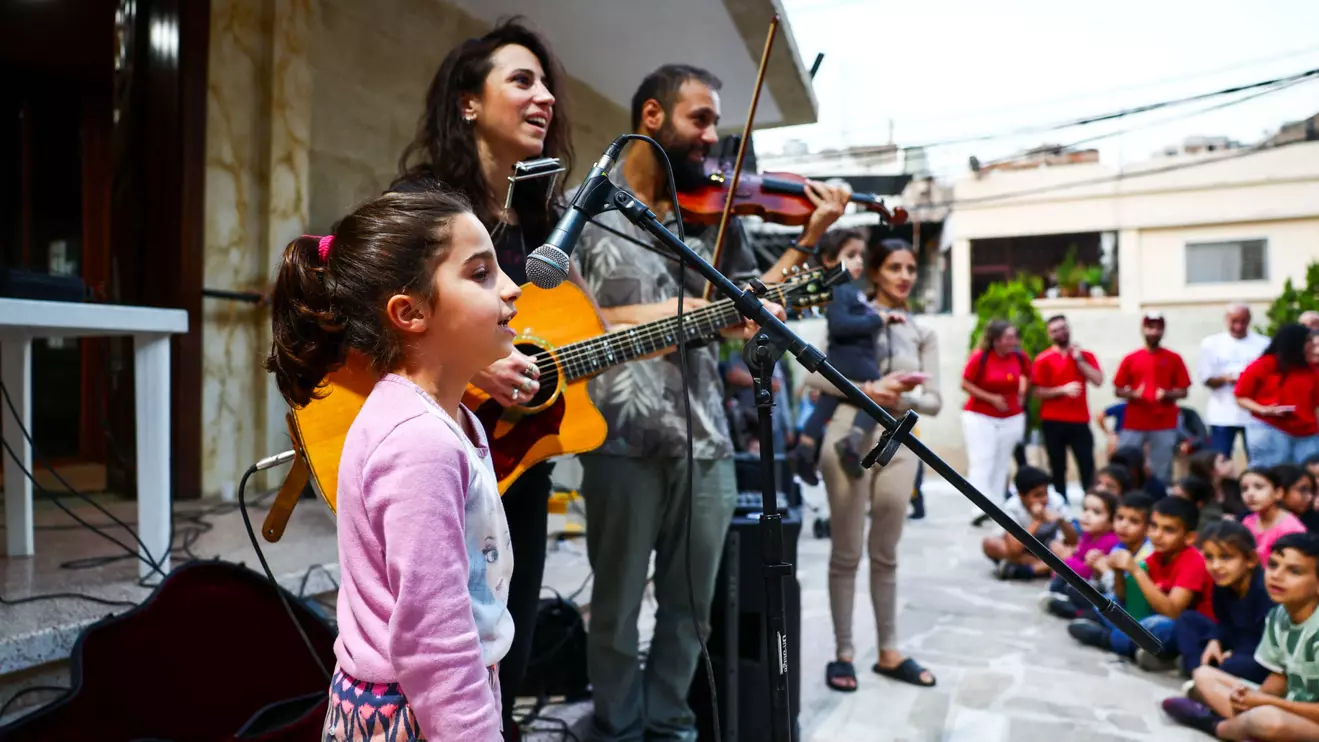
Lebanese singer and musician Joy Fayad has grappled with the emotional toll of the conflict - which made it difficult for her to perform for months.
"It limited my creativity, it was like I shut down. I couldn't give to others, nor to myself," Fayad, 36, said.
Instead, she threw her energy into songwriting. One line in a new song reads: "You are from the downtrodden people, whose word has been silenced, and by their weapons, you are paying the price with your blood."
She recently began performing again, singing for displaced and refugee children in Lebanon at a charity event north of Beirut.
"They're changing the atmosphere, having fun after such a difficult period," she said, especially for those who became accustomed to the sound of bombs instead of beats.
By Emilie Madi and Riham Alkousaa