Iraq
Iraq devalues dinar
Iraq's central bank devalued the dinar against the dollar on Wednesday, the first time in more than three years, as the economic fallout from the Middle East war deepens.

Iraq's central bank will ban five more local banks from engaging in U.S. dollar transactions, a move that comes after meetings with U.S. Treasury officials in efforts to combat money laundering, dollar smuggling and other violations, two sources with direct knowledge of the matter told Reuters on Sunday.
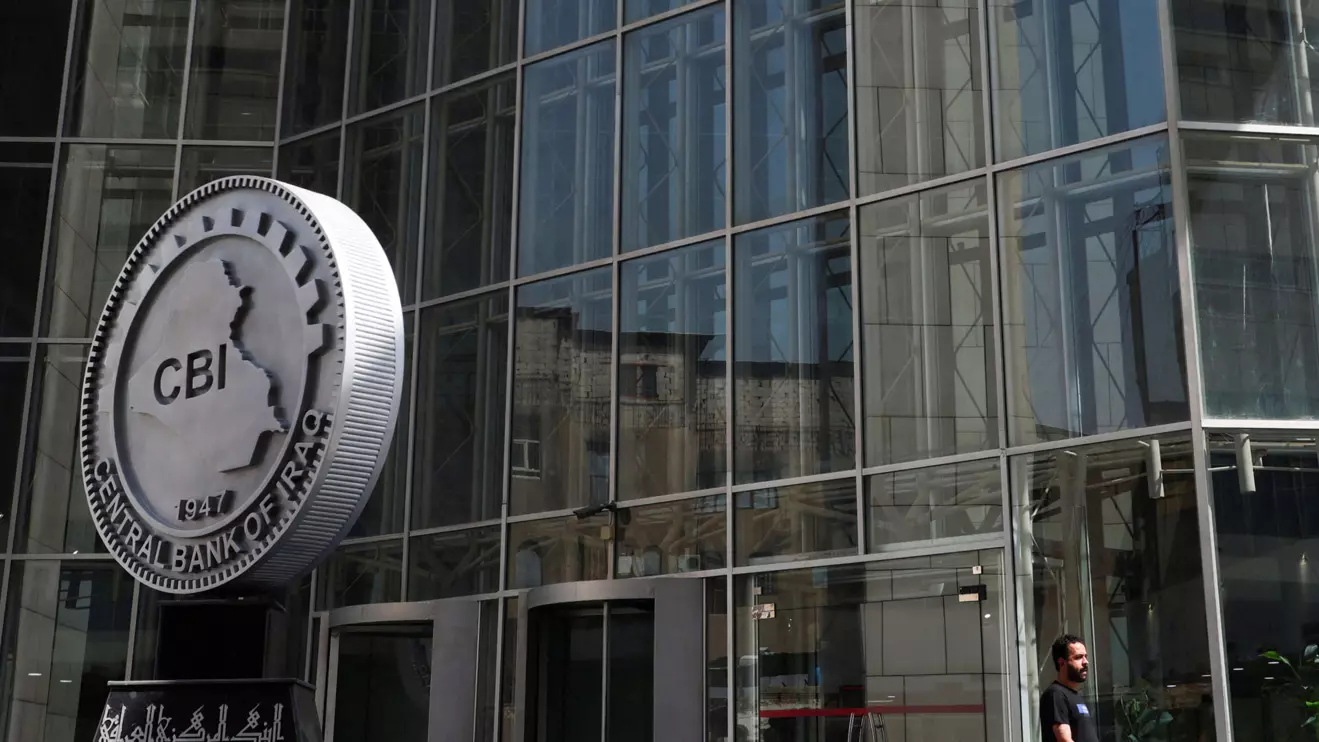
An Iraqi man walks at the headquarters of the Central Bank of Iraq in Baghdad, Iraq , Reuters/Ahmed Saad
Iraq's central bank will ban five more local banks from engaging in U.S. dollar transactions, a move that comes after meetings with U.S. Treasury officials in efforts to combat money laundering, dollar smuggling and other violations, two sources with direct knowledge of the matter told Reuters on Sunday.
The move comes after meetings in Dubai last week between officials from the Central Bank of Iraq - which last year already banned eight banks from U.S. dollar transactions - and U.S. Treasury and Federal Reserve officials, one of the sources said.
A rare ally of both the United States and Iran with more than $100 billion in reserves held in the U.S., Iraq relies heavily on Washington's goodwill to ensure that its access to oil revenues and finances are not blocked.
But OPEC's second-largest producer may find itself in the crosshairs after U.S. President Donald Trump said this month he would restore his "maximum pressure" policy towards Iran.
Iran views its neighbour and ally Iraq as an economic "lung" and wields considerable military, political and economic influence there through the powerful Shi'ite militias and political parties it backs. It also sources hard currency from Iraq through exports and avoids U.S. sanctions via its banking system.
Reuters revealed in December a sophisticated fuel oil smuggling network, that generates at least $1 billion a year for Iran and its proxies, had flourished in Iraq since Prime Minister Mohammed Shia al-Sudani took office in 2022.
Banks banned from dollar transactions are allowed to continue operating and are allowed to engage in transactions in other currencies, the central bank says.
But the move restricts the banks' ability to conduct transactions in dollars, hampering most operations conducted outside of Iraq.
The current Iraqi government came to power with the support of powerful, Iran-backed parties and armed groups with interests in Iraq's highly informal economy, including the financial sector long seen as a money-laundering hot spot.
Western officials had lauded cooperation with Prime Minister Sudani towards carrying out economic and financial reforms meant to curb the ability of Iran and its allies to access U.S. dollars, but pressure is expected to pile on with Trump's administration.
The five banks are Al-Mashreq Al-Arabi Islamic Bank, United Bank for Investment, Al Sanam Islamic Bank, Misk Islamic Bank and Amin Iraq For Islamic Investment and Finance.
The Central Bank of Iraq did not immediately respond to a request for comment.
The Treasury also did not immediately respond to a request for comment.
The move also included three payment services firms: Amawl, AL-Saqi Payment and Aqsa Payment.
Reporting by Maha El Dahan in Dubai and Ahmed Rasheed in Baghdad
Iraq's central bank devalued the dinar against the dollar on Wednesday, the first time in more than three years, as the economic fallout from the Middle East war deepens.
Eighty-five percent of African private-sector transactions are conducted with companies outside the continent. Egyptian President Abdel Fattah El-Sisi used that figure on Saturday to open the inaugural Alamein Africa Forum, a three-day business summit in the Mediterranean city of El-Alamein.
The UAE Ministry of Finance announced Friday the listing and start of secondary-market trading for its second five-year Sovereign Retail T-Sukuk on Nasdaq Dubai, following successful subscription, allocation and settlement.

To make this website run properly and to improve your experience, we use cookies. For more detailed information, please check our Cookie Policy.
Necessary cookies enable core functionality. The website cannot function properly without these cookies, and can only be disabled by changing your browser preferences.