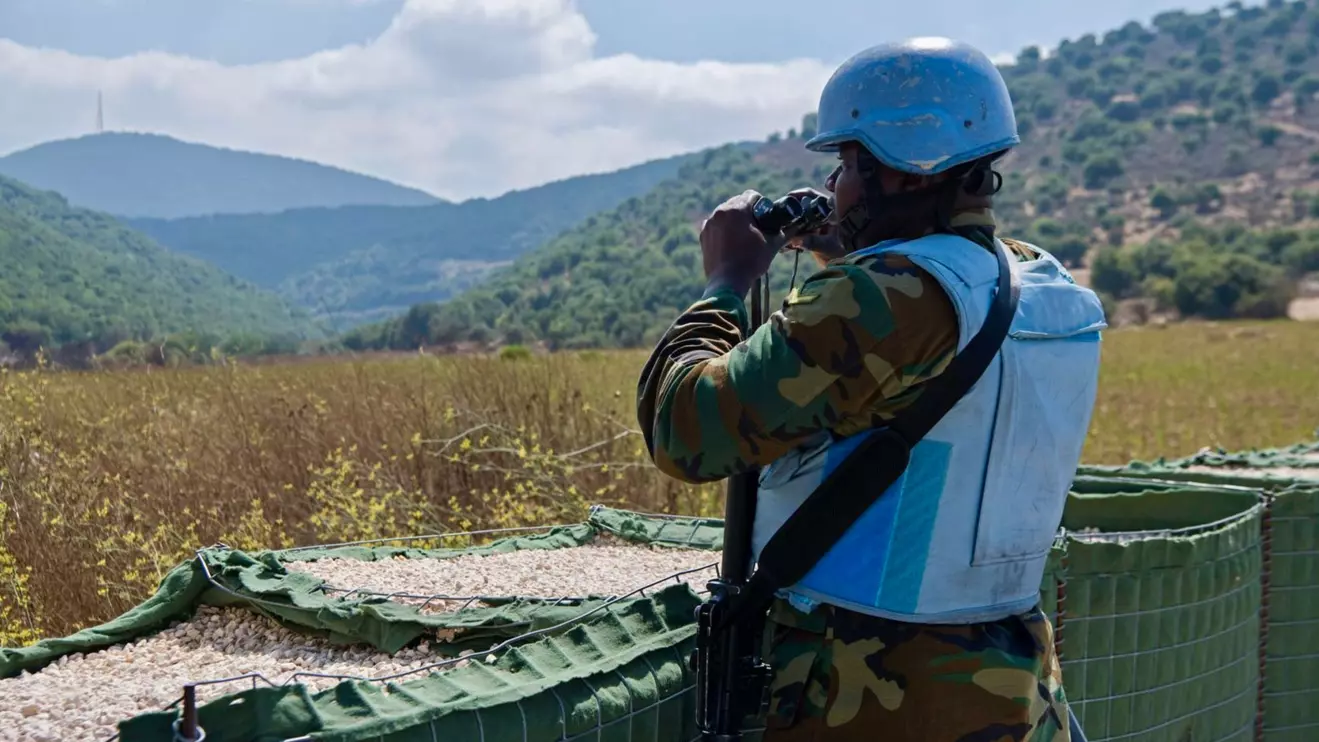
Four Italian soldiers were lightly injured after two rockets exploded at a UNIFIL peacekeeping force base in southern Lebanon, the Rome government said on Friday, expressing outrage at the incident.
The U.N. mission known as UNIFIL is stationed in southern Lebanon to monitor hostilities along the demarcation line with Israel -- an area that has seen fierce clashes this month between Israeli troops and Iran-backed Hezbollah fighters.
Since Israel launched a ground campaign across the border against Hezbollah fighters at the end of September, UNIFIL soldiers have suffered several attacks.
"I reiterate once again that such attacks are unacceptable and I renew my call for the parties on the ground to ensure the safety of UNIFIL soldiers at all times and to work together to quickly identify those responsible," Prime Minister Giorgia Meloni said in a statement.
Italian sources said an investigation into the facts was under way. Foreign Minister Antonio Tajani told Italian media that Hezbollah might be responsible for the attack.
The defence ministry said in a statement that the two 122mm rockets hit a bunker in the base at Chama village and a room near the international military police headquarters, causing damage to the surrounding infrastructure.
Some glass shattered due to the explosion, hitting the four soldiers, the statement said.
"It is intolerable that once again a UNIFIL base has been hit," Defence Minister Guido Crosetto said.
Italy has long been a major contributor to the 10,000-strong multi-national operation, providing more than 1,000 soldiers.
Israel has also been accused of carrying out some of the attacks, but has denied such incidents were deliberate. It has told UNIFIL to evacuate from southern Lebanon for its own safety - a request that the force has rejected.
Reporting by Angelo Amante