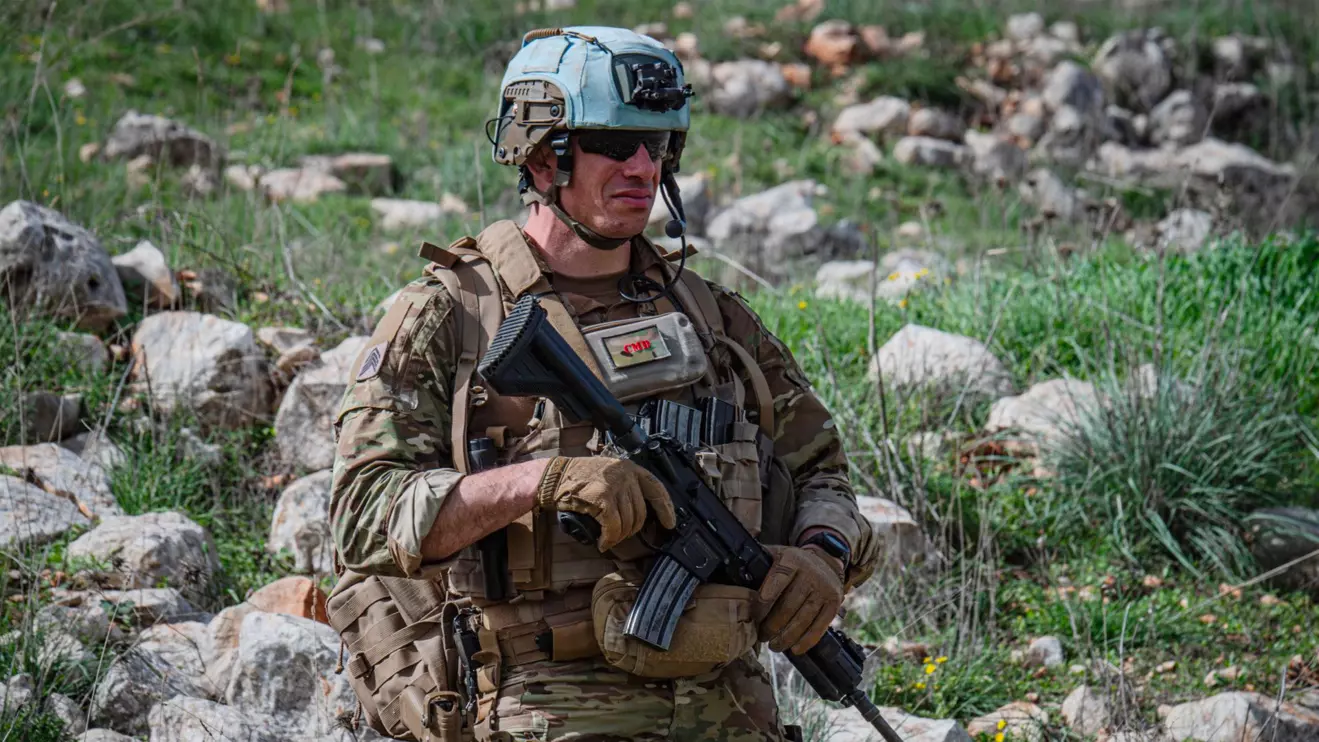
Corporal-Chef Anicet Girardin of the 132nd Cynotechnical Infantry Regiment of Suippes died Wednesday morning from wounds sustained in a Hezbollah ambush in southern Lebanon, becoming the second French soldier of the United Nations Interim Force in Lebanon (UNIFIL) to be killed in the same attack that claimed the life of Adjudant Florian Montorio on Saturday.
The two soldiers were part of a French UNIFIL patrol inspecting a minefield near Ghandouriyé, in the Bint Jbeil district, when they were ambushed by armed fighters. France immediately attributed the attack to Hezbollah. The Iran-backed militia has denied involvement, a denial that strains credulity given the group's documented presence and operational control over the area where the ambush took place.
An attack on the international order
This was not a skirmish between warring factions. These were United Nations peacekeepers, soldiers operating under an explicit international mandate, in a zone where Hezbollah's presence is itself a violation of UN Security Council Resolution 1701.
Targeting them is not a tactical error or a case of mistaken identity. It is a deliberate act of aggression against the international community and the rule of law.
Hezbollah has now killed French soldiers twice in the same operation. It has fired rockets into Israeli territory throughout the current conflict. It has systematically obstructed UNIFIL's freedom of movement for years.
And it has done so with near-total impunity, sheltered by Iranian backing, Lebanese political paralysis, and the repeated failure of the international community to enforce its own resolutions.
In Paris on Tuesday, President Macron called for Hezbollah to be disarmed "by the Lebanese themselves." It is a reasonable aspiration, and an increasingly hollow one.
The Lebanese state has neither the military capacity nor the political will to disarm a militia that functions as a state within a state, controls significant territory, and now kills UN peacekeepers in broad daylight.
The death of Corporal Girardin demands a harder reckoning. Voluntary disarmament has been on the table for twenty years, since Resolution 1701 was adopted in the aftermath of the 2006 war.
Two decades on, Hezbollah is more heavily armed than ever, equipped with precision missiles, anti-tank weapons, and a battle-hardened fighting force forged in Syria and Gaza.
Force as the only remaining language
There are those who will argue that military pressure risks escalation. That argument has run its course.
The escalation is already here, it is French soldiers being killed on UN peacekeeping missions. It is Iranian-proxy forces operating with impunity in territory they are legally prohibited from occupying.
The disarmament of Hezbollah through diplomatic means alone has failed. What remains is a choice: either the international community enforces its own resolutions with credible military pressure, or it accepts that UN peacekeeping mandates are, in practice, meaningless in the face of a determined and well-armed non-state actor.
France has now buried two soldiers killed by the same militia in the same ambush. The time for calibrated statements and calls for dialogue has passed.