Lebanon
The Middle East's most unlikely peace talks just got real
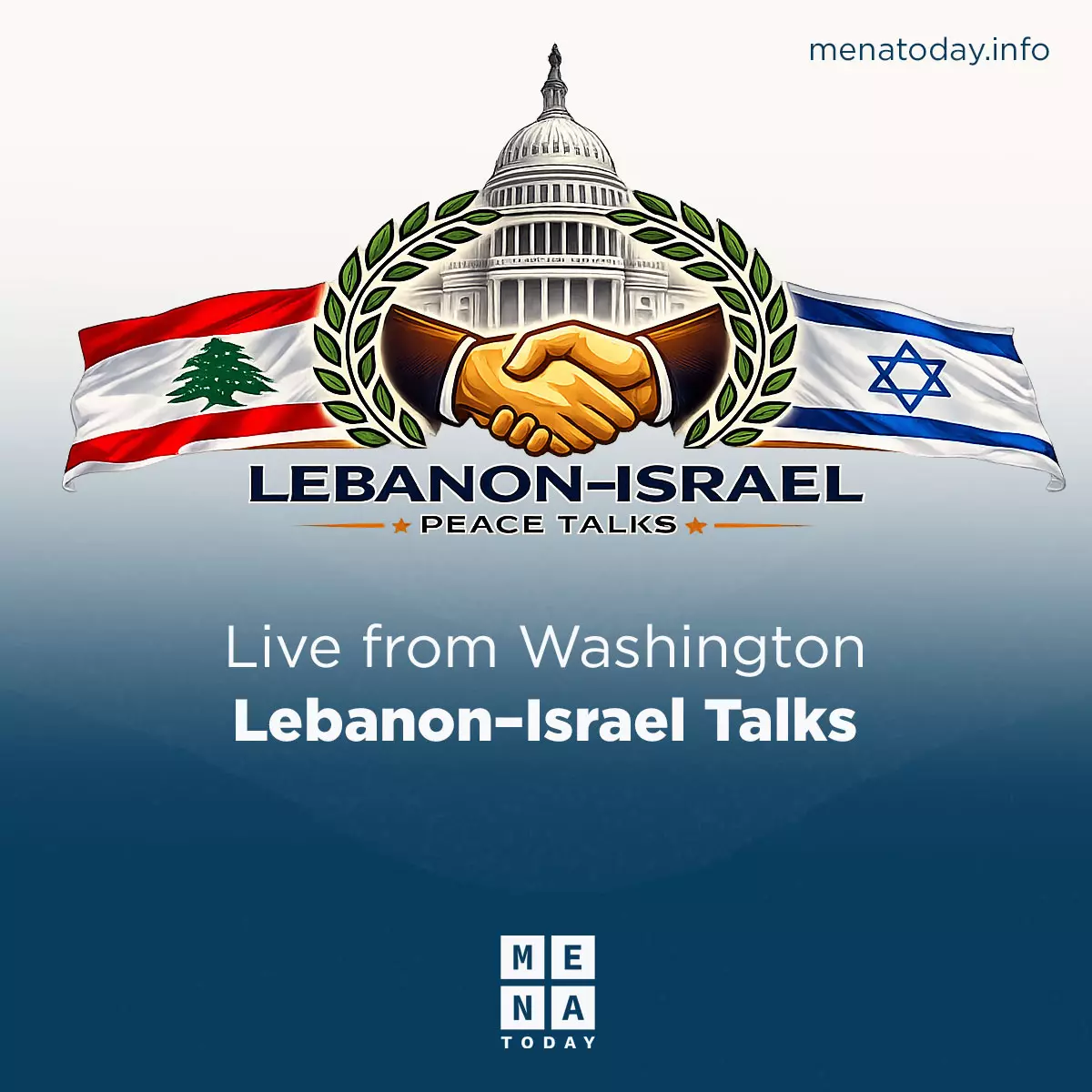
In a historic diplomatic breakthrough, Israel and Lebanon have agreed to enter into direct peace negotiations, following a landmark meeting between their ambassadors in Washington.

Iran secretly acquired a Chinese spy satellite in late 2024 that allowed it to target U.S. military bases across the Middle East during the recent war, the Financial Times reported on Wednesday

The TEE-01B satellite, built and launched by Chinese company Earth Eye Co, was acquired by the Islamic Revolutionary Guard Corps' Aerospace Force after it was launched into space from China © Mena Today
Iran secretly acquired a Chinese spy satellite in late 2024 that allowed it to target U.S. military bases across the Middle East during the recent war, the Financial Times reported on Wednesday.
The TEE-01B satellite, built and launched by Chinese company Earth Eye Co, was acquired by the Islamic Revolutionary Guard Corps' Aerospace Force after it was launched into space from China, the report said, citing leaked Iranian military documents.
Iranian military commanders directed the satellite to monitor major U.S. military sites, the newspaper said, citing time-stamped coordinate lists, satellite imagery and orbital analysis. The images were taken in March before and after drone and missile strikes on those locations, the FT said.
As part of the deal, the IRGC received access to commercial ground stations operated by Emposat, a Beijing-based provider of satellite control and data services with a network extending across Asia, Latin America and other regions, according to the report.
Reuters could not verify the report.
The White House, CIA, Pentagon as well as China's foreign affairs ministry, defence ministry and its embassy in Washington did not immediately respond to Reuters' requests for comment. Earth Eye Co and Emposat also did not immediately respond to Reuters' queries.
The FT said the White House did not comment on the relationship between Emposat and the IRGC, but a spokesperson referred to comments U.S. President Donald Trump made at the weekend when he warned that China would face "big problems" if it provided Iran with air defence systems.
When asked about the matter, the Chinese embassy in Washington told the FT: "we firmly oppose relevant parties spreading speculative and insinuative disinformation against China."
The satellite captured images of Prince Sultan Air Base in Saudi Arabia on March 13, 14 and 15, the FT said.
On March 14, Trump confirmed U.S. planes at the base had been hit.
According to the report, the satellite also monitored the Muwaffaq Salti Air Base in Jordan and locations close to the U.S. Fifth Fleet naval base in Manama, Bahrain, and Erbil airport, Iraq, around the time of IRGC-claimed attacks on facilities in those areas.
Reporting by Shivani Tanna
In a historic diplomatic breakthrough, Israel and Lebanon have agreed to enter into direct peace negotiations, following a landmark meeting between their ambassadors in Washington.
No ships have made it past a U.S. naval blockade of Iran's ports and coastal areas, and six merchant ships have followed orders to turn back, the U.S. military said on Tuesday, providing the first details on a day-old effort ordered by President Donald Trump after peace talks between the U.S. and Iran broke down.
U.S. Secretary of State Marco Rubio hosted the first direct talks between Israel and Lebanon in decades on Tuesday and both sides said they held positive discussions although it was not immediately clear if they agreed to a framework for peace.
To make this website run properly and to improve your experience, we use cookies. For more detailed information, please check our Cookie Policy.
Necessary cookies enable core functionality. The website cannot function properly without these cookies, and can only be disabled by changing your browser preferences.