Lebanon’s political deadlock continues as the country remains without a president since the end of Michel Aoun’s term on October 31, 2022.
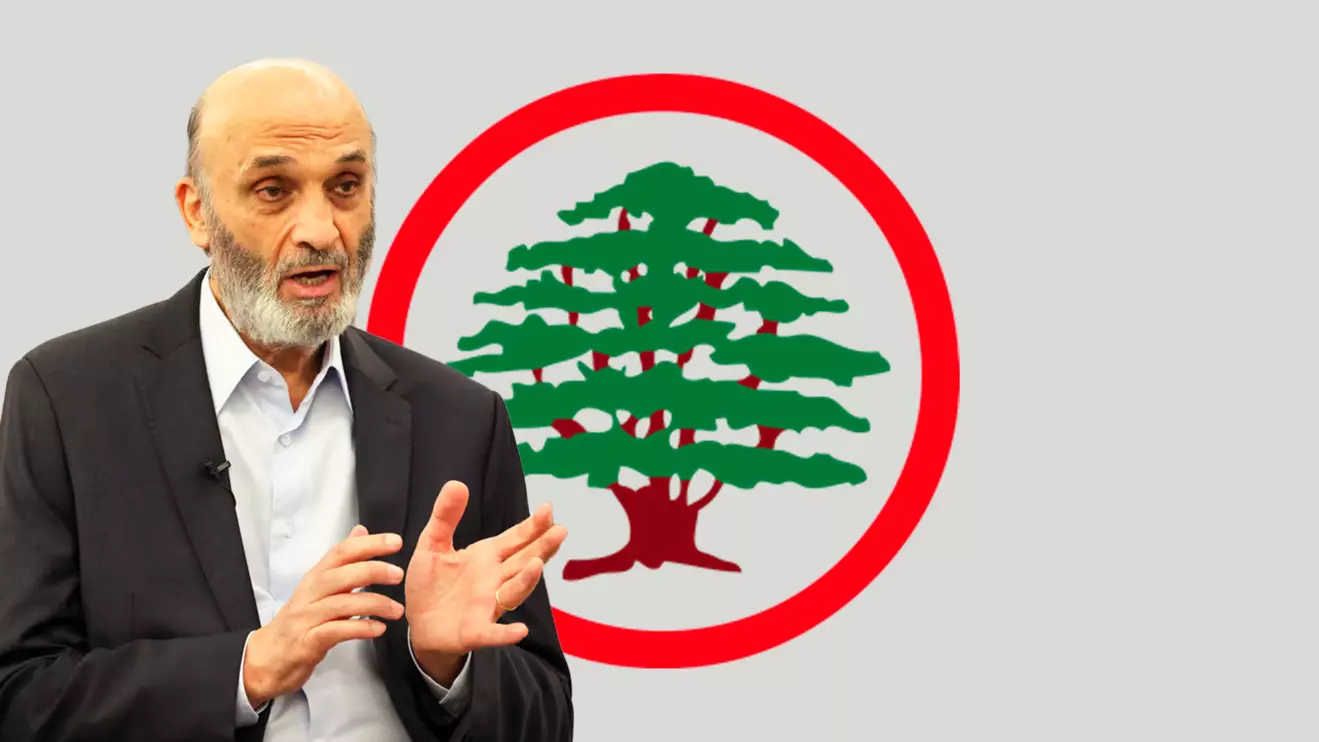
In an interview with LBC, Samir Geagea, leader of the Lebanese Forces (LF), expressed his willingness to hold a parliamentary session to elect a president even without the participation of the Shiite community.
“Yes, I accept a session to elect a president without the participation of the Shiite community. The Constitution permits it, as does the National Pact,” Geagea stated, referring to Lebanon’s unwritten sectarian power-sharing agreement. He added, “For example, if the Maronites rejected a decision, should the country be paralyzed as a result?”
Geagea also criticized Nabih Berry, the Shiite Speaker of Parliament - a close ally of Hezbollah - accusing him of deliberately obstructing the presidential election process.
“Berry’s refusal to hold sessions without the participation of the Lebanese Forces and the Free Patriotic Movement (FPM) shows he doesn’t truly want to convene a session. Adopting such an approach has been a flawed principle, leading to stagnation for 40 years,” Geagea argued.
Geagea’s remarks echo criticism from Maronite Patriarch Béchara Rai, who recently accused Berry of blocking the presidential election. This marked the first time the head of the Maronite Church directly blamed Berry for impeding progress on electing a new head of state.
Geagea proposed two potential solutions to the ongoing crisis: either amending the Constitution to account for current practices and establish a new constitutional framework, or adhering to the existing Constitution, which mandates holding a presidential election. “Demanding consensus before an election is unacceptable,” he stated.
Geagea also addressed the escalating violence between Israel and Hezbollah. “We have about three to four months to clarify the situation, and I expect the fighting to continue or even intensify. Both parties see this as an opportunity to strengthen their positions before a resolution that would limit their maneuverability,” he said.
Criticizing Hezbollah’s strategy, Geagea argued that its calculations have been flawed. “The results so far prove that Hezbollah’s approach has been fundamentally mistaken. Unfortunately, the party persists in this logic, as evidenced by the recent speech of Hezbollah’s Secretary-General, Sheikh Naim Qassem. What is unfolding now aligns exactly with Israel’s plans.”
Geagea highlighted Israel’s rapid advances in southern Lebanon, contrasting them with the protracted campaign in Gaza.
“In one month, the Israelis have occupied around 200 square kilometers in Lebanon, whereas it took them eight to nine months to occupy 360 square kilometers in Gaza. This shows they are far ahead in Lebanon, contrary to Hezbollah’s claims.”
Meanwhile, Hezbollah’s new leader, Naim Qassem, declared on Wednesday his determination to continue the fight against Israel. In his second speech since succeeding Hassan Nasrallah, who was assassinated in an Israeli strike, Qassem vowed to strike Israel on its own soil.
Qassem claimed Hezbollah has tens of thousands of fighters ready to confront Israel and warned that no location in Israel is safe from the group’s missiles and drones.
“Despite the blows we’ve suffered, our resolve remains unshaken, and we will continue to strike back,” he said.