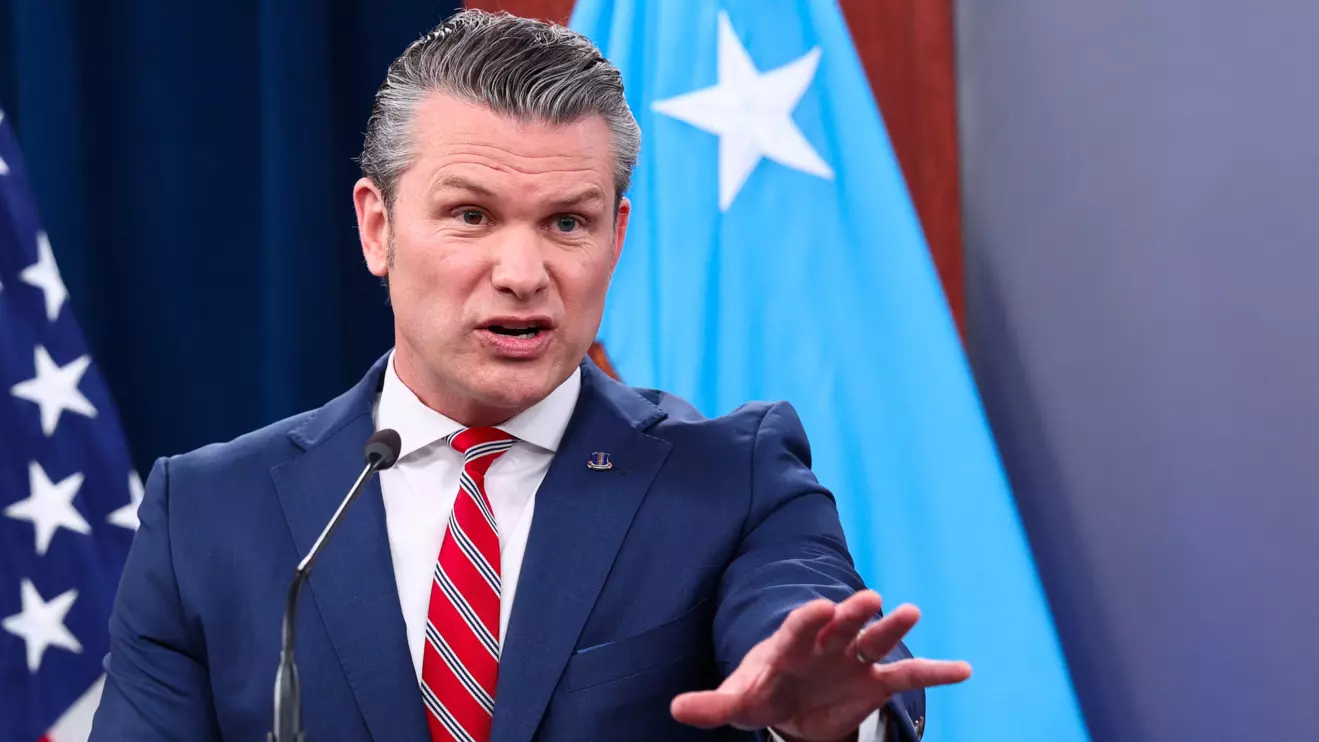
U.S. Defense Secretary Pete Hegseth said on Tuesday that the ceasefire with Iran was not over, even as the U.S. and Iran exchanged fire in the Gulf as they wrestled for control of the Strait of Hormuz.
Hegseth said the U.S. had successfully secured a path through the critical waterway and that hundreds of commercial ships were lining up to pass through, as Washington seeks to break a chokehold Iran has asserted on the Strait of Hormuz since the conflict began on February 28.
"We know the Iranians are embarrassed by this fact. They said they control the strait. They do not," Hegseth told a Pentagon news conference.
The U.S. military says it sank six Iranian small boats and intercepted Iranian cruise missiles and drones, after President Donald Trump sent the navy to escort stranded tankers through the Strait of Hormuz in a campaign he called "Project Freedom."
Several merchant ships in the Gulf reported explosions or fires on Monday, and an oil port in the United Arab Emirates, which hosts a large U.S. military base, was set ablaze by Iranian missiles.
General Dan Caine, the chairman of the Joint Chiefs of Staff, said that since the ceasefire was announced on April 7, Iran had fired at commercial vessels nine times and seized two container ships.
He said Iran has attacked U.S. forces more than 10 times.
However, the attacks fell "below the threshold of restarting major combat operations at this point," Caine told reporters.
Asked whether the ceasefire with Iran still held, Hegseth said: "The ceasefire is not over."
"We said we would defend and defend aggressively, and we absolutely have. Iran knows that, and ultimately, the president can make a decision whether anything were to escalate into a violation of a ceasefire," he said.
The operation is Trump's latest effort to force an end to the disruption of international energy supplies caused by Iran's blockade of the strait, which carried a fifth of global oil and liquefied natural gas before the war.
The U.S. Navy is also enforcing a maritime blockade of Iran, which prevents ships from going to Iran or departing Iranian territory.
By Idrees Ali and Phil Stewart