Israel
No poll bounce for Netanyahu
Israeli Prime Minister Benjamin Netanyahu is racing to pass a state budget and stave off early elections he would likely lose, with the war in Iran so far doing little to improve his standing in the polls.
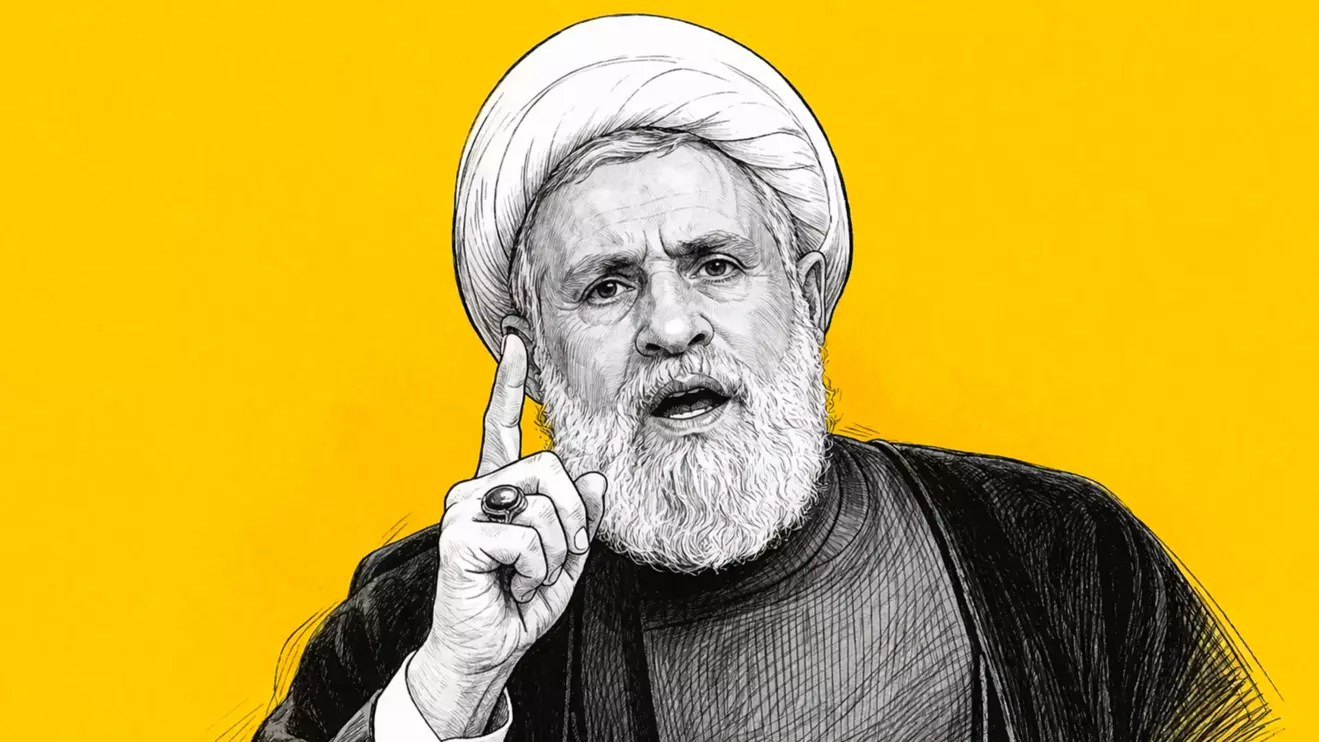
Hezbollah chief Naim Qassem declared Wednesday in a televised speech that negotiating with Israel "under fire" amounted to imposed surrender, calling for unity and vowing his fighters were prepared to continue "without limits."
Naim Qassem © Mena Today
Hezbollah chief Naim Qassem declared Wednesday in a televised speech that negotiating with Israel "under fire" amounted to imposed surrender, calling for unity and vowing his fighters were prepared to continue "without limits."
Strong words. But they come with a critical caveat: the Lebanese government has formally banned Hezbollah from any military activity on Lebanese soil. Qassem is not speaking as a state actor, he is speaking as the head of a terrorist organization openly defying his own country's authorities.
Hezbollah is not an independent force. It is financed, trained, armed and directed by Iran, which ordered the group to attack Israel on March 2nd. What Qassem presents as resistance is in reality a proxy war fought on Lebanese territory, at Lebanon's expense, for Tehran's strategic interests.
As Iran's own leadership fractures under the pressure of war and internal power struggles, Hezbollah's defiant posturing looks increasingly like a cornered actor playing out a script written in Tehran, whether Lebanon wants it or not.
The Lebanese people deserve better than a militia that wages wars they never voted for, on orders from a foreign power.
Israeli Prime Minister Benjamin Netanyahu is racing to pass a state budget and stave off early elections he would likely lose, with the war in Iran so far doing little to improve his standing in the polls.
While Donald Trump's teams are reportedly engaged in discussions over a potential ceasefire with Iran, covering the critical issues of nuclear capabilities, ballistic missiles, and proxy forces including Hezbollah, Hamas, and the Houthis, Tehran is publicly denying any such talks are underway.
Spanish Prime Minister Pedro Sánchez told lawmakers Wednesday that the current Middle East conflict is "far worse" than the Iraq War of 2003, a dramatic claim that says more about his domestic political calculations than any genuine diplomatic insight.
To make this website run properly and to improve your experience, we use cookies. For more detailed information, please check our Cookie Policy.
Necessary cookies enable core functionality. The website cannot function properly without these cookies, and can only be disabled by changing your browser preferences.