Hezbollah said on Wednesday the Lebanese government was committing a "grave sin" by tasking the army with establishing a state monopoly on arms, sharpening a national divide over calls for the Shi'ite Muslim group to disarm.
Despite unprecedented pressure from Washington and from its domestic rivals, the Iran-backed group has refused to fully relinquish its arsenal, which it retained after Lebanon's civil war ended in 1990 even as other militias disarmed.
Now, the U.S. has demanded Lebanon's cabinet explicitly pledge to strip Hezbollah of its weapons - a move that risks reigniting tensions in Lebanon, a nation of multiple sects where Hezbollah retains significant support among Shi'ites.
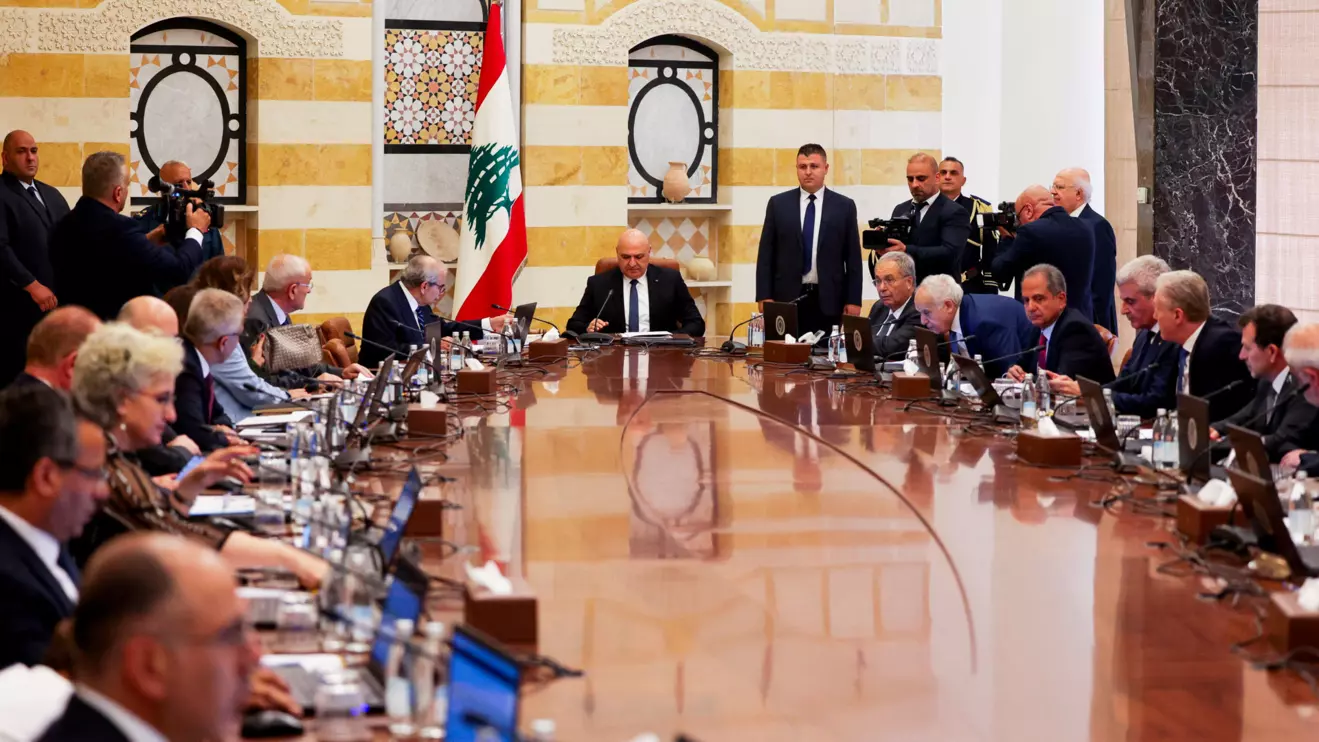
The cabinet on Tuesday tasked the Lebanese army with drawing up a plan to confine arms across the country to six official security forces by year's end.
Hezbollah rejected the decision in a written statement on Wednesday, saying it was a result of U.S. "diktats" and that it would "deal with it as if it does not exist".
"The government of Prime Minister Nawaf Salam committed a grave sin by taking a decision to strip Lebanon of its weapons to resist the Israeli enemy... This decision fully serves Israel's interest," the group said.
The statement said Shi'ite ministers walked out of the cabinet session before the decision was reached as "an expression of the resistance's (Hezbollah's) rejection of this decision".
The group said it remained ready to discuss a broader national security strategy and called on its supporters to remain patient.
WAR WITH ISRAEL
The session at Lebanon's presidential palace was the first time the cabinet addressed Hezbollah's weapons - unimaginable when the group was at the zenith of its power before a devastating war with Israel last year.
A U.S.-brokered ceasefire between Lebanon and Israel in November ended that conflict, called on Lebanon to confiscate all "unauthorized" weapons across the country and said Israel would stop offensive operations against Lebanese targets.
But Israel has kept its troops at five points in Lebanon's southern border region and has continued air strikes against what it says are Hezbollah fighters and arms depots.
In June, the U.S. submitted a roadmap to Lebanese officials that proposed Hezbollah fully disarm in exchange for Israel withdrawing its troops and halting its strikes.
Hezbollah and its main ally, the Amal Movement led by parliament speaker Nabih Berri, have demanded the order be reversed, saying Israel must halt its strikes before any discussion on weapons can be held.
On Wednesday, Amal said Lebanon's government should focus on consolidating the November ceasefire and said the next cabinet session on Thursday would be a chance to correct course.
Ministers will meet again on Thursday to continue discussions on the U.S. proposal.
Imad Salamey, chairman of the Lebanese-American University's Department of Political and International Studies, said the country's Shi'ite community, hit hardest by last year's war, was now concerned that relinquishing Hezbollah's arms would leave them vulnerable to further Israeli attacks.
"We are most probably going into a polarized political landscape," he told Reuters.
Reporting by Maya Gebeily and Laila Bassam