The stakes in the confrontation with Iran extend far beyond the Middle East. If Tehran emerges from this crisis looking stronger, the damage will not be confined to Israel or the Gulf.
It will become a global psychological event, proof, in the eyes of America's rivals and wavering allies, that the United States can still strike, but can no longer impose a strategic outcome.
That perception would be devastating.
Gulf states will not abandon Washington overnight. They still need American weapons, intelligence and naval power. But they will hedge more openly, and some already are.
Saudi Arabia has signed oil-in-yuan contracts with China. The UAE has expanded financial ties with Beijing. These are insurance policies, purchased while the relationship with Washington still felt secure. An Iranian survival narrative would accelerate that logic across every Gulf capital.
Israel's calculation would be different, and more dangerous.
For Jerusalem, a stronger Iran means direct existential threat. If Iran appears to win, Israel will become more aggressive, not less, pushing Washington for a harder line while reserving the right to act alone. An emboldened Iran and a more desperate Israel is precisely the combination most likely to produce the wider war everyone claims to want to avoid.
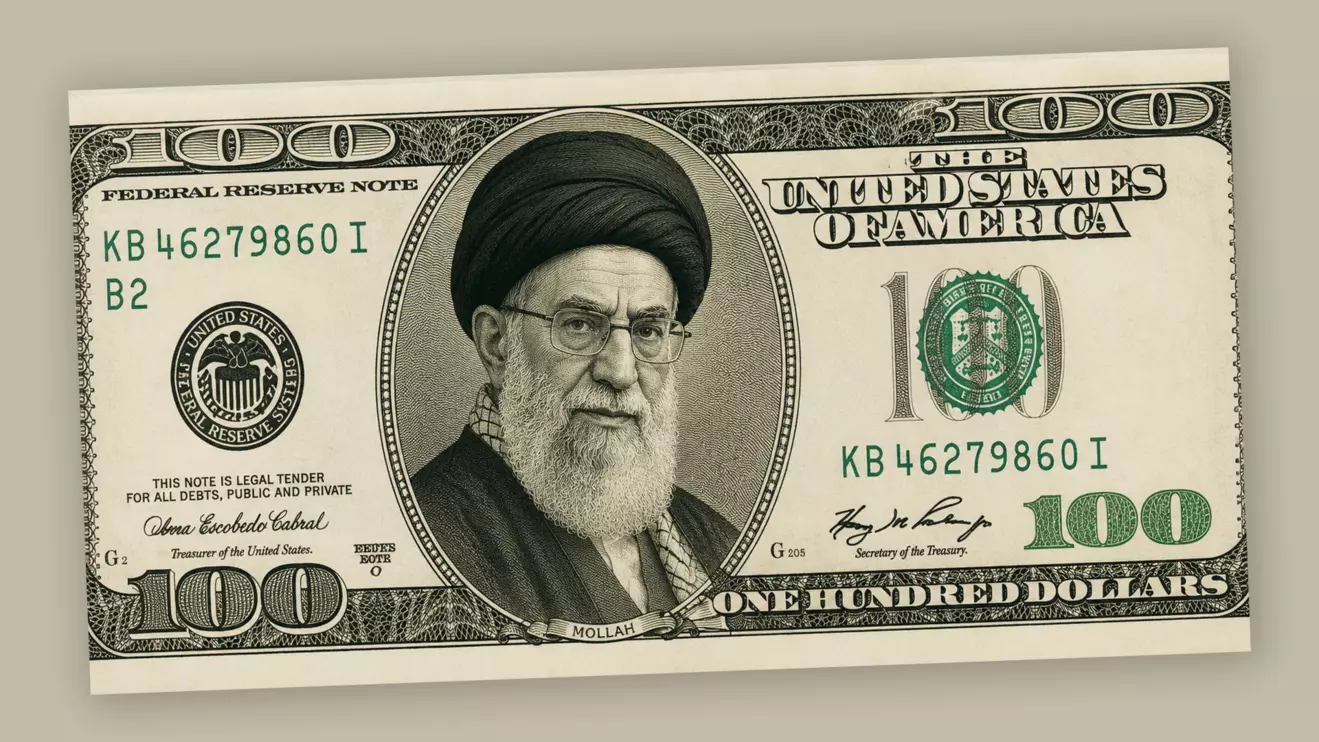
The Dollar at Stake
The most consequential damage may unfold far from any battlefield, in the global financial system.
The dollar is not just a currency. It is the central nervous system of American power. If Iran appears to win, China will immediately exploit the moment to argue that the American order is no longer reliable.
Beijing will push harder for oil trade in yuan. Alternative payment systems will gain ground. Russia will amplify the message. Some Gulf states, while still tied to Washington, will quietly expand non-dollar arrangements, not out of ideology, but out of prudence.
China cannot replace the dollar tomorrow. But it doesn't need to. It only needs to weaken the belief that the dollar system is permanent. An Iranian survival narrative, broadcast globally as proof that American power can be exhausted, would do exactly that.
The United States cannot afford an outcome that allows Tehran to claim victory. In international politics, perception becomes power.
If Iran convinces the world that America can be challenged and outlasted, the Middle East will not be the only battlefield America loses.