Israel
Israel and Greece flex naval muscle in joint Mediterranean drill
The Israeli and Hellenic navies have carried out a joint exercise in the Mediterranean Sea, led by the commanders of both forces.

Inflation in Turkey significantly slowed in July, dropping to 61.78% year-on-year from 71.6% in June, according to official figures released on Monday.
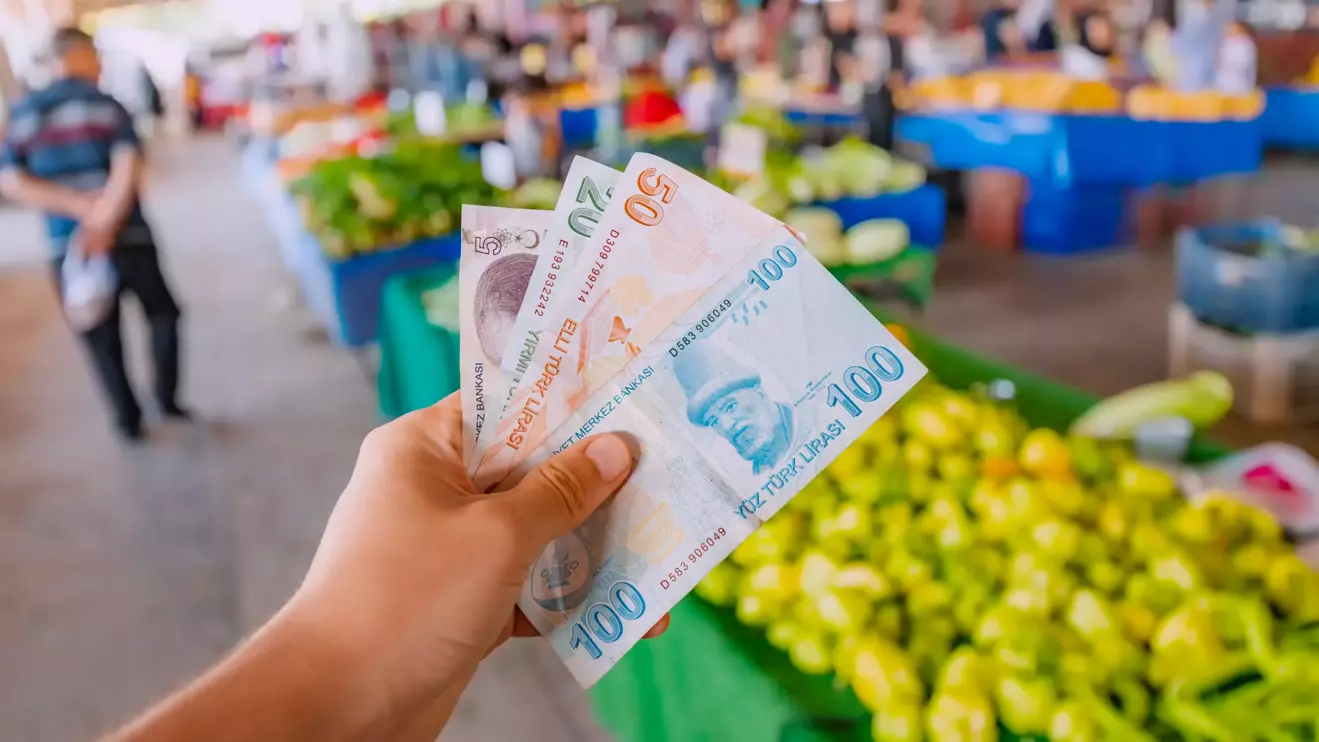
Analysts attribute the inflation crisis as a major factor in the Justice and Development Party (AKP)'s poor performance in the local elections held in late March © Mena Today
Inflation in Turkey significantly slowed in July, dropping to 61.78% year-on-year from 71.6% in June, according to official figures released on Monday.
Despite this annual slowdown, the month-on-month increase in consumer prices accelerated, rising to 3.23% in July compared to 1.64% in June.
The annual surge in prices has particularly affected sectors such as education (+104.5%), housing (+98.4%), hospitality and restaurants (+76%), and health (+63.2%), as reported by the Turkish Statistical Institute.
Turkish Economy Minister Mehmet Simsek expressed optimism on social media platform X, stating, "Annual inflation is decreasing. We continue to receive positive results in all areas of our program, whose main objective is disinflation.
The reduction in inflation will be more noticeable in the coming period." Inflation typically falls in Turkey during the summer due to reduced energy consumption and an influx of foreign currency from tourism.
The Central Bank of Turkey predicts that inflation will be at 43.5% year-on-year by the end of 2024 and 25.5% by the end of 2025. Inflation had previously surged from 38.2% in June 2023 to 75.45% in May, showing a nearly continuous acceleration.
At the end of July, the central bank kept its benchmark interest rate unchanged at 50% for the fourth consecutive month, citing close monitoring of the inflation slowdown that began in June following the peak in May.
Political and Economic Implications
Analysts attribute the inflation crisis as a major factor in the Justice and Development Party (AKP)'s poor performance in the local elections held in late March.
The AKP, led by President Recep Tayyip Erdogan, faced significant setbacks due to the economic challenges.
However, the official inflation figures have been contested by independent economists from the Inflation Research Group (Enag), who estimate the annual increase in consumer prices to be 100.88%.
As Turkey navigates its inflationary challenges, the government remains focused on implementing measures to achieve long-term economic stability and reduce the impact on its citizens.
The Israeli and Hellenic navies have carried out a joint exercise in the Mediterranean Sea, led by the commanders of both forces.
The Israeli military forced around 1,200 Palestinians to leave their homes in Hebron in the occupied West Bank, a Palestinian official said on Saturday, a day after a Palestinian attack killed two Israeli soldiers.
Ras Al Khaimah authorities said on Saturday that all beaches in the emirate would be closed until further notice, a day after an offshore oil leak prompted beach closures in neighbouring Umm Al Quwain and Sharjah.

To make this website run properly and to improve your experience, we use cookies. For more detailed information, please check our Cookie Policy.
Necessary cookies enable core functionality. The website cannot function properly without these cookies, and can only be disabled by changing your browser preferences.