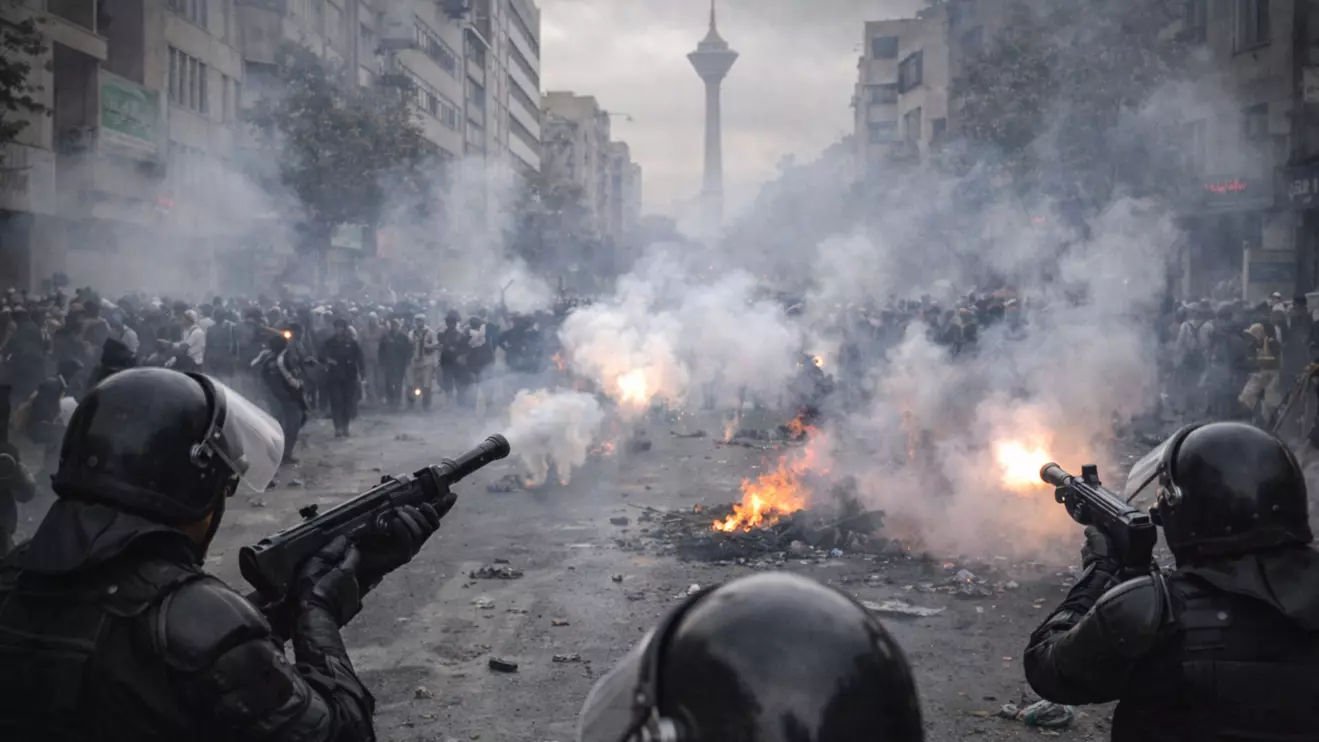
European Commission President Ursula von der Leyen promised Tuesday that new sanctions against Tehran would be "rapidly" proposed to the 27 member states, after an "appalling" toll of victims from the repression of protests in Iran.
"New sanctions targeting those responsible for the repression will be rapidly proposed," she stated on social media platform X.
But her carefully diplomatic language barely captures the horror unfolding in Iran.
At least 2,000 people have been slaughtered by the regime's forces in just two weeks. Slaughtered, not "killed in clashes" or "died during protests." Murdered by a theocratic dictatorship determined to drown freedom in blood.
And even that staggering figure likely understates the carnage. Sources inside Iran contacted by Menatoday.info cite death tolls between 3,000 and 4,000 victims. The regime is killing Iranians faster than independent observers can count the bodies.
Twelve hundred dead in two weeks. That's 85 people killed every single day. More than three murdered every hour, around the clock, for fourteen consecutive days. This isn't crowd control gone wrong or isolated incidents of excessive force. This is systematic, deliberate mass killing.
The Iranian regime isn't trying to disperse protesters, it’s trying to exterminate the protest movement through terror. Shoot enough people, kill enough teenagers, massacre enough mothers and fathers, and perhaps the survivors will be too traumatized to continue demanding freedom. That's the calculation in Tehran.
Iranian security forces are firing live ammunition directly into crowds of unarmed civilians.
They're shooting people in the head and chest, kill shots, not warning shots. They're gunning down protesters in the streets, then preventing ambulances from reaching the wounded, ensuring that injuries become fatalities. They're raiding hospitals to arrest or finish off survivors.
And what does Europe offer? Sanctions. "Rapidly proposed" sanctions. How reassuring for the Iranian mother whose son was shot in the face yesterday. How comforting for the father watching his daughter bleed out because security forces won't let anyone help her. How meaningful for the teenager about to be executed for the crime of demanding freedom.
Sanctions. The same tired, ineffective tool that has accomplished precisely nothing for four decades. The same meaningless gesture that allows European leaders to claim they're "doing something" while Iranians die by the thousands.
Von der Leyen calls the death toll "appalling." Appalling? Try monstrous. Try evil. Try genocidal. But "appalling" is the strongest word European diplomacy can muster while a regime massacres its own population at industrial scale.
The Complicity of Inaction
Europe has watched Iranian brutality for weeks now. The world has seen the videos: security forces shooting protesters, beating people to death, torturing prisoners. The evidence is overwhelming, undeniable, and readily available on every social media platform.
Yet Europe's response has been glacially slow, painfully inadequate, and utterly toothless. New sanctions will be "rapidly proposed"—but not immediately implemented, not comprehensive, and certainly not crippling enough to force regime change.
Meanwhile, Iranians are dying. Not in abstract future scenarios that sanctions might eventually influence, but right now. Today. This hour. As European bureaucrats schedule meetings to discuss proposals for sanctions that might be adopted next month.
The Massacre Continues
The true death toll may never be known. The regime controls hospitals, morgues, and cemeteries. It pressures families to bury victims quickly and quietly. It threatens anyone who speaks about casualties. Bodies disappear. Records are destroyed. Witnesses are silenced.
Iran doesn't need sanctions. It needs intervention. It needs a no-fly zone to prevent the regime from using helicopters to hunt protesters. It needs arms for the resistance fighters battling security forces. It needs international recognition of the revolution and support for a provisional government.
At minimum, it needs sanctions so severe they paralyze the regime immediately, not "rapidly proposed" measures that might take effect eventually. Total economic isolation. Freezing of all regime assets. Expulsion of Iranian diplomats. Closure of embassies. Support for armed resistance.
Instead, Europe offers tepid condemnation and promises to maybe, possibly, eventually impose some additional sanctions on some officials responsible for some of the killing. It's insulting. It's cowardly. And it's complicit.
Every day Europe delays decisive action, it shares responsibility for Iranian deaths. The regime calculates, correctly, that it can massacre thousands without facing serious consequences from the international community. Why wouldn't it continue killing when the worst punishment is strongly worded statements and symbolic sanctions?
Europe's failure isn't just diplomatic inadequacy. It's moral bankruptcy. Western leaders claim to support human rights, democracy, and freedom. But when Iranians fight and die for those very values, Europe responds with bureaucratic processes and cautious incrementalism.
The Iranian people don't have time for Europe's gradual escalation of sanctions. They're being murdered now. They need help now. They're risking everything for freedom right now, while Europe schedules committee meetings to discuss potential future actions.
There's only one acceptable outcome: the complete collapse of the Islamic Republic. Not reform. Not negotiation. Not a power-sharing arrangement. Total regime change.