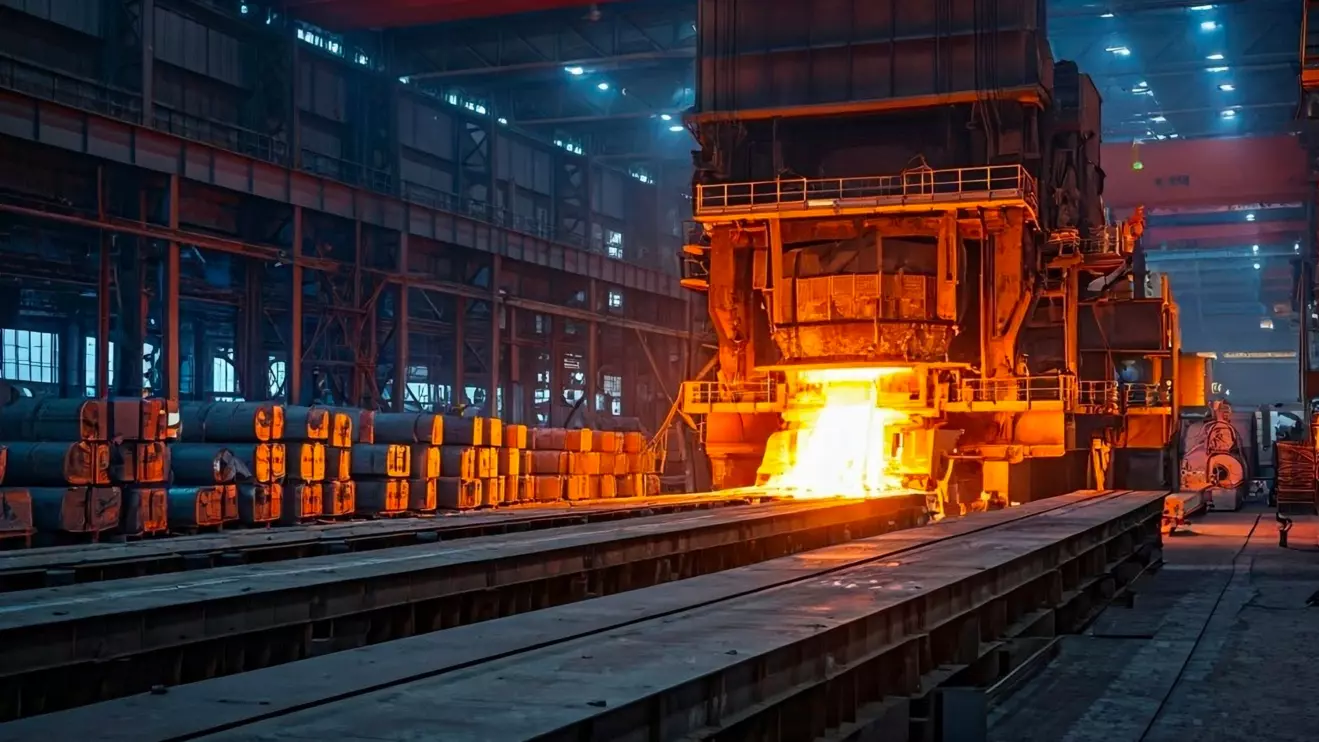
Israeli Prime Minister Benjamin Netanyahu announced Friday that Israeli air strikes have destroyed 70% of Iran's steel production capacity, a claim that followed the shutdown of the country's two largest steel companies, both crippled by coordinated Israeli-American strikes.
"Over the past few days, the air force has destroyed 70% of Iran's steel production capacity. This is a formidable result that deprives the Revolutionary Guards of both financial resources and the ability to produce many weapons," Netanyahu declared in a video statement released by his office.
He added, with characteristic directness: "In full coordination with President Trump, we will continue to crush Iran."
The announcement came one day after Iran's two premier steel producers confirmed they had been forced to halt operations following repeated strikes.
The Khuzestan Steel Company, located in the country's southwest, and the Mobarakeh Steel Company, situated in Isfahan province in central Iran, have both sustained sustained and escalating attacks over the past week.
The strategic significance of these targets cannot be overstated. Steel is not merely an industrial commodity, it is a critical input for Iran's military-industrial complex.
Missiles, drones, naval vessels, armoured vehicles: all require steel. By systematically dismantling Iran's production capacity, Israel and the United States are not just hitting economic targets, they are degrading Iran's ability to replenish and sustain its weapons arsenal.
The financial dimension is equally significant.
Iran's steel sector is a major source of revenue for the state and, by extension, for the Revolutionary Guards, the ideological army that funds Hezbollah, the Houthis and other proxy forces across the region. Destroying 70% of production capacity, if Netanyahu's figures are accurate, represents a severe blow to those funding streams.