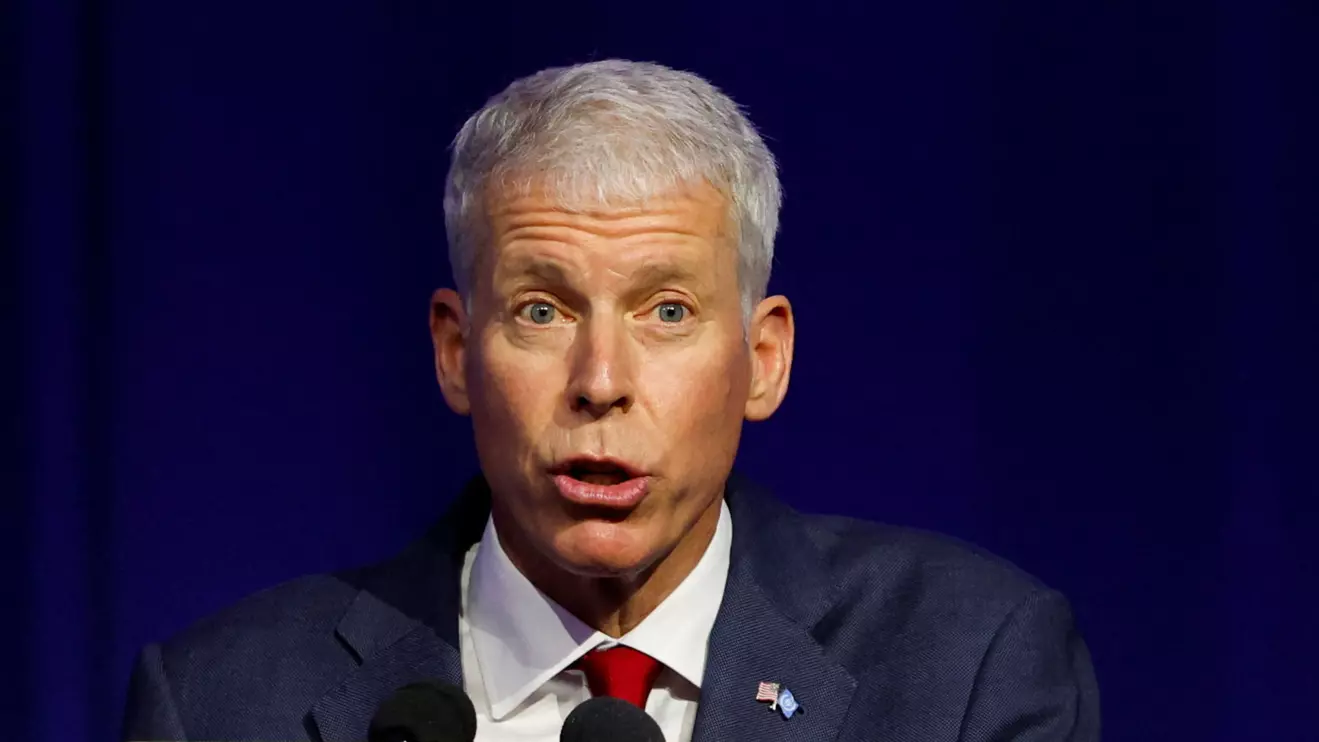
Iran's uranium-enrichment programme must be "completely dismantled", U.S. Energy Secretary Chris Wright told the U.N. nuclear watchdog's annual General Conference on Monday.
The U.S. and Israel bombed Iran's uranium-enrichment plants in June, arguing Iran was getting too close to being able to produce a nuclear weapon, even though the International Atomic Energy Agency that inspects Iran's nuclear facilities said it had no credible indication of a coordinated weapons programme.
The IAEA has, however, said it is concerning that Iran amassed an estimated 440.9 kg (972 lbs) of uranium enriched to up to 60% purity, close to the roughly 90% of weapons-grade. That is enough, if enriched further, for 10 nuclear bombs, according to an IAEA yardstick.
Iran's enrichment plants were seriously damaged or destroyed in the attacks. It is less clear what happened to its stock of enriched uranium. The IAEA has not been able to carry out verification inspections since the attacks.
"If it wasn't already clear enough, I will restate the United States' position on Iran," Wright said in a speech to the meeting of all IAEA member states.
"Iran's nuclear weapons pathway, including all (uranium) enrichment and (plutonium) reprocessing capabilities, must be completely dismantled."
E3 IN PROCESS OF REIMPOSING SANCTIONS
Britain, France and Germany, known as the E3, have initiated a one-month process to re-impose sanctions on Iran lifted under a 2015 nuclear deal that unravelled after President Donald Trump pulled the United States out in 2018.
The E3 have said they might hold off on completing that process if Iran lets IAEA inspections fully resume, accounts for its enriched uranium and holds direct nuclear talks with the United States.
Iran reached an agreement with the IAEA last week to pave the way towards resuming inspections. It is unclear whether enough progress will be made to satisfy the Europeans.
Tehran insists, however, that it has the right to enrich uranium, as all parties to the nuclear Non-Proliferation Treaty (NPT) do, provided they use nuclear technology solely for peaceful purposes. It denies seeking nuclear weapons.
Israel, by contrast, is not a party to the NPT and is widely believed to be the only country in the Middle East to possess nuclear weapons. Israel has a policy of not commenting on that subject.
"We hope dialogues restart and we hope they're successful. I think there's a reasonable chance they will be," Wright later told a press conference.
Asked what the United States was offering Iran, he said: "Rejoining the community of trading nations, removal of sanctions. It would be a home run for the Iranian people, and we've talked about other things as well, so there's plenty of carrots for Iran to abandon their nuclear weapons programme."