Iran
One country votes. The other executes
On the eve of Israel’s general election, Iran said on Monday that the outcome would make no difference to the Islamic Republic. The remarks echo the regime’s long-standing rhetoric toward Israel.

Yemen's Houthi rebels have threatened to strike Saudi airports and vital assets in response to what they described as a Saudi military intrusion into their airspace, in the latest display of aggression from one of Iran's most powerful regional proxy forces.
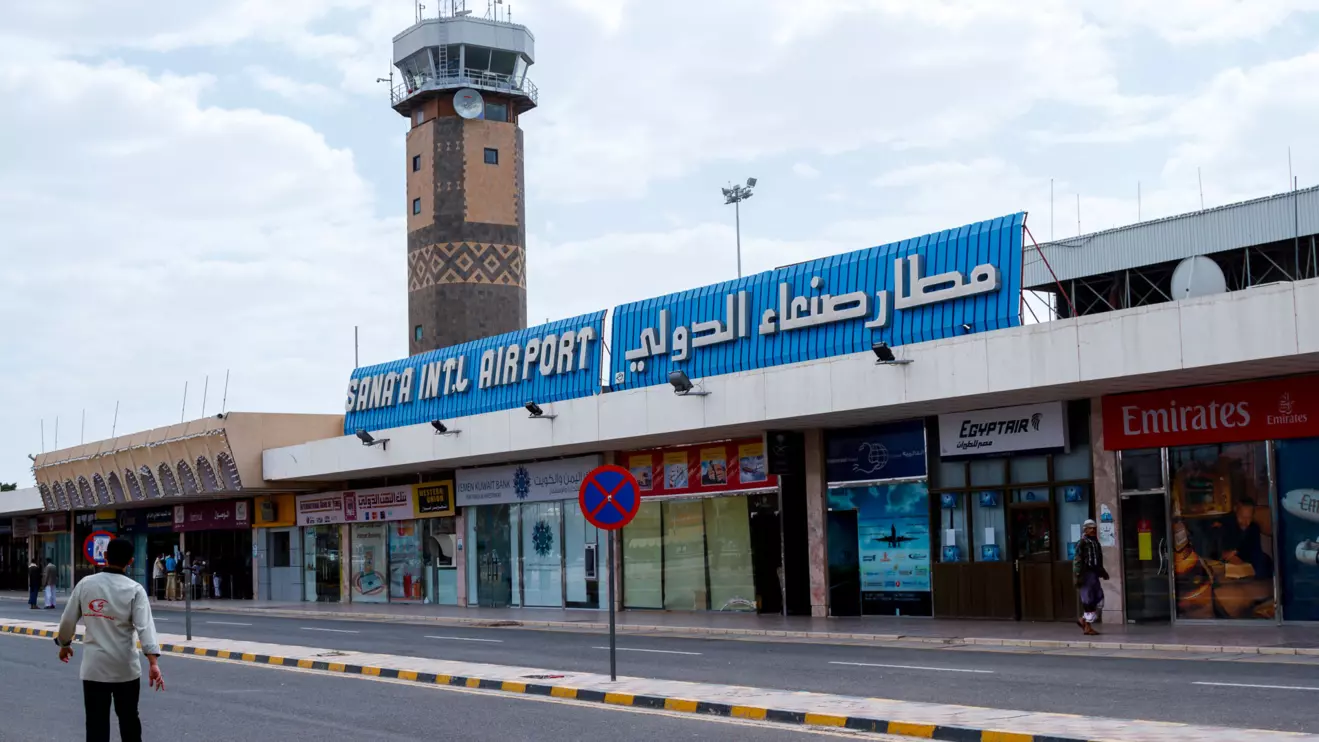
Sanaa International Airport in Yemen © Mena Today
Yemen's Houthi rebels have threatened to strike Saudi airports and vital assets in response to what they described as a Saudi military intrusion into their airspace, in the latest display of aggression from one of Iran's most powerful regional proxy forces.
Houthi military spokesman Yahya Saree issued the warning in a video message, declaring that "any new attempt to violate our airspace or any aggression will be met with a comprehensive response targeting Saudi airports and vital interests on land and at sea."
The incident was triggered by what the Houthis claimed was a Saudi attempt to prevent an Iranian civilian aircraft carrying over 200 passengers, including wounded and sick citizens, from landing at Sanaa international airport.
According to Houthi media, the plane ultimately landed and later departed for Tehran carrying a Houthi delegation attending the funeral of Supreme Leader Ali Khamenei.
Iran's Yemeni Hand
The episode is a reminder of a reality that too often gets lost in coverage of the Yemen conflict: the Houthis are not an independent actor. They are, like Hezbollah in Lebanon and Hamas in Gaza, a fully owned instrument of Iranian foreign policy, created, armed, funded and directed by Tehran to project power across the region and apply pressure on Iran's adversaries at minimum cost to the Islamic Republic itself.
The Houthis joined the regional conflict on March 28, launching missiles toward Israel in solidarity with Tehran before a regional ceasefire was established. Their willingness to escalate against Saudi Arabia, a country with which they have been at war for over a decade, reflects not Yemeni national interest, but Iranian strategic calculation.
Yemen, the poorest country on the Arabian Peninsula, has been divided for more than a decade between the Houthis, who control most of the north, and the internationally recognised government backed by Saudi Arabia. Its people have paid an enormous price for being the ground on which Iran chooses to fight its proxy wars.
The threat against Saudi airports is, in this context, entirely consistent with the pattern: whenever Tehran needs leverage, its proxies apply pressure. The Houthis are simply the Yemeni chapter of a regional militia network that answers to one address, Tehran.
By Hassan Gohrb
On the eve of Israel’s general election, Iran said on Monday that the outcome would make no difference to the Islamic Republic. The remarks echo the regime’s long-standing rhetoric toward Israel.
Top officials from Mecca Pact countries Saudi Arabia, Turkey and Pakistan are to meet Iran's leaders in Tehran on Monday in their first high-level contact since the kingdom became a pressure point in the wider Iran conflict.
Attacks by Yemen's Iran-aligned Houthis have nearly emptied the skies over Riyadh this month, aviation data showed on Monday, with cancellations grounding almost nine out of every 10 scheduled flights at the Saudi capital's airport.
To make this website run properly and to improve your experience, we use cookies. For more detailed information, please check our Cookie Policy.
Necessary cookies enable core functionality. The website cannot function properly without these cookies, and can only be disabled by changing your browser preferences.