Iran
One country votes. The other executes
On the eve of Israel’s general election, Iran said on Monday that the outcome would make no difference to the Islamic Republic. The remarks echo the regime’s long-standing rhetoric toward Israel.

Having choked off shipping through the Strait of Hormuz, Iran is now signaling it could play its most dangerous card yet: using Yemen's Houthi allies to shut the Bab el-Mandeb gateway to the Red Sea, opening a new front against Washington and putting two of the world's most vital energy arteries at risk.
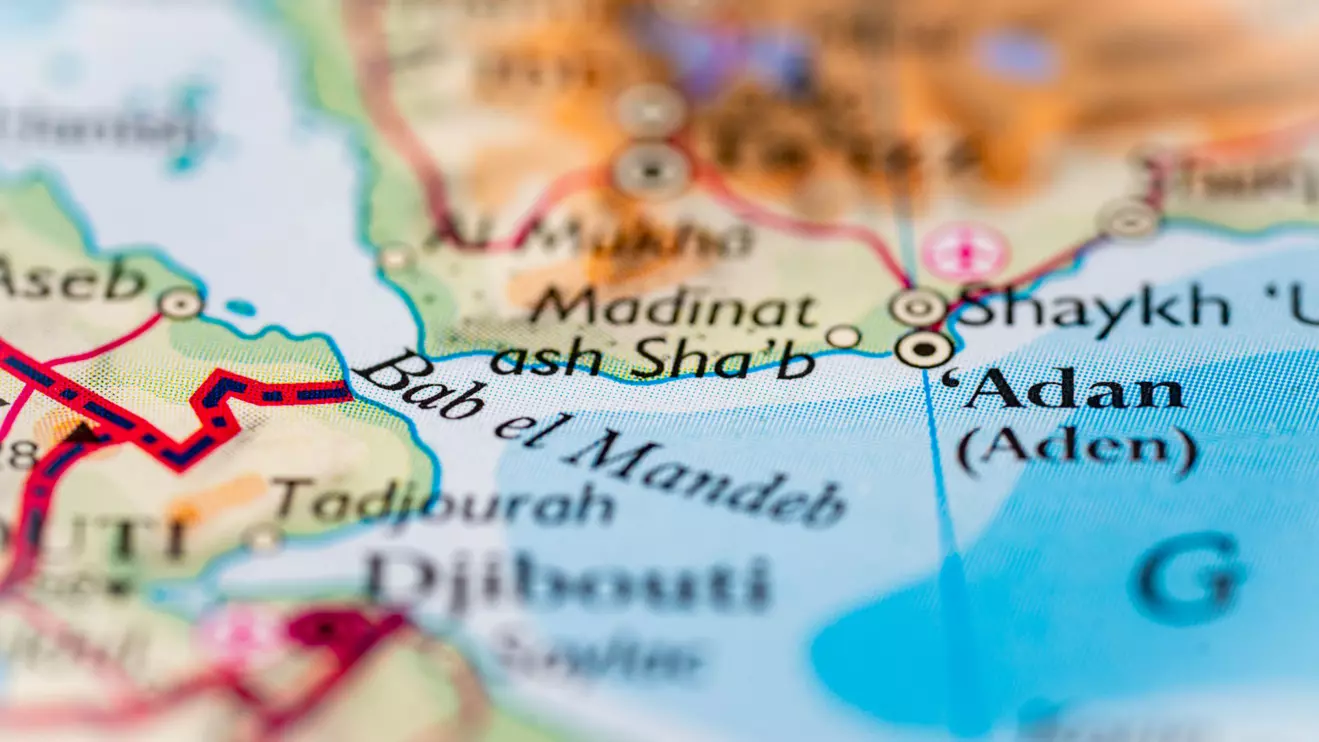
Iran has already demonstrated the power of its most valuable strategic asset by disrupting traffic through Hormuz © Mena Today
Having choked off shipping through the Strait of Hormuz, Iran is now signaling it could play its most dangerous card yet: using Yemen's Houthi allies to shut the Bab el-Mandeb gateway to the Red Sea, opening a new front against Washington and putting two of the world's most vital energy arteries at risk.
As U.S. strikes deepen inside Iran and Houthi attacks escalate in tandem, analysts say Tehran is widening the conflict and seeking to increase pressure on Washington by extending the threat to global trade and energy supplies beyond the Gulf.
Iran has already demonstrated the power of its most valuable strategic asset by disrupting traffic through Hormuz. Now it appears ready to open a second pressure point at Bab el-Mandeb, the narrow waterway linking the Red Sea to the Gulf of Aden through which Saudi oil exports and a substantial share of global shipping pass.
A senior Yemeni official warned on Monday that the country's armed forces were prepared to close the Bab el-Mandeb Strait - a move he said could send oil prices soaring to $200 a barrel - if Saudi Arabia continued to attack Yemen, according to a report on Iran's Press TV website.
Mohammed al-Farah, a member of the political bureau of Ansarullah, the Houthi resistance movement, said Washington was inciting Saudi Arabia to strike Yemen and that such a provocation would never be in the interest of the United States.
"If the current situation aggravates, the Bab el-Mandeb Strait and the Strait of Hormuz will be closed in an operational alliance. Oil prices would then skyrocket to $200 a barrel in a dreadful shock," he warned.
If Hormuz is Tehran's strongest strategic lever, Bab el-Mandeb may be its last major reserve, analysts said.
"Iran is willing to go all the way," Middle East scholar Fawaz Gerges told Reuters. He said Tehran was showing Washington it could threaten both chokepoints simultaneously, transforming the conflict from a bilateral confrontation into a challenge to the sea lanes underpinning global energy trade.
"Now (Tehran) is escalating both near and wide. The message is that not only Hormuz, but Bab al-Mandab, is at risk."
'MISSION CREEP'
The danger, analysts say, is less an immediate return to all-out war than a slow but relentless "mission creep" in which each side raises the stakes without crossing into direct confrontation.
As the conflict spreads from the Gulf to the Red Sea, the growing threat to trade and energy supplies could also increase pressure on Washington and Tehran to return to negotiations before the world's two most important oil chokepoints become the conflict's defining battleground.
Dennis Ross, a former U.S. Middle East peace negotiator, said from Washington's point of view, "the issue is, how do you change the Iranian calculus to the point where they're ready, again, to talk, but not just to talk, but actually to work out an arrangement that is ... acceptable."
HOUTHI ATTACKS ON COMMERCIAL SHIPPING
The Houthis have already shown they can choke global commerce through the Bab el-Mandeb. After the Gaza war erupted in October 2023, the Iran-backed group launched attacks on commercial shipping in the Red Sea, saying it was targeting vessels linked to Israel in support of Palestinians.
The campaign forced major shipping companies to reroute vessels around southern Africa, raising transport costs, and prompted U.S. and British airstrikes as well as a multinational naval mission to protect shipping.
Andreas Krieg, a senior lecturer at King's College London's School of Security Studies, described the latest Houthi threat as "another nuclear option" for Iran after Hormuz — one it would deploy only if the Islamic Revolutionary Guard Corps concluded that a return to all-out war had become unavoidable.
But he warned that if Washington intensified strikes on Iran's critical infrastructure, Tehran could respond by using its Yemeni allies to close Bab el-Mandeb, compounding the economic shock already caused by the Strait of Hormuz.
Abdulaziz Sager, chairman of the Saudi-based Gulf Research Center, said Gulf states increasingly believe diplomacy with Iran has reached its limits, despite the high cost that any wider confrontation would impose on the region.
"Both a victorious Iran and a defeated Iran carry consequences for the region," said Sager, adding that "many Gulf states may consider the costs of the latter to be more acceptable if they lead to a more stable regional security environment".
He said the Houthis retain the capability to disrupt navigation through Bab el-Mandeb but are unlikely to escalate without clear direction from Tehran. Any Houthi attempt to threaten shipping, he added, could trigger a broader military response from the United States and its partners aimed at significantly degrading the group's capabilities.
The war, launched in late February by the U.S. and Israel, has destabilised the Gulf and spread across the region, with Iran attacking U.S. bases in multiple countries. Thousands of people have been killed in the war, mainly in Iran and Lebanon.
By Samia Nakhoul
On the eve of Israel’s general election, Iran said on Monday that the outcome would make no difference to the Islamic Republic. The remarks echo the regime’s long-standing rhetoric toward Israel.
Tomorrow, Israelis head to the polls for the first time since the October 7, 2023 Hamas attack. For months, Benjamin Netanyahu looked set to lose.
Top officials from Mecca Pact countries Saudi Arabia, Turkey and Pakistan are to meet Iran's leaders in Tehran on Monday in their first high-level contact since the kingdom became a pressure point in the wider Iran conflict.
To make this website run properly and to improve your experience, we use cookies. For more detailed information, please check our Cookie Policy.
Necessary cookies enable core functionality. The website cannot function properly without these cookies, and can only be disabled by changing your browser preferences.