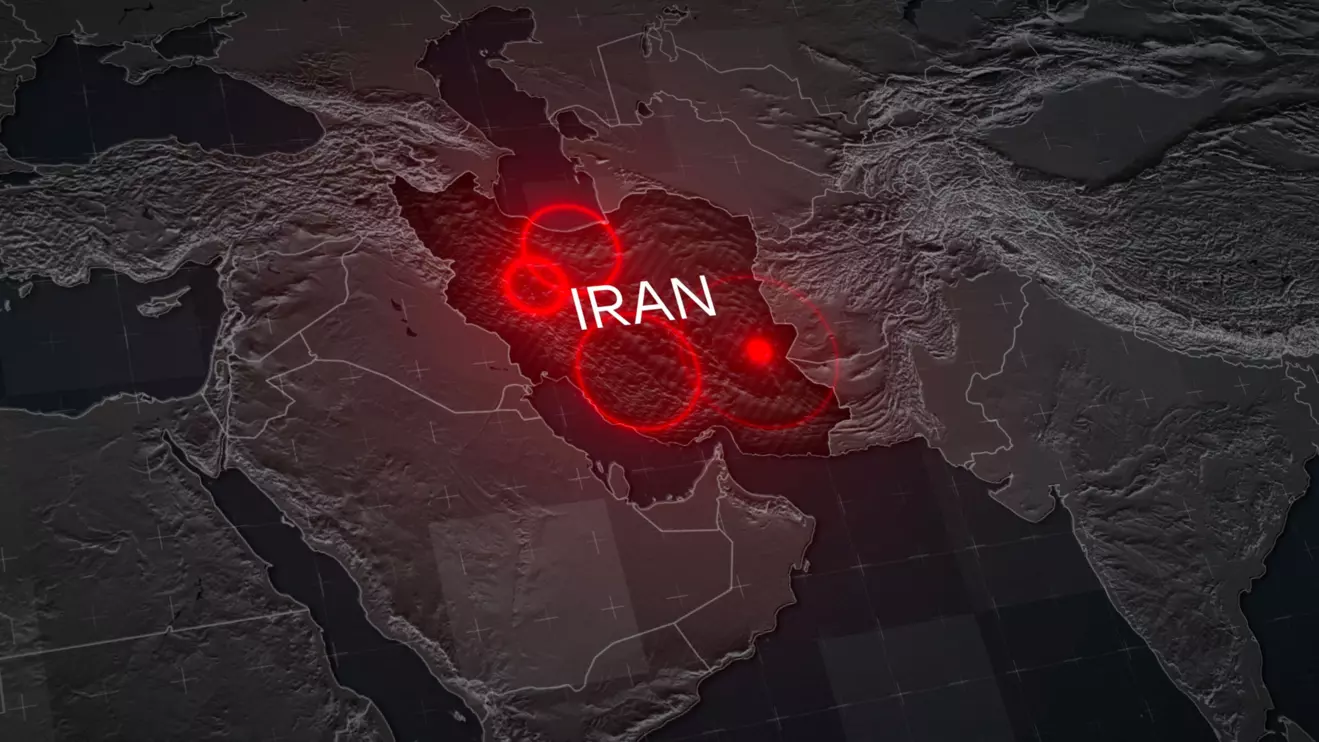
America has to stop lying to itself about Iran. The United States is not being dragged into a war because of Israel.
That is the lazy argument, the dangerous argument, and the argument Iran wants the world to believe.
The truth is much more serious: America is already in a confrontation with Iran because Iran has been waging war against American interests, American soldiers, American allies, and the international order for decades.
Iran has attacked American interests directly and indirectly. It has armed militias that targeted American soldiers.
It has destabilized Iraq, Syria, Lebanon, Yemen, and the Gulf. It has threatened shipping routes, energy markets, embassies, bases, and allies. It has built a regional system of violence designed to weaken American power and push the United States out of the Middle East.
Israel is part of the battlefield, but Israel is not the cause. Iran is the cause.
That distinction is essential. Without it, the debate becomes morally and strategically dishonest. It allows politicians, commentators, and activists to pretend that if only America distanced itself from Israel, the problem would disappear.
It would not. Iran’s ambition is not limited to Israel. Iran wants regional dominance. Iran wants nuclear leverage. Iran wants to humiliate the United States. Iran wants to prove that Western power is tired, divided, and afraid.
For years, Washington has tried every elegant formula. Containment. Engagement. Sanctions. Negotiations. Back channels. Temporary understandings. Carefully worded statements.
The result has not been peace. The result has been an emboldened Iranian regime with a network of proxies stretching across the region and a growing confidence that America does not have the stomach to impose a real price.
That is the heart of the crisis.
America is not facing a small regional dispute. It is facing a hostile revolutionary regime that has built an entire military and ideological strategy around bleeding America without triggering a full American response.
Iran understands the psychology of democracies. It knows that America wants to avoid another war. It knows that American public opinion is exhausted by Iraq and Afghanistan. It knows that many Americans hear the word “Middle East” and immediately want out.
So Iran pushes. It pushes through Hezbollah. It pushes through militias in Iraq and Syria. It pushes through the Houthis in Yemen. It pushes through Hamas. It pushes at sea. It pushes through drones, missiles, intimidation, and political blackmail.
And every time America answers with hesitation, Iran learns the same lesson: escalation works.
But Iran’s confrontation with America does not exist in isolation. Behind it stands a broader global reality. China and Russia may not be directing every Iranian move, but they clearly benefit when Iran places sustained pressure on the Western world.
Every crisis that forces America to divide its attention between the Middle East, Europe, and Asia creates strategic advantages for Washington’s competitors.
China benefits when America is pulled away from the Indo-Pacific. Russia benefits when American focus is diverted from Europe and Ukraine. Both benefit when Western unity is strained, when energy markets become uncertain, when alliances are tested, and when American deterrence appears negotiable.
This does not mean Iran is merely a tool of Beijing or Moscow. Iran has its own ambitions, its own ideology, and its own regional agenda.
But the practical effect is clear: when Iran escalates against the West, other powers that seek to weaken American influence benefit from the distraction, the uncertainty, and the erosion of deterrence.
That is why America must view Iran not only as a regional challenge, but as part of a wider strategic picture. The issue is not simply one country or one conflict. It is about whether the United States and its allies can maintain credibility, stability, and deterrence in a world where adversaries increasingly learn from one another.
China watches how America responds to Iran. Russia watches how America responds to Iran. North Korea watches too. Every adversary studies whether American warnings mean anything. They study whether American red lines are real. They study whether American allies can trust Washington when pressure rises.
This is why the argument must be reframed. America is not protecting Israel as a favor. America is defending its own position in the world.
It is defending freedom of navigation. It is defending its soldiers. It is defending its alliances. It is defending the principle that a terror-supporting regime cannot dominate one of the most strategically important regions on earth.
The Iranian regime has survived for decades by betting that the West will always blink first
The Middle East is not some distant theater America can simply abandon without consequence. Energy, shipping, global trade, military credibility, and the security architecture of several continents are tied to it. If Iran controls the tempo of the region, America loses more than influence. It loses deterrence.
And when America loses deterrence in one place, the consequences are not local. They travel.
The United States has to ask itself a hard question: does it want to remain a superpower, or does it want to manage decline with sophisticated language?
Because decline rarely announces itself dramatically. It begins with excuses. It begins when enemies attack and there is no serious consequence. It begins when allies doubt and enemies advance. It begins when leaders confuse restraint with strategy and call weakness diplomacy.
No serious person should want a reckless war. War is terrible. War should never be romanticized. But there is something worse than confronting danger early: allowing danger to grow until confrontation becomes unavoidable and far more devastating.
Iran must understand that attacking Americans, threatening American allies, pressuring maritime routes, funding armed groups, and racing toward nuclear leverage will bring consequences that are direct, painful, and unmistakable.
That does not mean America must act blindly. It means America must act with clarity. Diplomacy can work only when backed by force. Sanctions can work only when enforced. Alliances can work only when enemies believe those alliances have teeth.
The Iranian regime has survived for decades by betting that the West will always blink first.
It has used ideology as a weapon, proxies as shields, civilians as propaganda, and negotiation as a way to buy time. That game has to end.
America’s confrontation with Iran is not someone else’s war imported to Washington. It is America’s own unfinished confrontation with a regime that has chosen hostility as its strategy.
Iran is the immediate challenge. China and Russia are among the strategic beneficiaries of every Western hesitation.
The sooner America admits that, the safer everyone becomes.
Not because war is desirable. Because pretending there is no war is exactly how America loses one.